
Should I Take Vitamin D in the Morning or at Night?
By AT2A8 min read

Vitamin D is an essential nutrient that supports bone health, immune function, and overall vitality. When deciding on a daily routine, many people wonder: should I take vitamin D in the morning or at night? Finding the right time to take your supplements can help you stay consistent and get the most out of your daily habits.
Because vitamin D is fat-soluble, it requires dietary fat to be absorbed properly by your body. This means that the timing of your supplement often depends on when you eat your meals. Pairing your supplement with a breakfast or lunch is a common practice that helps support absorption.
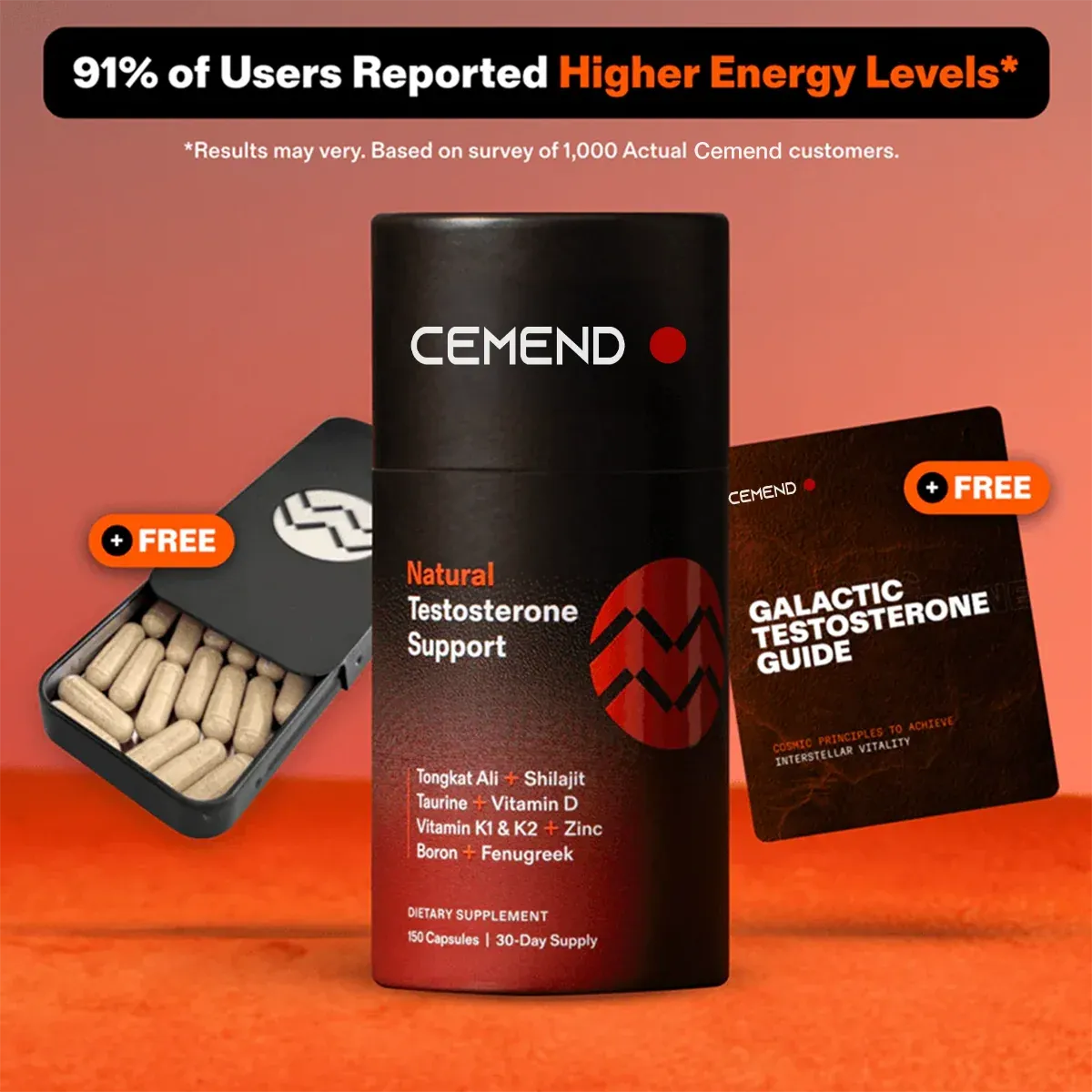
Some dietary supplements combine vitamin D with other key nutrients to support specific goals. For example, CEMEND Natural Testosterone Support is a vegetarian capsule supplement that includes vitamin D alongside ingredients like tongkat ali, fenugreek, shilajit, taurine, zinc, boron, and vitamins K1 and K2. Each container of this supplement holds 150 capsules, making it easy to plan your daily intake.
How Vitamin D Absorption Works
To understand the best time to take your supplement, it helps to understand how your body processes fat-soluble nutrients. Unlike water-soluble vitamins, which dissolve quickly in water, fat-soluble vitamins require lipids to pass through the intestinal wall. This biological mechanism dictates how and when you should consume your daily dose.
When you consume vitamin D with a meal that contains dietary fats, your body can absorb the nutrient much more efficiently. Without these fats, the absorption rate drops, meaning much of the nutrient may pass through your system unused.
Here are some key factors to keep in mind regarding absorption:
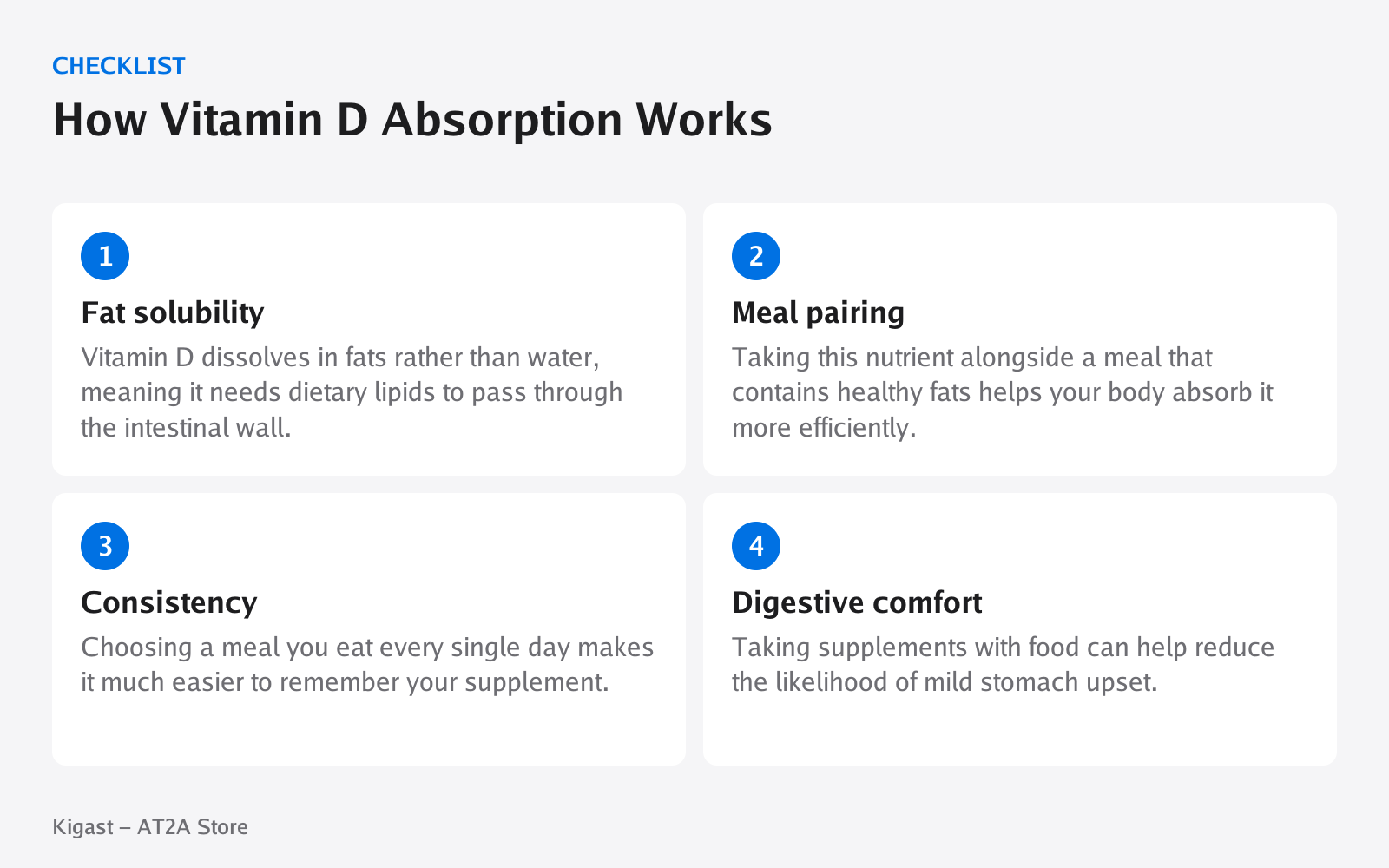
- Fat solubility: Vitamin D dissolves in fats rather than water, meaning it needs dietary lipids to pass through the intestinal wall.
- Meal pairing: Taking this nutrient alongside a meal that contains healthy fats helps your body absorb it more efficiently.
- Consistency: Choosing a meal you eat every single day makes it much easier to remember your supplement.
- Digestive comfort: Taking supplements with food can help reduce the likelihood of mild stomach upset.
Should I Take Vitamin D in the Morning or at Night?
The debate between morning and evening intake often comes down to personal preference, lifestyle, and how your body responds to the supplement. While there is no single rule that applies to everyone, looking at how vitamin D interacts with your body's natural rhythms can help you make an informed decision.
The Case for Morning Intake
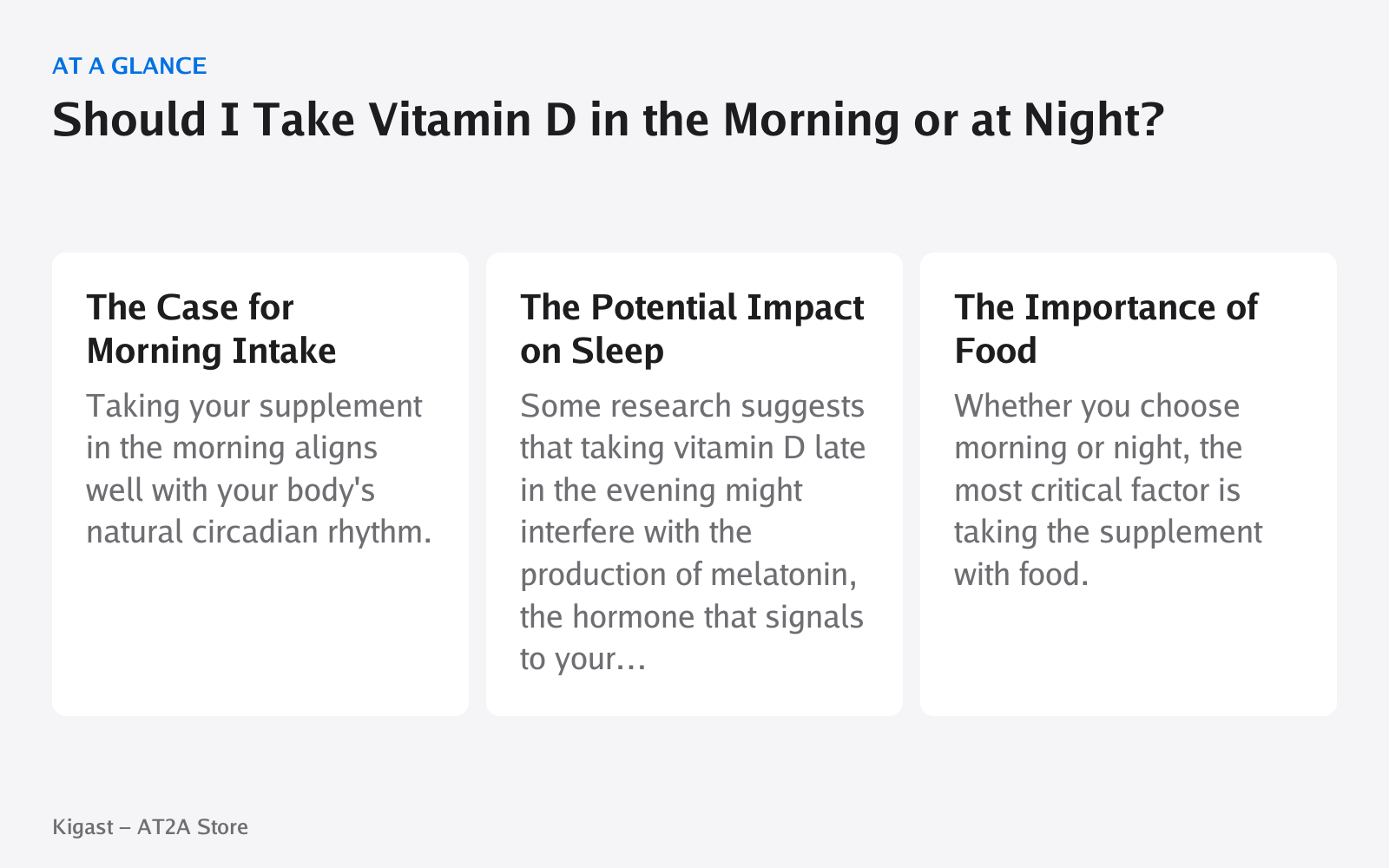
Taking your supplement in the morning aligns well with your body's natural circadian rhythm. Since your body naturally produces vitamin D when your skin is exposed to sunlight, taking it early in the day mimics this natural process. Many people find that a morning routine is easier to maintain because it becomes part of their breakfast habit.
The Potential Impact on Sleep
Some research suggests that taking vitamin D late in the evening might interfere with the production of melatonin, the hormone that signals to your body that it is time to sleep. While this effect varies from person to person, those who struggle with nighttime rest often prefer to move their dose to the morning or afternoon.
The Importance of Food
Whether you choose morning or night, the most critical factor is taking the supplement with food. A completely empty stomach is not ideal for fat-soluble vitamins. If your largest meal of the day is dinner, and you do not experience sleep disruptions, taking it at night with that meal may work well for you.
Combining Vitamin D with Other Nutrients
Many people take multiple supplements to support different aspects of their health. Understanding how vitamin D interacts with other vitamins and minerals can help you design a more efficient daily routine. Some nutrients work together to support bone health, while others are best taken at different times to avoid competition for absorption.
For instance, vitamin K is a common partner for vitamin D. While vitamin D helps your body absorb calcium, vitamin K helps direct that calcium to your bones where it is needed most. This is why formulas like CEMEND Natural Testosterone Support combine these ingredients into a single capsule. This product also includes zinc, boron, and fenugreek to support normal testosterone levels and overall vitality.
If you are also taking water-soluble vitamins, such as a B complex, your timing strategy might differ. For example, the 5-in-1 Vitamin B Complex is a liquid supplement containing vitamins B12 5000mcg, B6 3400mcg, and B1 2400mcg, along with niacin and folate. B vitamins help your body turn food into energy and support normal nervous system function. Because they are water-soluble, they can be taken with or without food, making them highly flexible for morning use.

Here are some common nutrient combinations to consider:
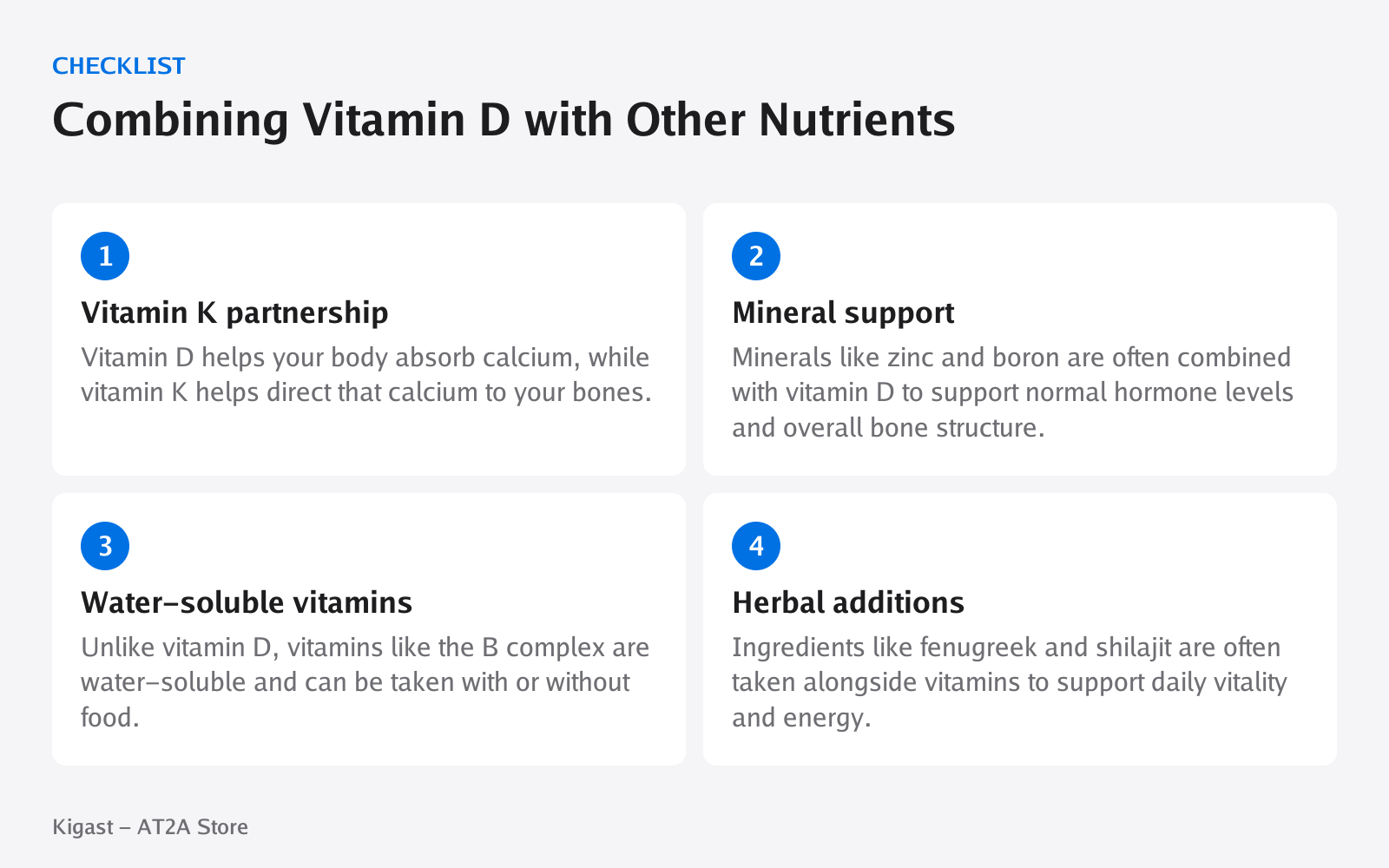
- Vitamin K partnership: Vitamin D helps your body absorb calcium, while vitamin K helps direct that calcium to your bones.
- Mineral support: Minerals like zinc and boron are often combined with vitamin D to support normal hormone levels and overall bone structure.
- Water-soluble vitamins: Unlike vitamin D, vitamins like the B complex are water-soluble and can be taken with or without food.
- Herbal additions: Ingredients like fenugreek and shilajit are often taken alongside vitamins to support daily vitality and energy.
Reading the Supplement Label
When choosing a vitamin D supplement, reading the label carefully is essential for understanding what you are putting into your body. Labels provide crucial information about serving sizes, ingredient forms, and additional components that may affect how you take the product.
Many supplements include proprietary blends or combinations of herbs and vitamins. For example, ORANIC EXTRACT® 3-in-1 Wellness Gummies combine shilajit, sea moss, and ashwagandha, plus lion's mane, in one daily gummy, with 30 gummies per container. While this product does not focus primarily on vitamin D, understanding how to read its label helps you manage your overall supplement intake and avoid taking too many overlapping ingredients.
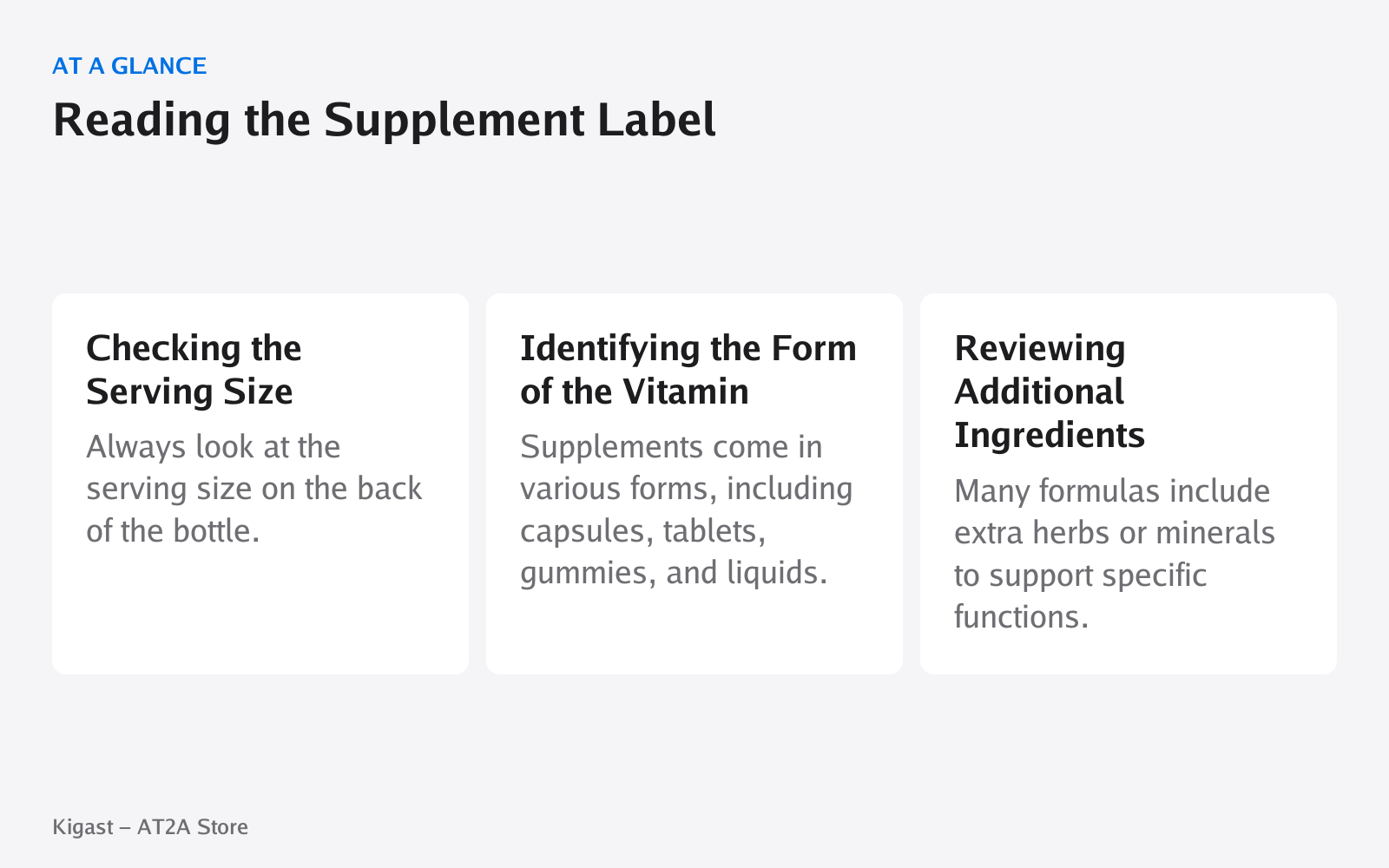
Checking the Serving Size
Always look at the serving size on the back of the bottle. Some supplements require multiple capsules to reach the stated amount, while others require only one. Knowing this helps you plan how long your supply will last. For instance, a bottle with 150 capsules will last longer if the serving size is small, so always calculate your daily intake accordingly.
Identifying the Form of the Vitamin
Supplements come in various forms, including capsules, tablets, gummies, and liquids. Capsules and tablets are easy to swallow, while gummies offer a chewable alternative for those who dislike swallowing pills. The form you choose can affect how quickly the nutrient is broken down in your digestive tract, though both forms are effective when taken with food.
Reviewing Additional Ingredients
Many formulas include extra herbs or minerals to support specific functions. It is important to read the full ingredient list to ensure you are not doubling up on nutrients if you take multiple daily supplements. Checking for fillers, binders, or common allergens is also a good practice for those with sensitive digestive systems.
Who Should Consult a Professional?
While vitamin D is a widely used and generally safe supplement, certain individuals should exercise caution and consult a healthcare professional before starting a new routine. Your doctor can help you determine the appropriate amount for your specific needs and ensure that your supplements do not interact with other aspects of your health care.
Individuals with pre-existing health conditions, those taking prescription medications, and women who are pregnant or nursing should always seek professional advice. A doctor can perform simple tests to check your current nutrient levels, helping you avoid taking too much or too little of any specific vitamin.
Additionally, if you are taking complex formulas that contain multiple herbs, such as shilajit, ashwagandha, or tongkat ali, a professional can help you understand how these ingredients might interact with your body. Staying informed and prioritizing safety is the best way to support your long-term well-being.
Frequently asked questions
Can I take vitamin D on an empty stomach?
It is not recommended to take vitamin D on an empty stomach. Because it is a fat-soluble vitamin, your body requires dietary fats to absorb it efficiently. Taking it with a meal that contains healthy fats ensures optimal absorption and helps avoid mild stomach discomfort.
Does vitamin D keep you awake at night?
Some individuals report that taking vitamin D late in the evening interferes with their sleep. This may be because vitamin D is linked to the body's natural response to sunlight, which can temporarily suppress melatonin production. If you experience sleep issues, try taking your supplement in the morning.
Can I take vitamin D and vitamin B complex together?
Yes, you can take them together. Vitamin D is fat-soluble and is best taken with a meal, while B vitamins are water-soluble and can be taken with or without food. Taking them both with breakfast is a convenient way to establish a consistent daily routine.
Should I take vitamin D with calcium?
Vitamin D helps your body absorb calcium, making them an excellent combination. Many people take them together to support bone health. However, it is always best to check your supplement labels to see if your product already contains both nutrients before adding another supplement.
How long does it take for vitamin D to work?
Vitamin D is absorbed into your bloodstream relatively quickly when taken with food, but it can take several weeks of consistent daily use to support your body's overall nutrient levels. Consistency is the most important factor in achieving steady results over time.
Sources
- Vitamin D — Health Professional Fact Sheet — Office of Dietary Supplements (ODS) at the National Institutes of Health (NIH)
- Vitamin D — MedlinePlus
- Vitamin D — MedlinePlus Medical Encyclopedia
- Ashwagandha — National Center for Complementary and Integrative Health
A note on these statements
These statements have not been evaluated by the Food and Drug Administration. This product is not intended to diagnose, treat, cure, or prevent any disease. Talk to your doctor or pharmacist before starting a supplement, especially if you are pregnant, nursing, take medication or have a medical condition.