
How to Use Growth Factor Serum, and Does It Work?
By AT2AUpdated 5 min read
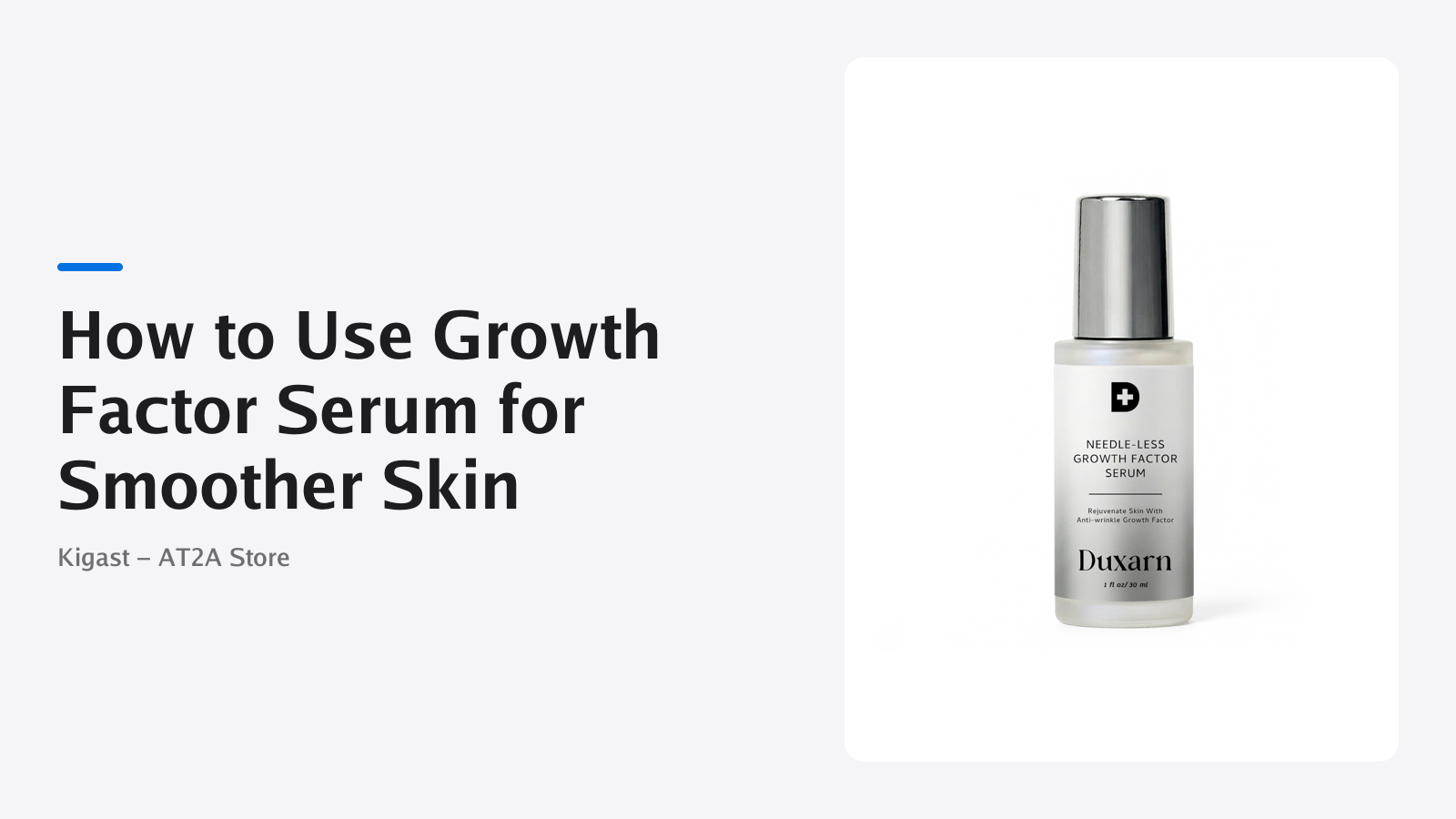
Growth factor serums sit at the premium end of skincare, and they come with a lot of jargon. This guide explains what growth factors are, what the research does and does not show, the order to apply a serum in, and how to read the label, so you can decide whether one belongs in your routine.
One note on wording: skincare is a cosmetic, which means it is about how skin looks and feels. Products that claim to change the structure or function of the body, or to regenerate cells, are regulated as drugs in the U.S.2, so be wary of serums that promise medical results.
What are growth factors in skincare?
Growth factors and cytokines are proteins that act as signals between cells. They are added to cosmetic products because of their ability to promote collagen synthesis, the protein network that gives skin its firm, smooth look1. Many products also use matrikines and other small peptides, which are designed to mimic some growth factor activity while being much smaller1.
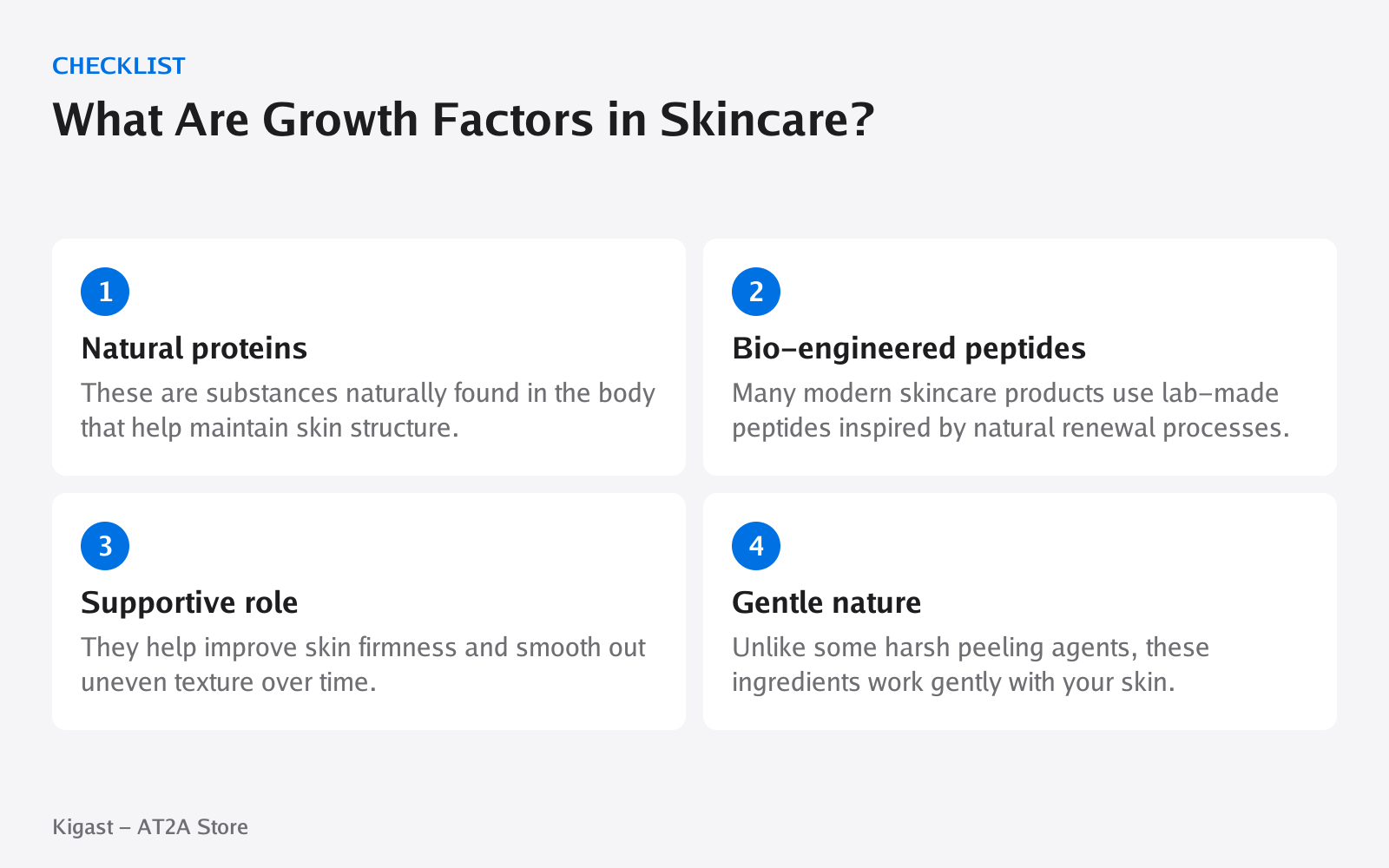
- Growth factors: signaling proteins, often produced in the lab for skincare.
- Peptides and matrikines: smaller molecules intended to have growth-factor-like activity with better skin penetration.
- Supportive role: used to support a firmer, smoother-looking complexion over time.
- Gentler profile: they do not work by exfoliating, so they are often chosen by people who find stronger actives irritating.
Do growth factor serums actually work?
The research is promising but limited. A 2016 review of commercially available growth factor and matrikine products summarized the clinical studies and concluded that "data are limited" and that the products need well-designed randomized trials1. Note that the review's authors were employed by, or paid by, a company that sells some of the products discussed1.
| Question | What the review reports | Strength of evidence |
|---|---|---|
| Can growth factors get into the skin? | Most growth factors are larger than 15,000 daltons, while molecules above about 500 daltons do not easily cross the outer skin layer1. | Well established physical limit |
| Do they improve the look of fine lines? | Several small studies, many open-label, reported better texture or fewer visible lines; in one 6-month study of 133 women, periorbital lines improved 33%, with no significant difference between the three products compared1. | Limited: small, mostly short studies |
| Are they better than a plain cream? | Mixed: in one 60-person, 6-month placebo-controlled study the growth factor product did not differ significantly from the base cream at month 61. | Mixed |
How do you use a growth factor serum?
Serums are light and concentrated, so they go on early in your routine, right after cleansing and before heavier products.
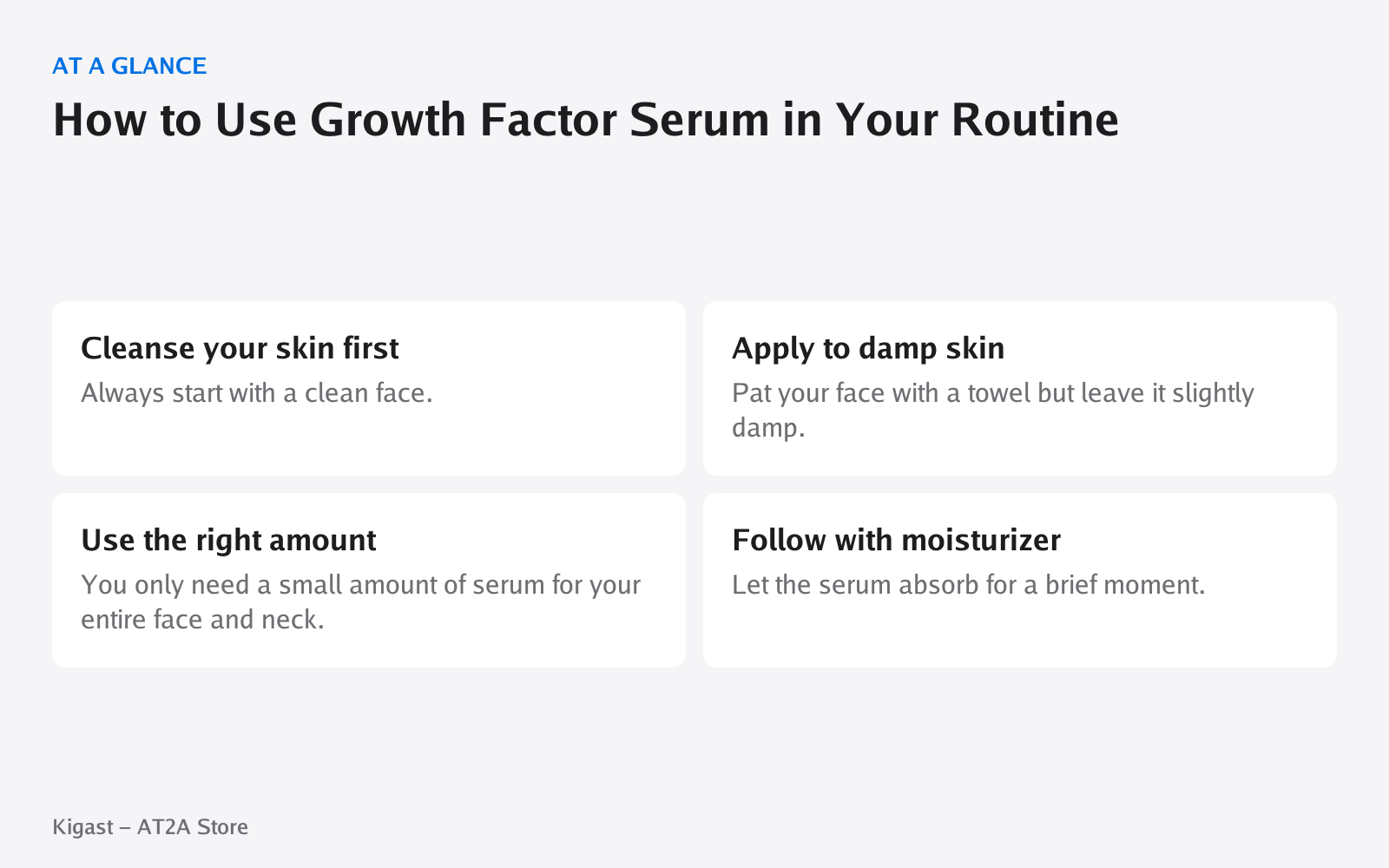
Cleanse your skin first
Start with a clean face so nothing sits between the serum and your skin.
Apply to clean, slightly damp skin
Pat your face with a towel, leaving it just damp, so the serum spreads easily.
Use a small amount
A few drops or one pump usually covers the face and neck. Follow the amount on your label.
Follow with moisturizer
Let the serum settle until it feels dry to the touch, then apply moisturizer. In the morning, finish with sunscreen.
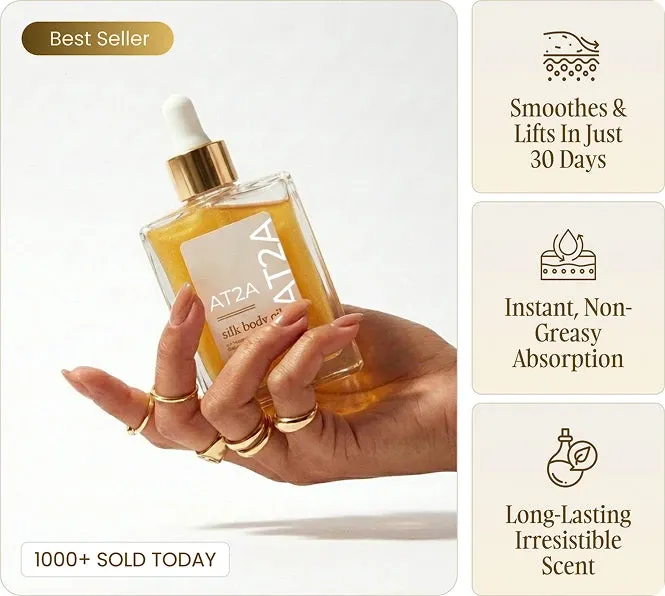
For body care, a body oil such as Silk Body Oil can follow a serum routine on the neck and chest area if you like a richer finish.
Should you use growth factor serum in the morning or at night?
Either works unless your label says otherwise. Many people use it at night, when there is no makeup or sunscreen to layer over it, or twice a day for consistency. If you also use strong exfoliating acids or retinoids, use them at a different time of day from your serum to limit irritation.
Which form of growth factor product suits your skin?
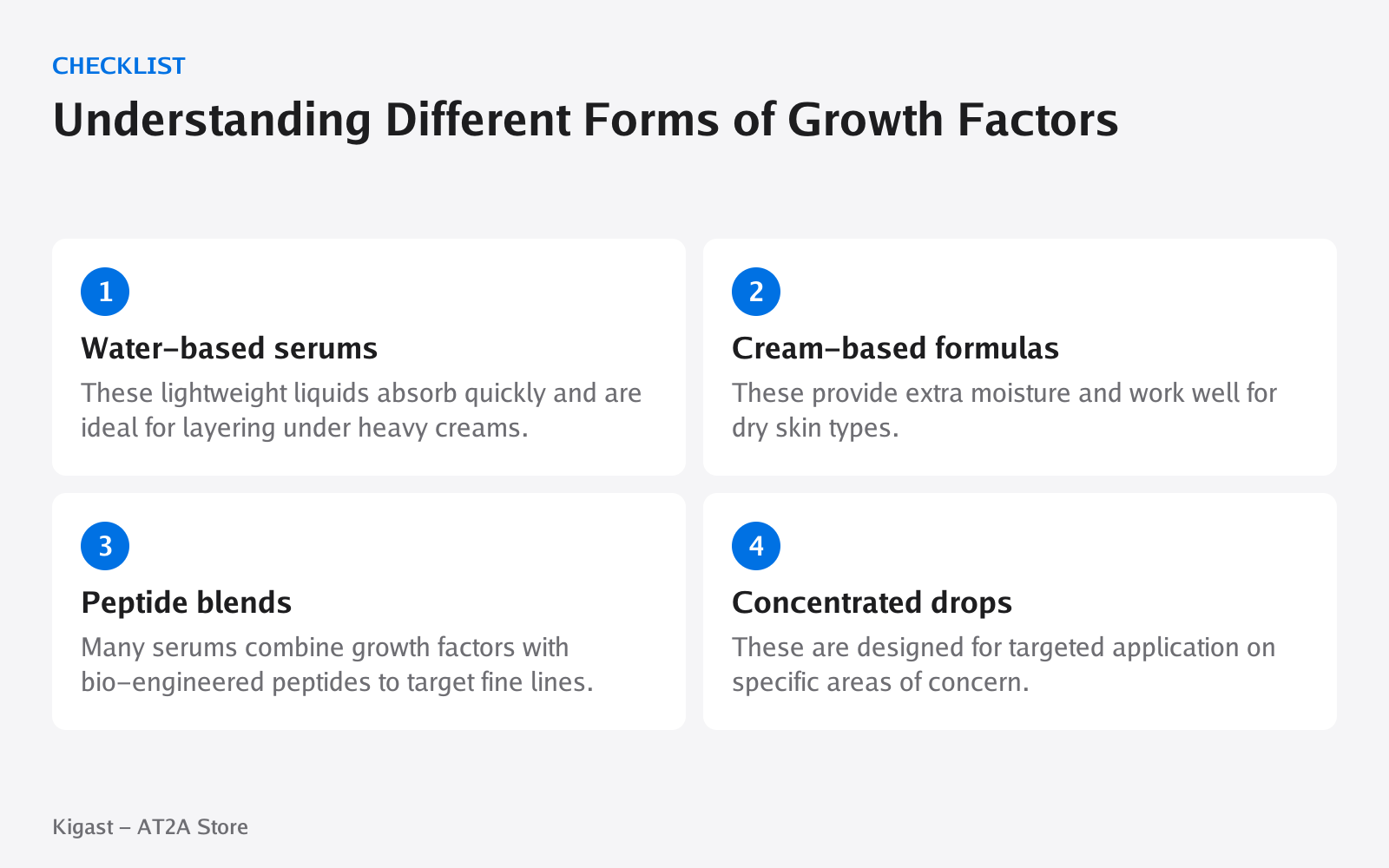
- Water-based serums: light, absorb quickly, layer well under creams; good for oily or combination skin.
- Cream formulas: add moisture, helpful for dry or mature skin.
- Peptide blends: combine growth factors with smaller peptides.
- Concentrated drops: for targeted areas such as around the eyes.
How do you read a growth factor serum label?
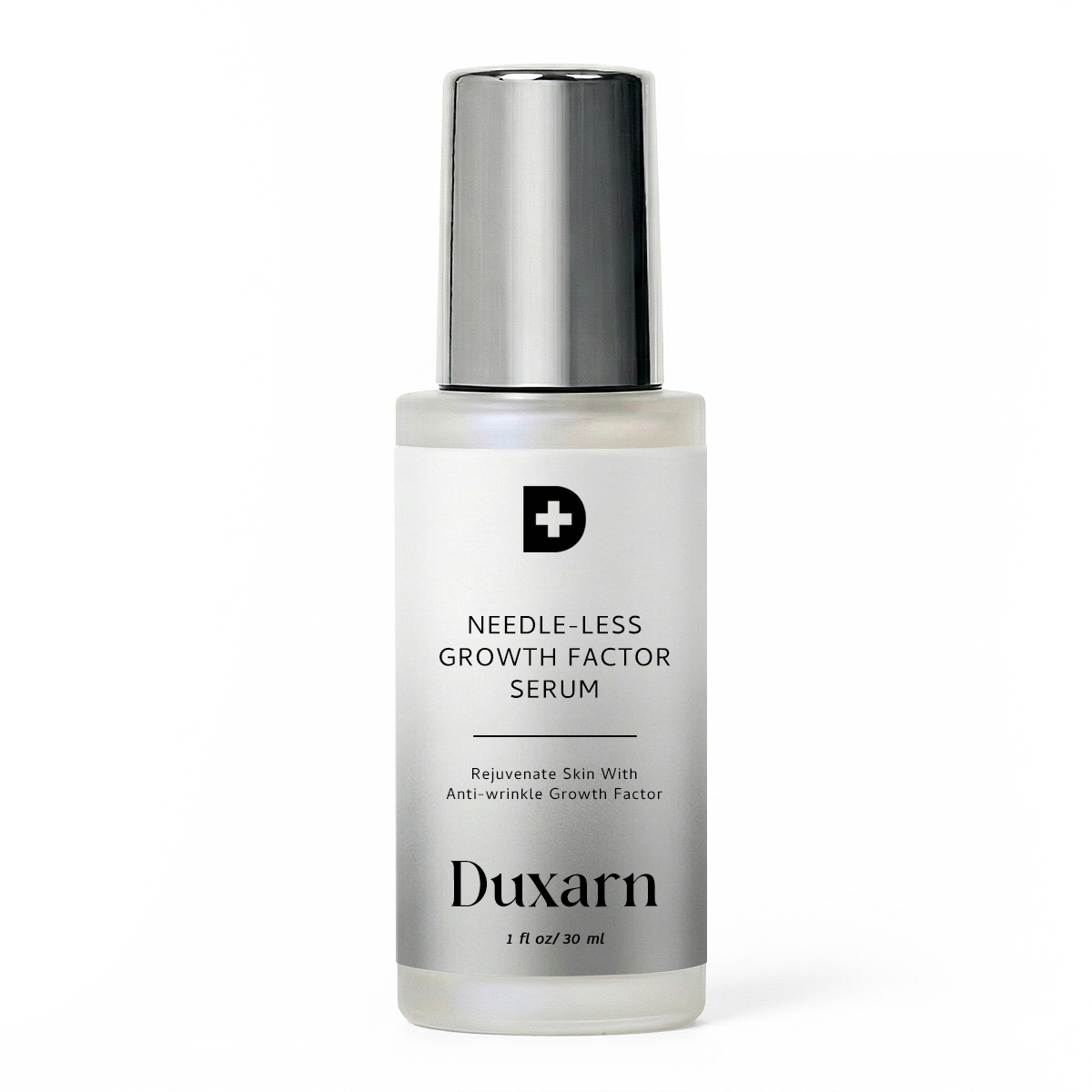
Check the key ingredients (growth factors, peptides or matrikines), the size, the directions and the period-after-opening symbol, a small open jar with a number that tells you how many months the product stays fresh once opened. Opaque or pump packaging helps protect sensitive ingredients from light and air. For example, the Duxarn Needle-less Growth Factor Serum comes in a 1 fl oz (30 ml) bottle.
Be cautious with claims: in the U.S., a product's intended use decides whether it is a cosmetic or a drug, and claims such as regenerating cells make a product a drug2.
Who should check with a professional first?
See a dermatologist before starting if you have very sensitive or reactive skin, a skin condition, or have recently had a procedure such as a peel, laser or microneedling. If you are pregnant or nursing, ask your doctor about any new active ingredient.
Everyone should patch-test. The American Academy of Dermatology suggests applying a quarter-sized amount to the underside of your arm or the bend of your elbow twice daily for 7 to 10 days; if there is no redness, itching or swelling, you can start using the product, and if there is, wash it off and stop3.
Frequently asked questions
Can I use growth factor serum every day?
Yes, most are designed for daily use, once or twice a day. Follow the label, and patch-test first.
How long does growth factor serum take to show results?
Studies of these products typically ran from about 6 weeks to 6 months. Give a serum several weeks of consistent use before judging it.
Can I use it with retinol or vitamin C?
Usually, yes. If your skin is sensitive, use strong actives such as retinoids or exfoliating acids at a different time of day from your serum.
Is growth factor serum good for sensitive skin?
Many people with sensitive skin tolerate it because it does not exfoliate, but test it on your inner arm twice a day for 7 to 10 days before applying it to your face.
How much should I use?
A few drops or one pump for the face and neck, or the amount your label gives.
Sources
- Skin rejuvenation using cosmetic products containing growth factors, cytokines, and matrikines: a review of the literature (Aldag, Nogueira Teixeira and Leventhal, 2016), Clinical, Cosmetic and Investigational Dermatology (accessed 2026-10-13)
- Is It a Cosmetic, a Drug, or Both? (Or Is It Soap?), U.S. Food and Drug Administration (accessed 2026-10-13)
- How to test skin care products, American Academy of Dermatology (accessed 2026-10-13)
These statements have not been evaluated by the Food and Drug Administration. This product is not intended to diagnose, treat, cure, or prevent any disease.