
What Is Shilajit? Benefits, Research and How to Choose Shilajit Gummies
By AT2AUpdated 5 min read

If you have seen shilajit on social media, you have probably also seen big promises attached to it. This guide takes a calmer look: what shilajit is, what the small amount of human research actually used and found, and how to choose a product you can trust.
What is shilajit?
Shilajit is a natural substance found mainly in the Himalayas, formed over centuries as plant material is gradually broken down by microorganisms.3 It seeps from rock as a dark, sticky resin, and it is cleaned and purified before being sold as resin, powder, capsules or gummies. Its main active component is fulvic acid, alongside other organic compounds and trace minerals.3 Shilajit has been used for centuries in Ayurveda, India's traditional medicine system, as a rasayana, a substance meant to support vitality.
What are the benefits of shilajit? What research says
Human research is limited to a few small trials of specific purified extracts. Results from one extract do not automatically apply to other products.
| Area | What the study used | What it found | Evidence strength |
|---|---|---|---|
| Normal testosterone levels | Purified shilajit, 250 mg twice a day for 90 days, healthy men aged 45 to 55 | Higher total and free testosterone than placebo | Limited: one small trial1 |
| Muscle strength after a tiring workout | 250 or 500 mg a day for 8 weeks, 63 active young men | At 500 mg a day, some men kept more strength after fatigue; 250 mg a day showed no difference | Limited: one trial, effect seen in a subgroup, funded by the supplier2 |
| Brain health and other uses | Mostly laboratory and animal work | Clinical trials are still needed | Very limited3 |
"Evidence strength" is our plain-language summary of the cited studies.
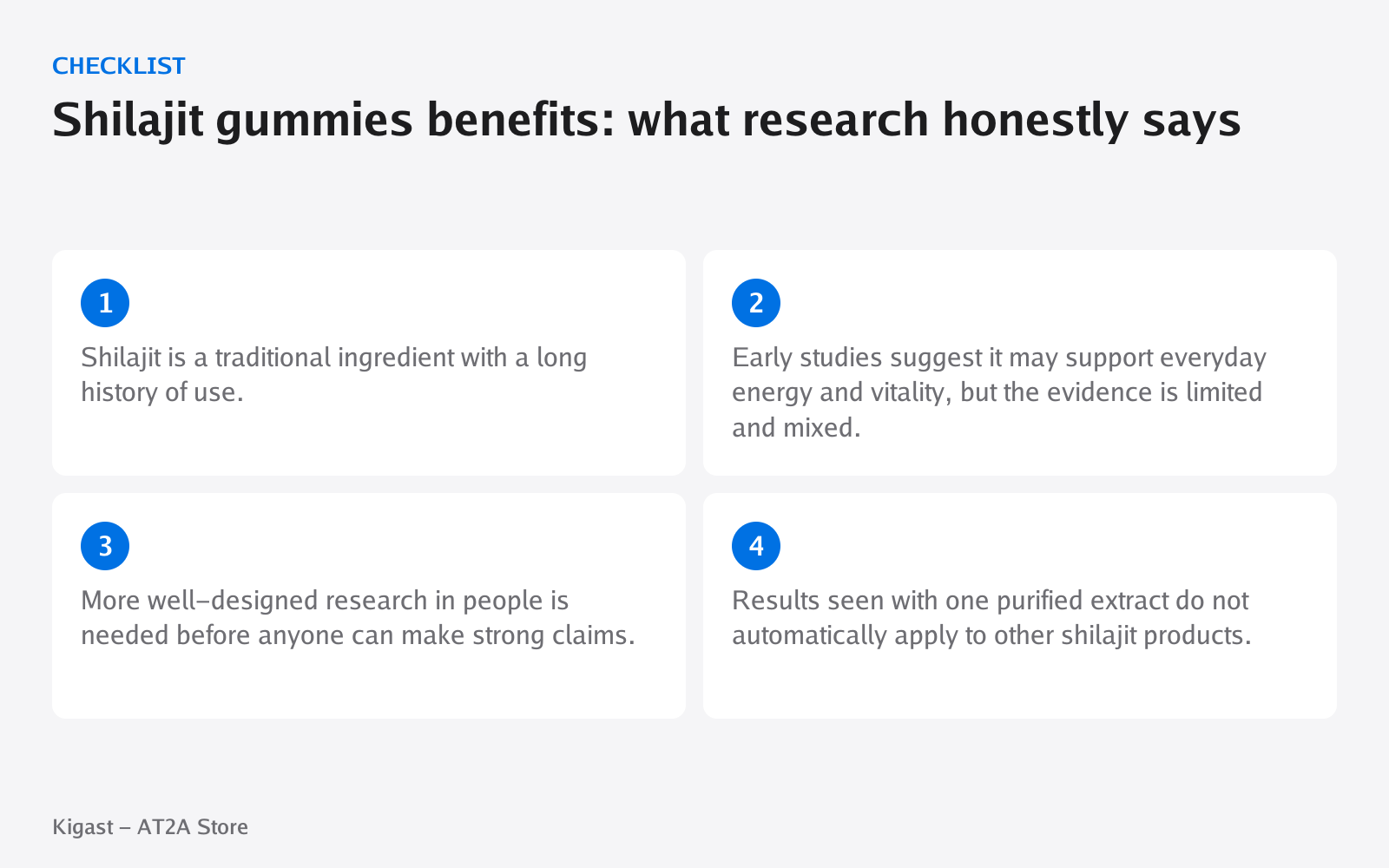
In the testosterone trial, men aged 45 to 55 took 250 mg of purified shilajit twice a day for 90 days; total testosterone, free testosterone and DHEAS rose more than with placebo, while other hormone levels stayed steady.1 In the strength trial, 63 recreationally active men took 250 mg or 500 mg a day of a purified extract (at least 50% fulvic acid) or placebo for 8 weeks. Among the stronger half of the men, those on 500 mg a day lost less strength during a fatiguing leg exercise test (8.9% decline versus 16.0% with placebo).2 Both trials are small, so treat these as early findings.
Is shilajit safe? Heavy metals and why testing matters
Because shilajit comes from rock and is used in Ayurveda, purity is the main concern. A study of Ayurvedic products bought online found that about 1 in 5 (20.7%) contained detectable lead, mercury or arsenic, and every product with metals exceeded at least one standard for acceptable daily intake. Most of the metal-containing products were sold by US websites, and three quarters claimed Good Manufacturing Practices.4 The NIH also warns that some Ayurvedic preparations may contain lead, mercury or arsenic in amounts that can be toxic.5
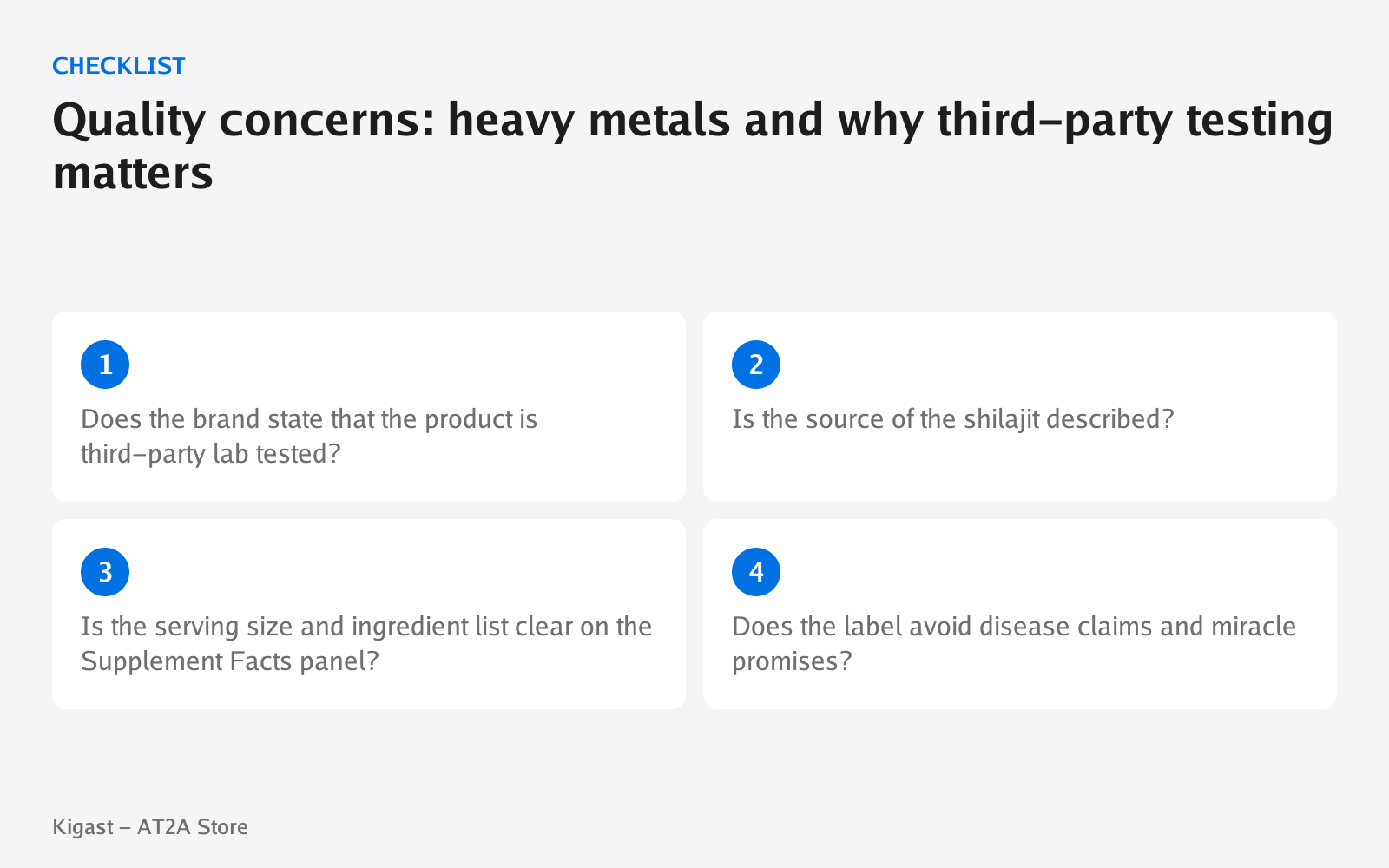
Questions to ask before you buy
- Does the label say the product is third-party lab tested?
- Is the shilajit purified, and is the source described?
- Are the serving size and amount of shilajit per serving clear on the Supplement Facts panel?
- Does the label avoid disease claims and miracle promises?
Ask your doctor before using shilajit if you are pregnant or breastfeeding, have a health condition, or take medicines. Long-term safety has not been studied.
Shilajit gummies vs resin: which is better?
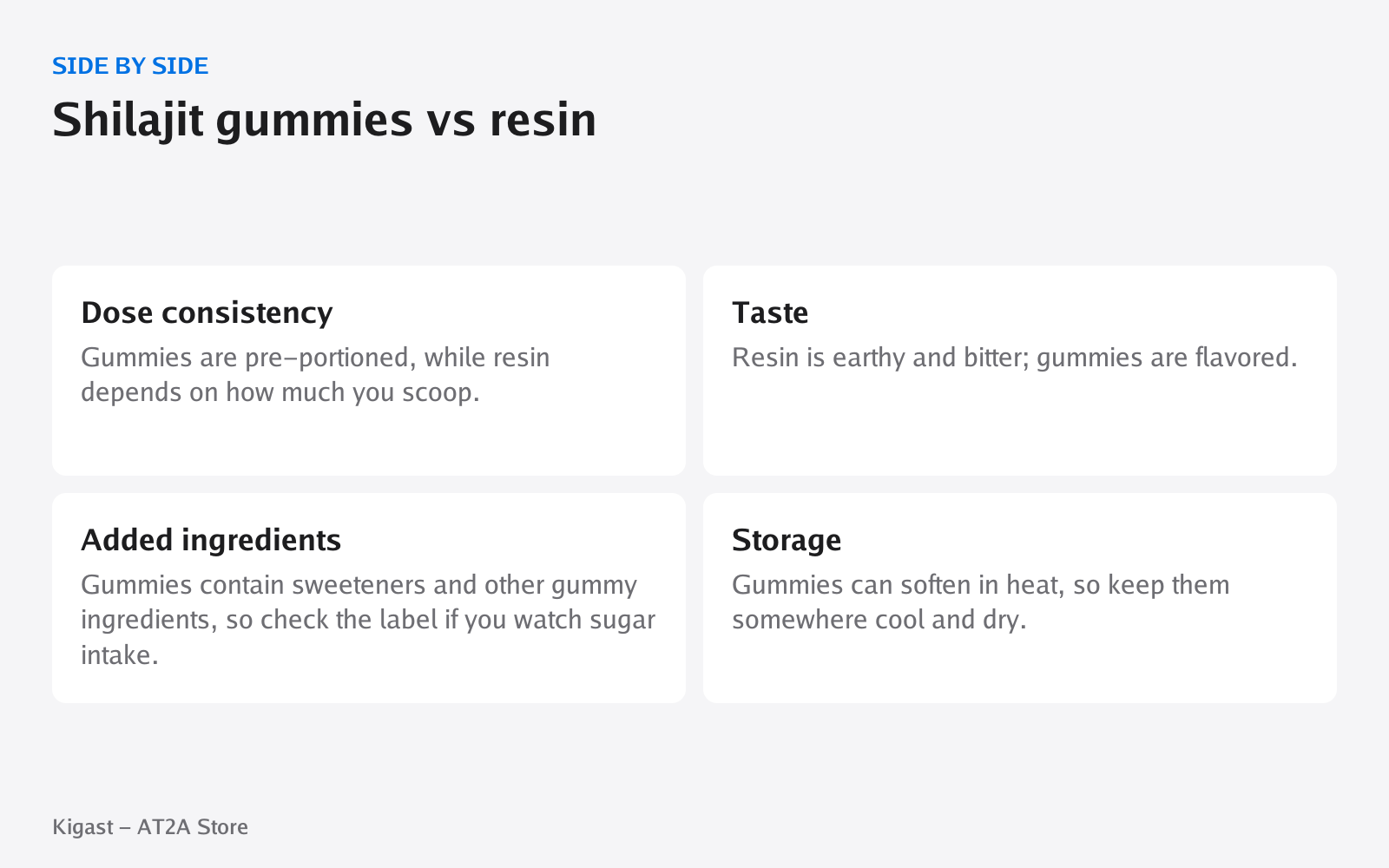
Resin is the traditional format: a small amount dissolved in warm water or tea. It is closer to the raw material but messy, bitter and hard to measure. Gummies are pre-portioned and easy to take, but contain sweeteners and other gummy ingredients, and can soften in heat.
Shilajit at AT2A
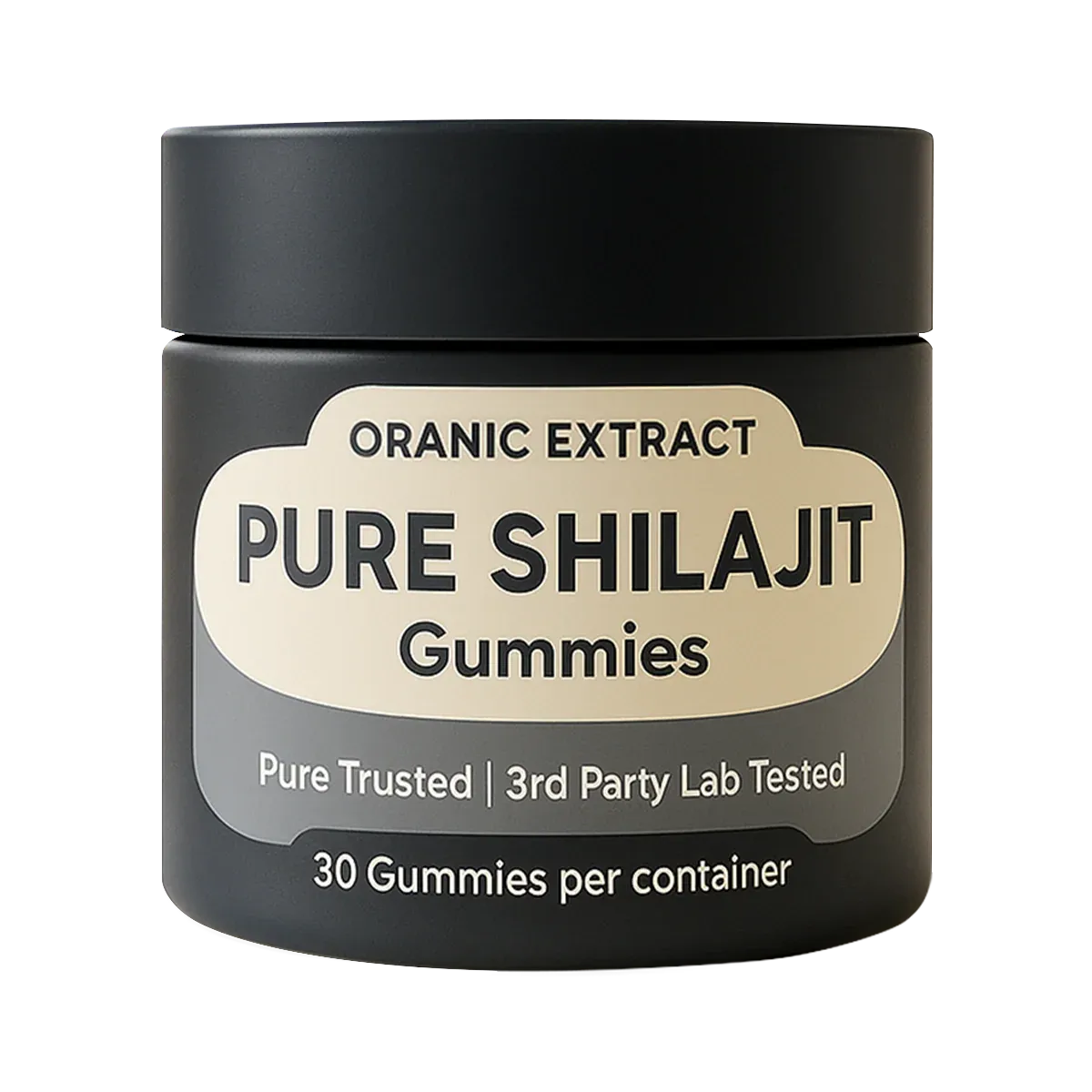
ORANIC EXTRACT Pure Shilajit Gummies come 30 gummies per container, and the label states they are third-party lab tested. Check the Supplement Facts panel for the amount of shilajit per gummy and compare it with the 250 to 500 mg a day used in the trials above.
Prefer a blend? The ORANIC EXTRACT 3-in-1 Wellness Gummies combine shilajit, sea moss and ashwagandha, 30 gummies per container. Shilajit is also one of the ingredients in CEMEND Natural Testosterone Support.

How do you take shilajit gummies?
Follow the serving on the label and take it at a time you will remember each day; the trials gave shilajit daily for 8 to 12 weeks.12 Our step-by-step guide covers timing, food and storage: How to take shilajit gummies.

Plan when to take shilajit with the AT2A supplement timing tool.
Frequently asked questions
What is shilajit made of?
Shilajit forms from plant material broken down over centuries. Its main active component is fulvic acid, along with other organic compounds and trace minerals.
How much shilajit was used in studies?
Trials used 250 to 500 mg a day of purified shilajit: 250 mg twice a day for 90 days in one, and 250 or 500 mg once a day for 8 weeks in another.
How long does it take for shilajit to work?
The trials ran for 8 to 12 weeks. There is no reliable timeline, and results with one purified extract may not apply to other products.
Is shilajit safe to take every day?
The trials gave it daily for up to 90 days, but long-term safety has not been studied. Choose a purified, tested product, and ask your doctor first if you have a health condition or take medicines.
Can women take shilajit?
The human trials were done in men, so there is little data for women. Talk to your doctor first, especially if you are pregnant or breastfeeding.
Sources
- Pandit S et al. Clinical evaluation of purified Shilajit on testosterone levels in healthy volunteers. Andrologia, 2016, PubMed (accessed 2026-10-13)
- Keller JL et al. The effects of Shilajit supplementation on fatigue-induced decreases in muscular strength and serum hydroxyproline levels. JISSN, 2019, PubMed Central (accessed 2026-10-13)
- Carrasco-Gallardo C et al. Shilajit: a natural phytocomplex with potential procognitive activity. International Journal of Alzheimer's Disease, 2012, PubMed (accessed 2026-10-13)
- Saper RB et al. Lead, mercury, and arsenic in US- and Indian-manufactured Ayurvedic medicines sold via the Internet. JAMA, 2008, PubMed (accessed 2026-10-13)
- Ayurvedic Medicine: In Depth, NIH National Center for Complementary and Integrative Health (accessed 2026-10-13)
These statements have not been evaluated by the Food and Drug Administration. This product is not intended to diagnose, treat, cure, or prevent any disease.