
Ashwagandha Gummies: Benefits, Dosage and When to Take Them
By AT2AUpdated 6 min read

Ashwagandha has gone from a little-known herb to one of the most talked-about supplements in the world, and the claims around it range from sensible to wildly overblown. This guide sticks to what human studies used and found, how to read a gummy label, and who should skip it.
What is ashwagandha?
Ashwagandha (Withania somnifera) is an evergreen shrub grown in Asia, Africa and Europe. Its Sanskrit name refers to the smell of its roots, and it is also called winter cherry or Indian ginseng, although it is not related to ginseng.1 The root has been used for centuries in India's Ayurvedic and Unani traditions as an adaptogen, a loose term for something that helps the body resist or adapt to stress.1
Ashwagandha contains natural compounds called withanolides, which researchers often measure to standardize extracts.1
What does ashwagandha do? What studies found
Most human trials are small and short and use specific branded extracts, so results may not apply to every product. Here is how the main areas stack up.
| Area | What studies used | What they found | Evidence strength |
|---|---|---|---|
| Everyday stress | 12 trials, 1,002 adults; benefits at 300 to 600 mg a day | Lower stress and anxiety scores than placebo | Moderate (the reviewers rated certainty low because studies varied)2 |
| Sleep quality | 5 trials, 400 adults; 6 to 12 weeks | A small but significant improvement, larger at 600 mg a day or more and after 8 weeks or longer | Moderate3 |
| Normal testosterone levels | Trials lasting 2 to 4 months | May increase testosterone levels in men | Limited4 |
"Evidence strength" is our plain-language summary of the cited reviews.
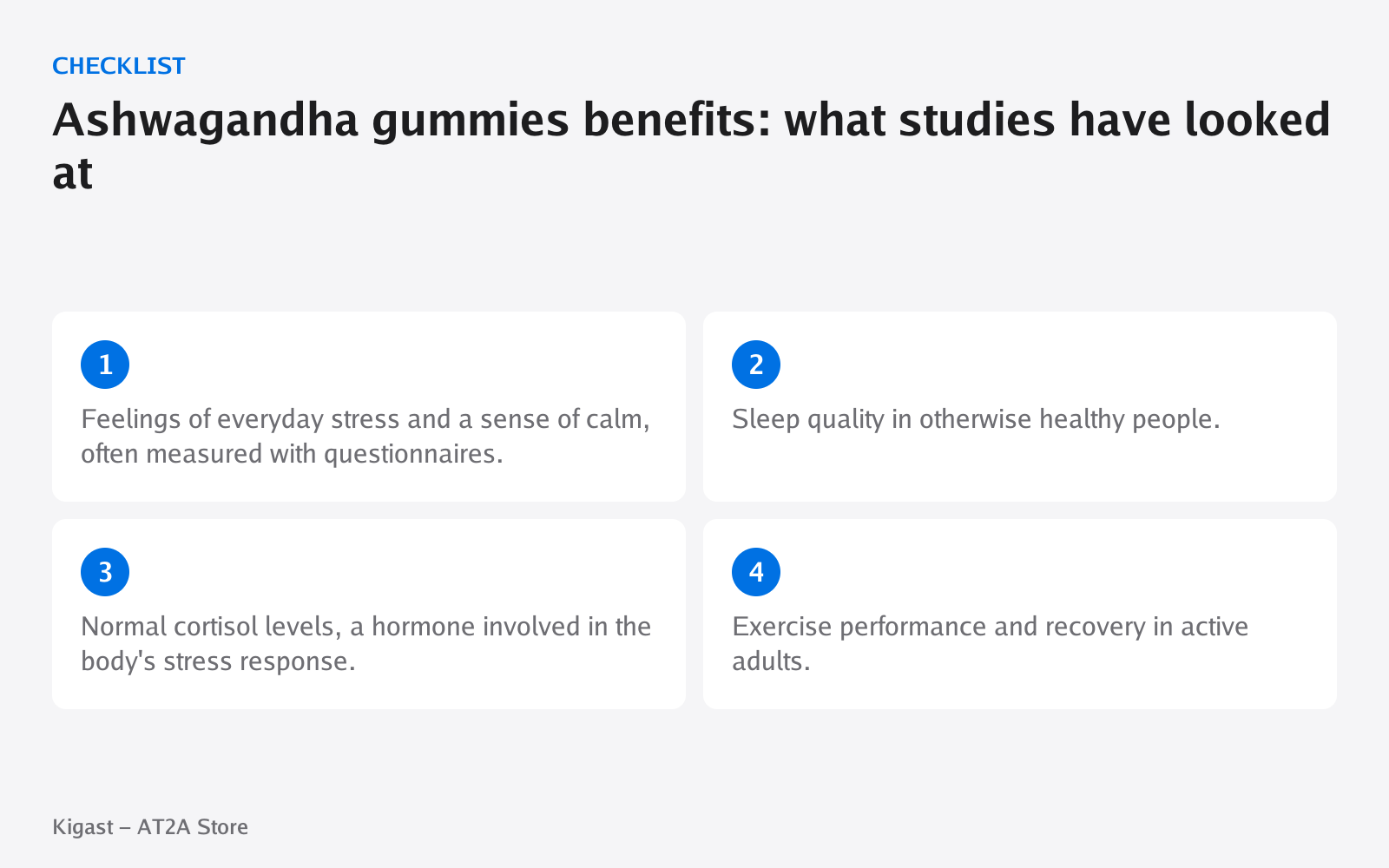
Stress
A 2022 meta-analysis pooled 12 randomized trials with 1,002 adults and found that ashwagandha lowered stress and anxiety scores compared with placebo. Stress benefits were seen at 300 to 600 mg a day, but the authors rated the certainty of the evidence as low.2 An earlier review of seven trials (491 adults, 6 to 8 weeks) found similar results, with doses from 240 to 1,250 mg a day of extract, and benefits that appeared greater at 500 to 600 mg a day.1
Sleep
A 2021 meta-analysis of five randomized trials with 400 adults found a small but significant improvement in overall sleep. Effects were larger in people with insomnia, at 600 mg a day or more, and when people took it for 8 weeks or longer.3
How much ashwagandha was used in studies?
Most stress and sleep trials used 300 to 600 mg a day of a root or root-and-leaf extract.12 An international psychiatry taskforce provisionally suggested 300 to 600 mg a day of root extract standardized to 5% withanolides, while noting more research is needed.1 Because studies used different extracts and doses, there is no single proven amount.1
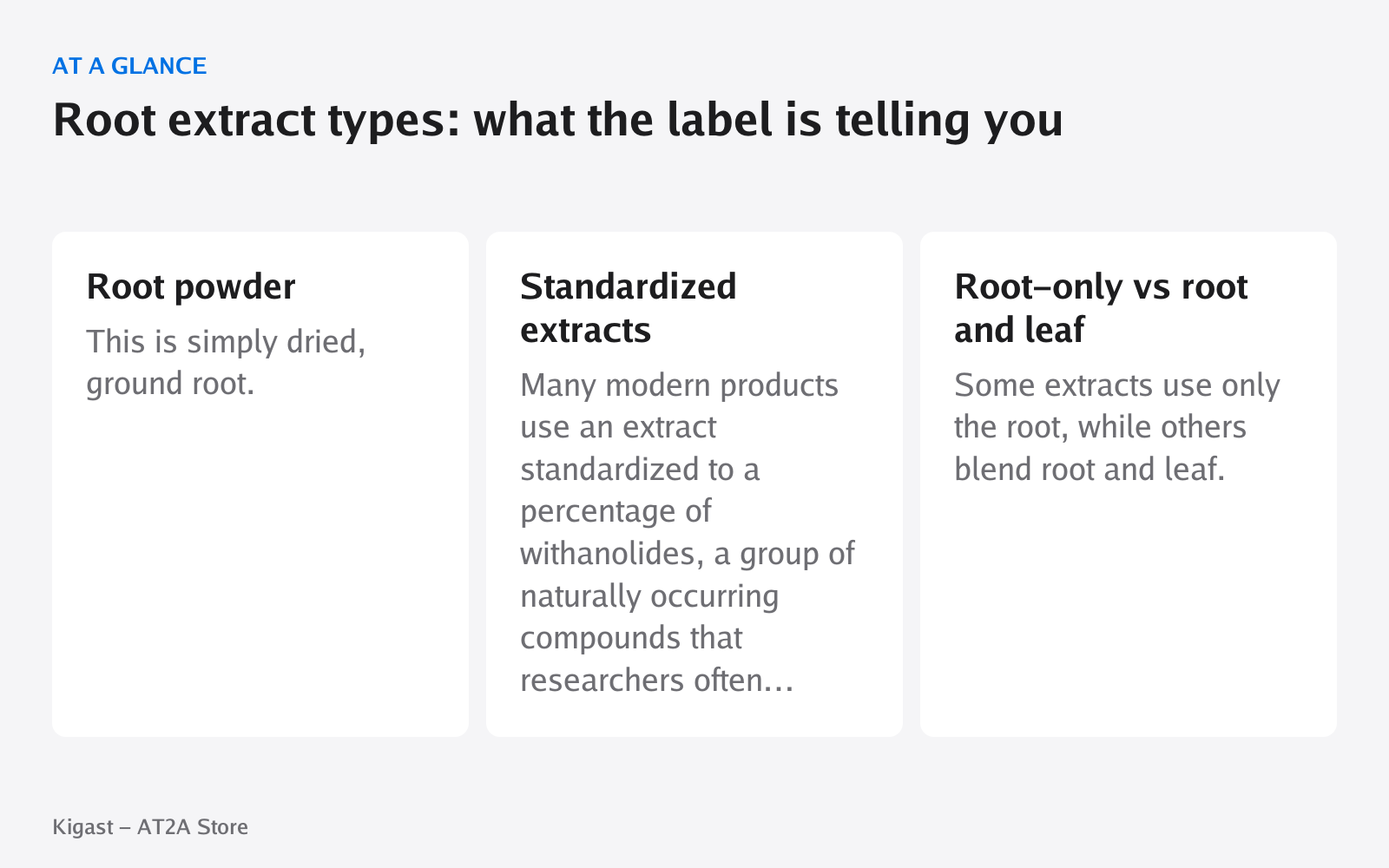
Reading a gummy label
- Plant part. Root-only extracts follow traditional use; some extracts blend root and leaf.
- Extract and standardization. Look for the extract amount per serving and, if listed, the withanolide percentage.
- Amount per gummy. Compare it with the 300 to 600 mg a day used in most trials. If the label does not list it, ask the brand.
When should you take ashwagandha, morning or night?
Any time works. Trials gave ashwagandha every day and benefits built over weeks, so taking it consistently matters more than the hour. We found no trial that compared morning with evening doses. Because some people feel drowsy on it,4 many choose the evening.
Plan when to take ashwagandha with the AT2A supplement timing tool.
Who should not take ashwagandha?
Ashwagandha may be safe for up to about 3 months; long-term safety is not known.4 Some people get drowsiness, stomach upset, diarrhea or vomiting.4
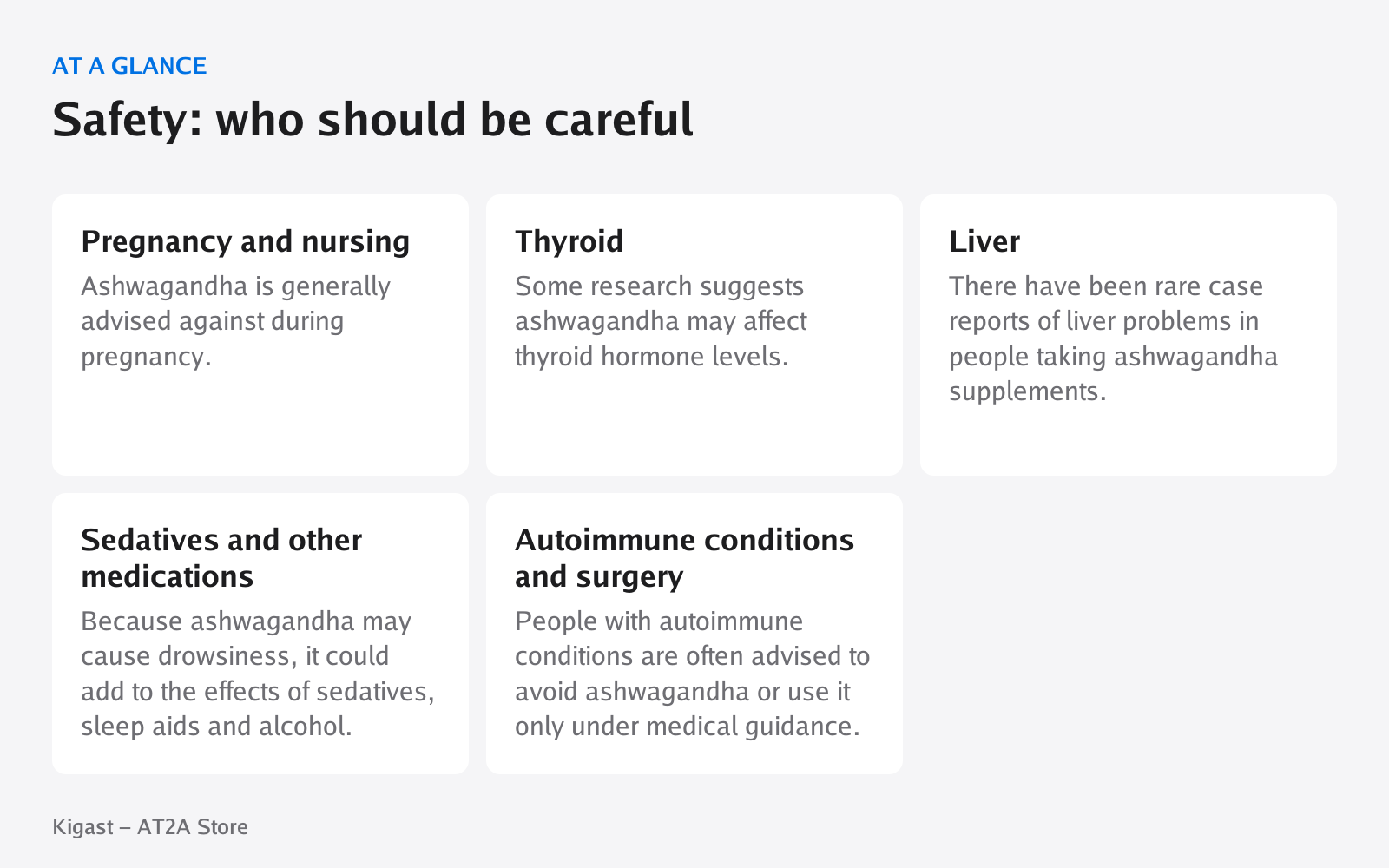
- Pregnancy and breastfeeding. Ashwagandha should be avoided during pregnancy and not used while breastfeeding.4
- Thyroid and autoimmune conditions. It is not recommended for people with thyroid or autoimmune disorders.4
- Liver. Rare cases of liver injury have been linked to ashwagandha supplements.4 In five reported cases, people had taken 450 to 1,350 mg a day for 1 week to 4 months.1 Stop and call a doctor if you notice yellow skin or eyes, dark urine or unusual tiredness.
- Surgery and prostate cancer. It is not recommended before surgery, and people with hormone-sensitive prostate cancer should avoid it.4
- Medicines. It may interact with diabetes and blood pressure medicines, immunosuppressants, sedatives, anti-seizure drugs and thyroid hormone.4 Ask your pharmacist before you start.
Can you take ashwagandha with sea moss and shilajit?
Some products combine all three in one gummy. Know what each adds:
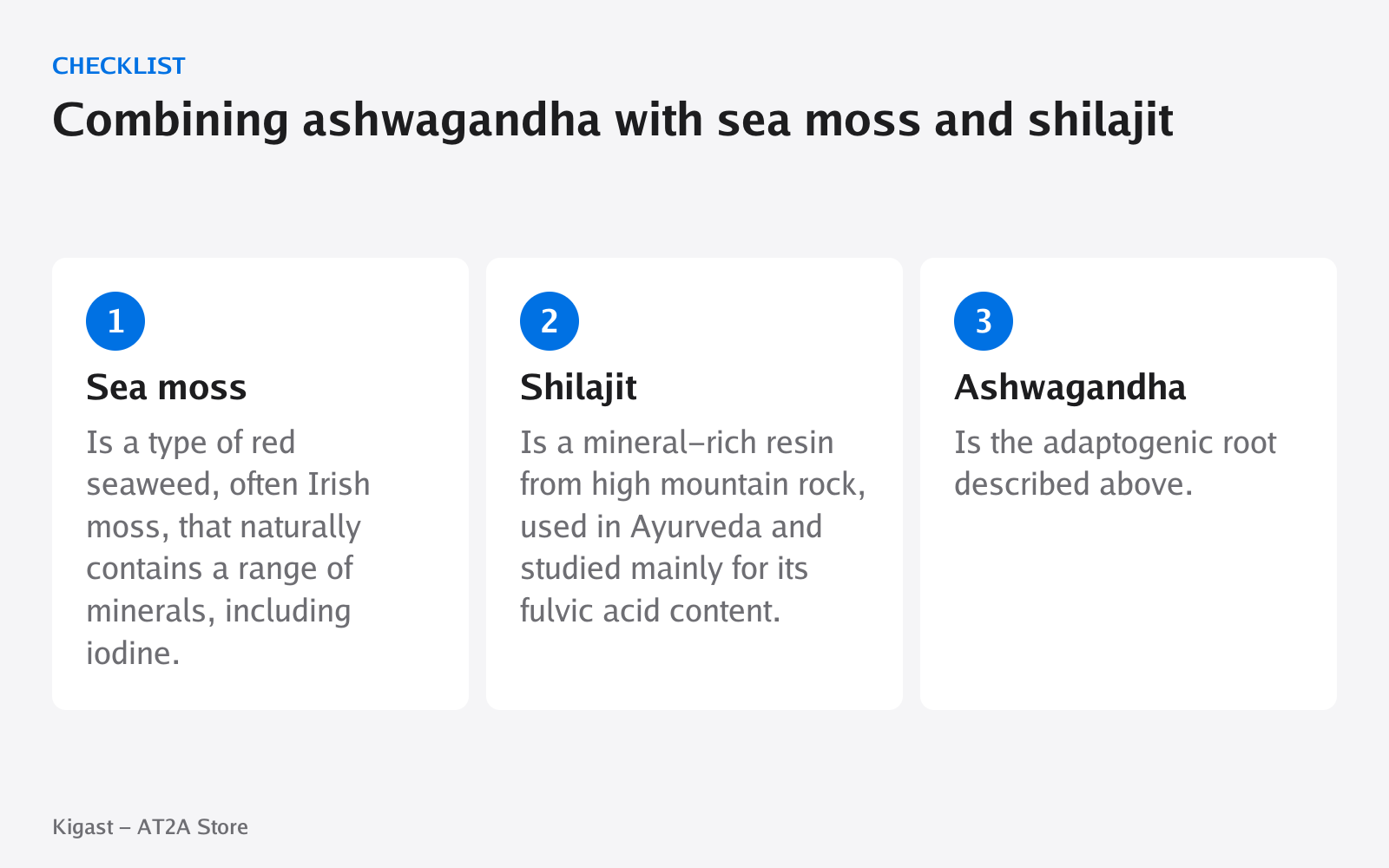
- Sea moss is a red seaweed. Seaweeds contain iodine in very different amounts: commercially sold seaweeds range from 16 to 2,984 mcg of iodine per gram.5 The adult upper limit for iodine is 1,100 mcg a day,5 which matters if you have a thyroid condition.
- Shilajit is a mineral-rich resin used in Ayurveda. Choose purified, tested products; see our shilajit guide.
- Ashwagandha is the root described above.
Plan when to take sea moss with the AT2A supplement timing tool.
Ashwagandha at AT2A
If you prefer a chewable, AT2A carries Cured Ashwagandha Gummies. Check the Supplement Facts panel for the extract and amount per gummy, and follow the label serving.
The ORANIC EXTRACT 3-in-1 Wellness Gummies combine shilajit, sea moss and ashwagandha in each gummy, sweetened with organic manuka honey. There are 30 gummies per container, and the label states they are third-party lab tested. Because they contain sea moss, count them toward your iodine and talk to your doctor first if you have a thyroid condition.

Frequently asked questions
How long does ashwagandha take to work?
Trials ran for 6 to 12 weeks. In the sleep review, benefits were larger when people took it for 8 weeks or longer.
Can I take ashwagandha every day?
Trials gave it daily, and it may be safe for up to about 3 months. Long-term safety is not known, so check with your doctor about longer use.
Do ashwagandha gummies make you sleepy?
Some people feel drowsy. Avoid combining it with alcohol, sedatives or sleep aids unless your doctor says it is fine, and see how it affects you before driving.
Is ashwagandha safe during pregnancy?
No. Ashwagandha should be avoided during pregnancy and not used while breastfeeding.
Can I take ashwagandha with thyroid medication?
Not without your doctor. Ashwagandha may interact with thyroid hormone, and it is not recommended for people with thyroid disorders. Blends with sea moss also add iodine.
Sources
- Ashwagandha: Is it helpful for stress, anxiety, or sleep? Fact Sheet for Health Professionals, NIH Office of Dietary Supplements (accessed 2026-10-13)
- Akhgarjand C et al. Does ashwagandha supplementation have a beneficial effect on the management of anxiety and stress? A systematic review and meta-analysis of randomized controlled trials. Phytotherapy Research, 2022, PubMed (accessed 2026-10-13)
- Cheah KL et al. Effect of ashwagandha (Withania somnifera) extract on sleep: a systematic review and meta-analysis. PLoS One, 2021, PubMed Central (accessed 2026-10-13)
- Ashwagandha: Usefulness and Safety, NIH National Center for Complementary and Integrative Health (accessed 2026-10-13)
- Iodine: Fact Sheet for Health Professionals, NIH Office of Dietary Supplements (accessed 2026-10-13)
These statements have not been evaluated by the Food and Drug Administration. This product is not intended to diagnose, treat, cure, or prevent any disease.