
How Far Apart Should I Take Iron and Calcium?
By AT2A7 min read
For the question 'how far apart should I take iron and calcium?', the short answer is to put a few hours between them and avoid taking them in the same sitting. Iron and calcium are both important minerals, but they can compete when they arrive together. A simple routine is iron with a meal and calcium with a different meal.
Timing is not the only factor. The form of iron, the form of calcium, the amount in the product, and the food in your stomach all change how much you absorb. A gap helps, but it does not make a poor label choice into a good one. Read the label before you build a schedule.
If you take a multivitamin or a combined mineral product, check whether it lists iron and calcium together. Some products do. In that case, talk with a pharmacist or clinician about whether the product fits your needs and how to space it from other mineral supplements.
How far apart should I take iron and calcium?
A practical answer is to separate iron and calcium by a few hours. Use different meals or different supplement times. Do not swallow an iron tablet with a glass of milk or a calcium supplement. Do not take a calcium tablet with an iron-rich meal if you can move it.
The exact gap depends on your routine. If your label gives directions, follow them. If you take iron on an empty stomach, take calcium later with food. If iron upsets your stomach, take it with a meal that is low in calcium, then take calcium at another meal.
Consistency matters more than perfect timing. Pick times you can repeat. A schedule that you follow is better than a strict plan that you abandon. Keep the gap wide enough that the minerals are not in the same swallow or the same meal.
Why timing matters for iron and calcium
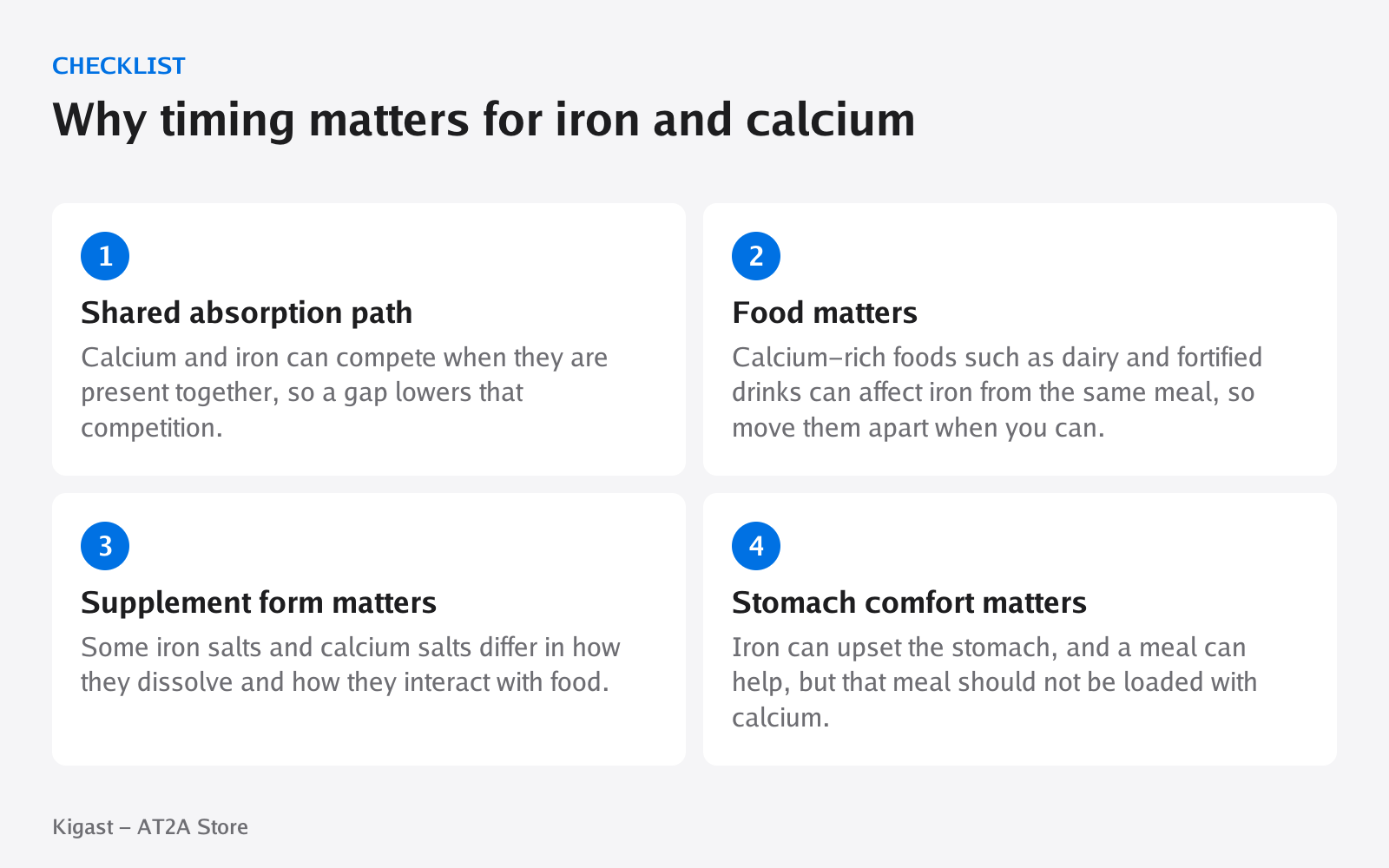
- Shared absorption path: Calcium and iron can compete when they are present together, so a gap lowers that competition.
- Food matters: Calcium-rich foods such as dairy and fortified drinks can affect iron from the same meal, so move them apart when you can.
- Supplement form matters: Some iron salts and calcium salts differ in how they dissolve and how they interact with food.
- Stomach comfort matters: Iron can upset the stomach, and a meal can help, but that meal should not be loaded with calcium.
How iron forms differ
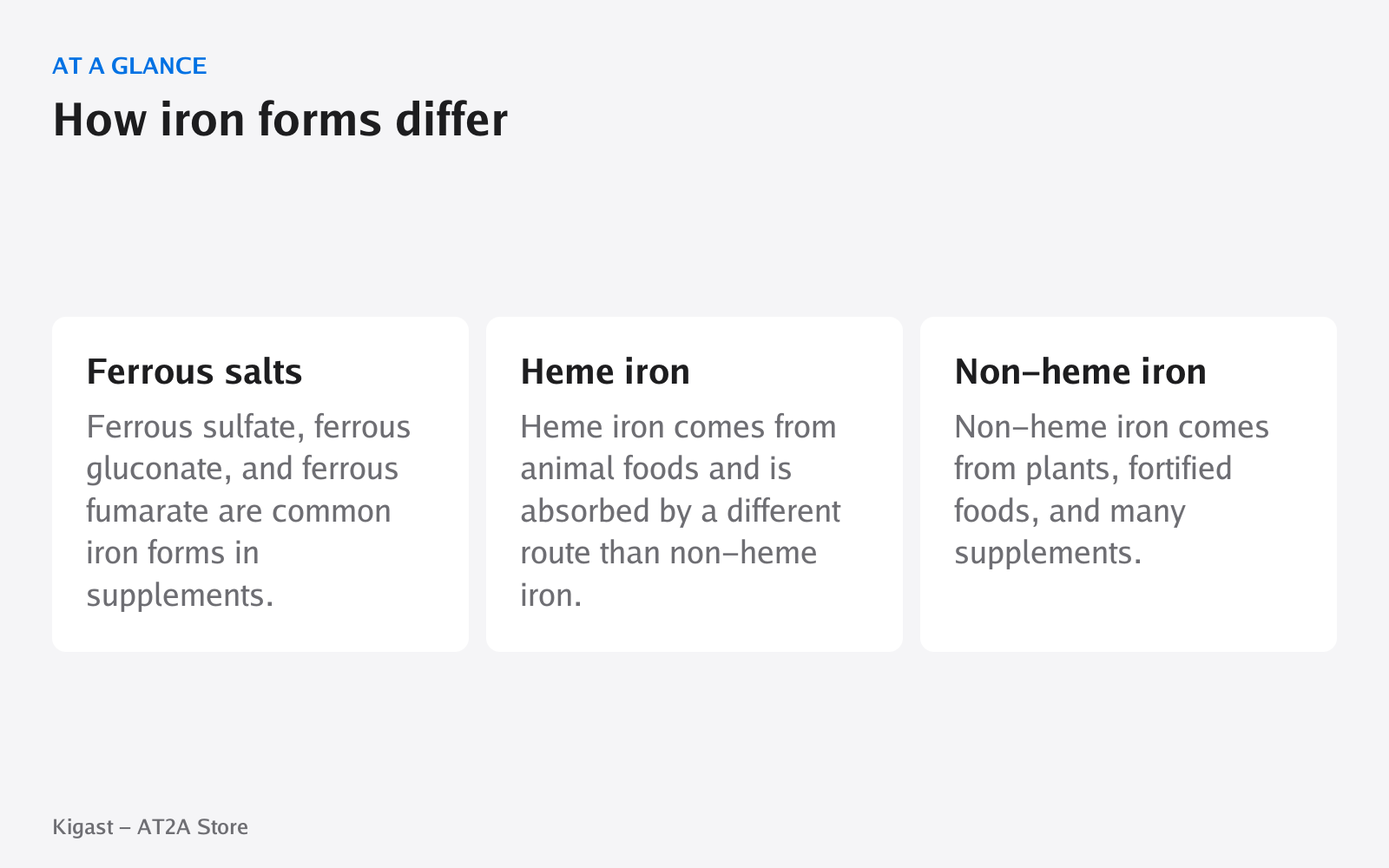
Ferrous salts
Ferrous sulfate, ferrous gluconate, and ferrous fumarate are common iron forms in supplements. They are often labeled by the amount of elemental iron, not the total salt weight. Check the label for the elemental iron amount and for directions about food.
Heme iron
Heme iron comes from animal foods and is absorbed by a different route than non-heme iron. It is less affected by calcium and by other meal factors. Still, if you use a heme iron supplement, read its label and keep it separate from calcium unless your clinician says otherwise.
Non-heme iron
Non-heme iron comes from plants, fortified foods, and many supplements. It is more sensitive to calcium, tea, coffee, and phytates. Vitamin C can support absorption, so pair non-heme iron with a vitamin C-rich food when possible. Keep calcium at another time.
How calcium forms differ
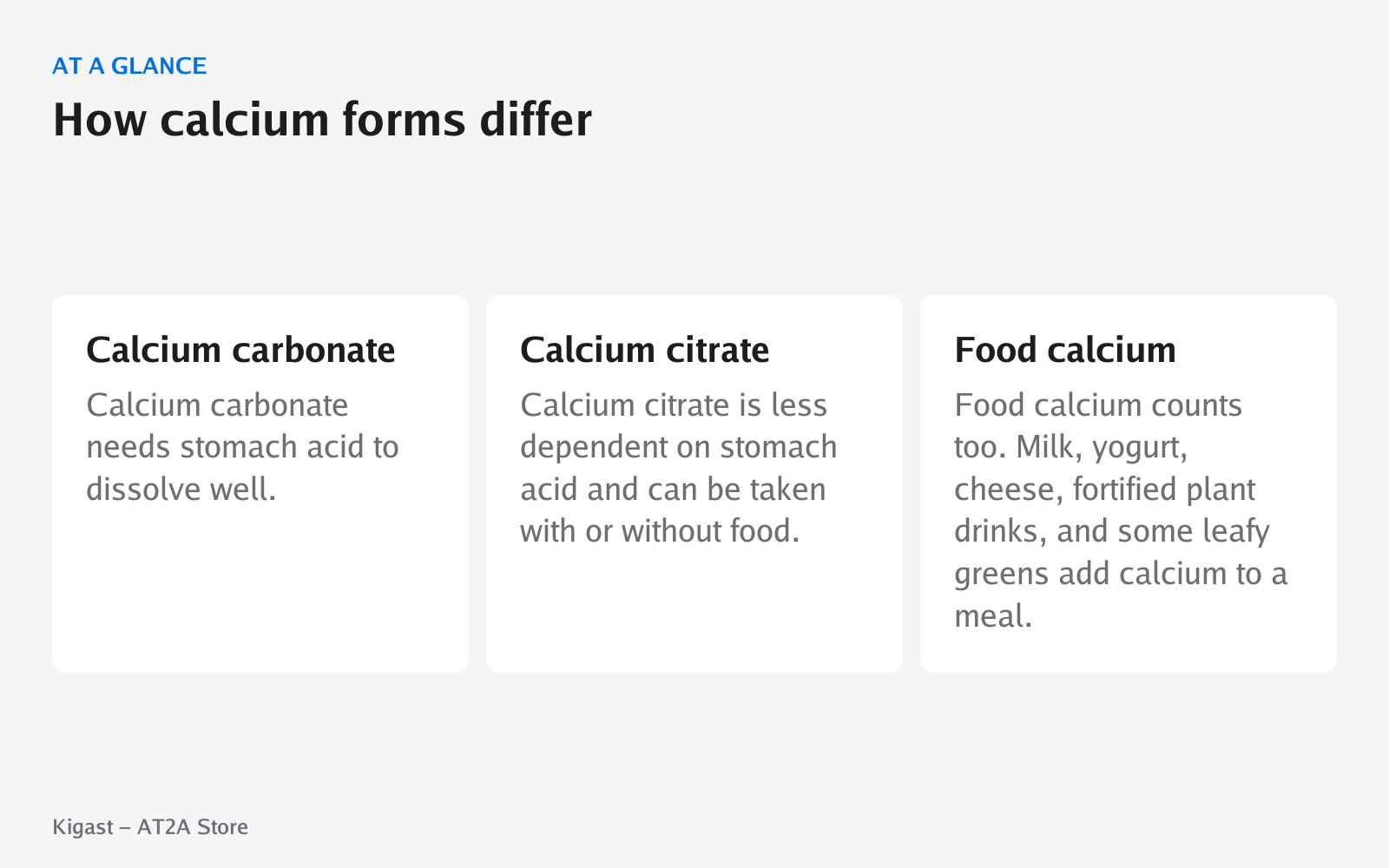
Calcium carbonate
Calcium carbonate needs stomach acid to dissolve well. It is often taken with food. That food may contain iron, so check the meal. If you use calcium carbonate, place it away from your iron time and follow the label.
Calcium citrate
Calcium citrate is less dependent on stomach acid and can be taken with or without food. It is still calcium, so it can still compete with iron. Do not assume that a citrate form removes the need for a gap.
Food calcium
Food calcium counts too. Milk, yogurt, cheese, fortified plant drinks, and some leafy greens add calcium to a meal. If you take iron with breakfast, keep the calcium drink for a later snack or meal. Read food labels for added calcium.
How to read a label for iron and calcium
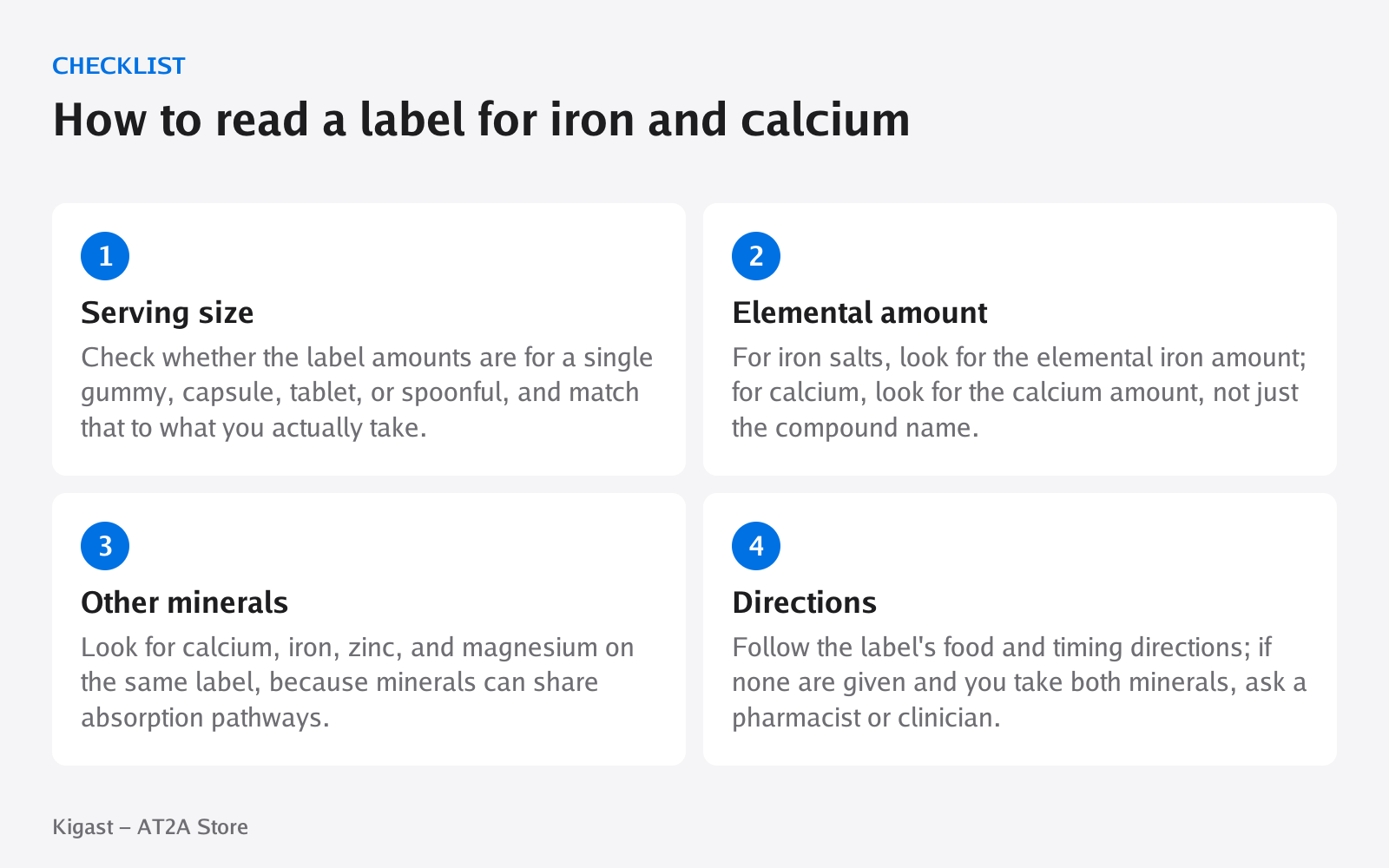
- Serving size: Check whether the label amounts are for a single gummy, capsule, tablet, or spoonful, and match that to what you actually take.
- Elemental amount: For iron salts, look for the elemental iron amount; for calcium, look for the calcium amount, not just the compound name.
- Other minerals: Look for calcium, iron, zinc, and magnesium on the same label, because minerals can share absorption pathways.
- Directions: Follow the label's food and timing directions; if none are given and you take both minerals, ask a pharmacist or clinician.
Fitting the gap into a daily routine
Start with your meals. If you take iron in the morning, keep milk, yogurt, and calcium-fortified drinks out of that meal. Take calcium with a later meal or snack. If you take calcium in the morning, move iron to a different meal. The goal is separate swallows and separate meal contexts.
Set a repeatable order. Many people find it easier to take iron with a meal that suits their stomach, then take calcium with a later meal. If you take other minerals, add them to the same review. Write the times on your phone or on the product box so you do not have to remember.
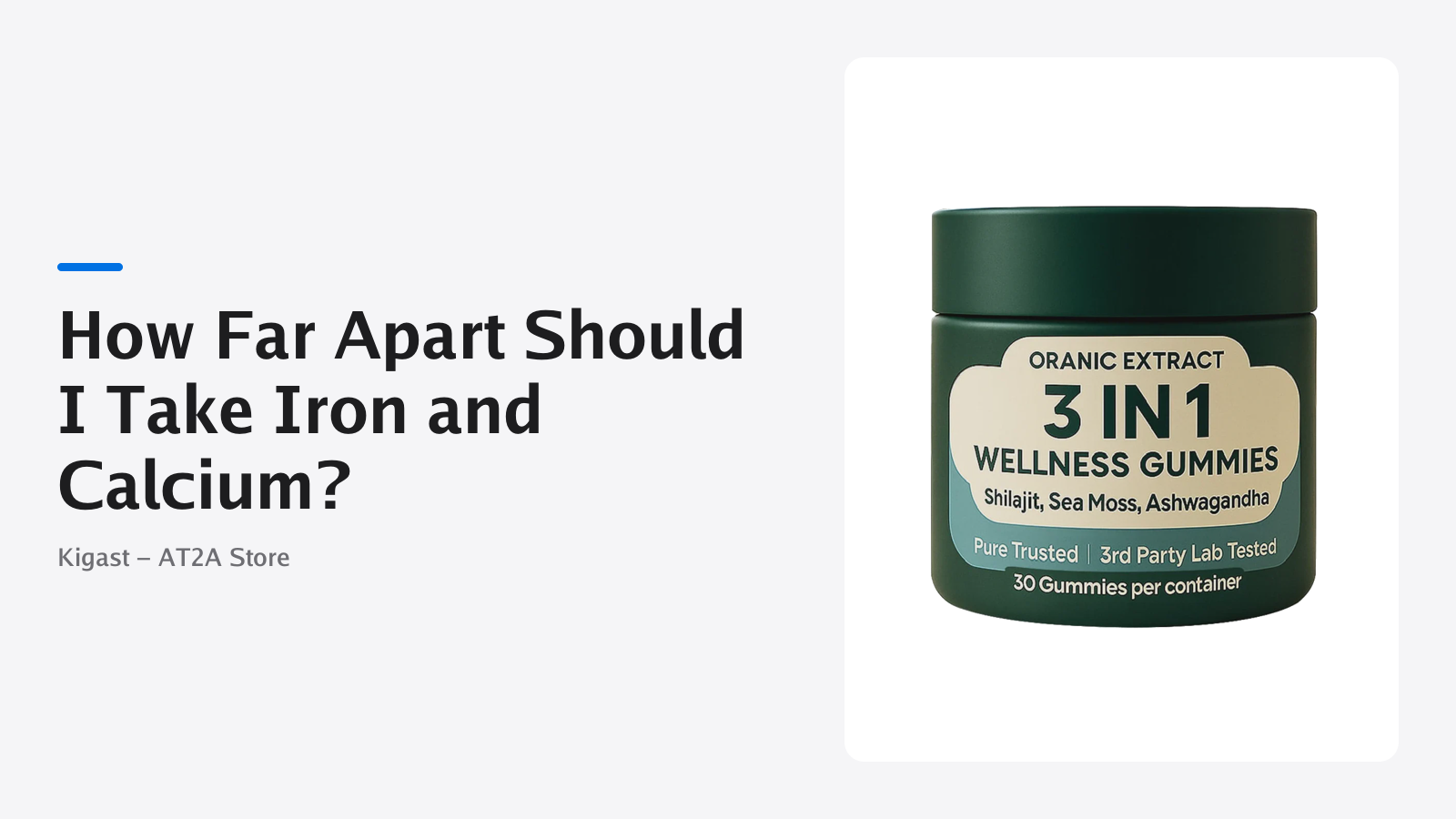
If your routine includes a gummy, read that label too. ORANIC EXTRACT® 3-in-1 Wellness Gummies list shilajit, sea moss, ashwagandha, and lion's mane, with 30 gummies per container. The label facts do not list iron or calcium; check every label for minerals and keep each product in its own slot.

CEMEND Natural Testosterone Support is a vegetarian capsule supplement with tongkat ali, fenugreek, shilajit, taurine, zinc, boron, and vitamins D, K1 and K2; each tube lists 150 capsules. Zinc is another mineral that can compete with iron, so if you take it, review the timing with a pharmacist or clinician. Do not stack mineral products without reading the full label.

Who should check with a doctor first
- People with a health condition: If you are under care for a health condition or take prescription medicine, ask before adding iron or calcium.
- People who are pregnant or breastfeeding: Mineral needs and safe amounts can differ, so use the plan your clinician gives you.
- People with kidney concerns: Calcium handling can matter, so do not self-adjust calcium products without advice.
- People with a history of iron problems: If you have been told to limit iron or have had iron-related care, confirm timing and amount with your clinician.
Frequently asked questions
Can I take iron and calcium at the same meal?
It is better to separate them. Calcium can compete with iron in the same meal, especially with non-heme iron. If you cannot avoid it, keep the calcium portion small and follow your label or clinician's plan.
What if my multivitamin lists both iron and calcium?
Read the label and ask a pharmacist or clinician. A combined product may be intended as a single supplement, but it can still affect how you time other mineral products. Do not add extra iron or calcium without advice.
Is calcium citrate easier to take with iron?
Calcium citrate is less dependent on stomach acid, but it is still calcium and can still compete with iron. Keep a gap when you can, and follow the product label for food directions.
Does food calcium count when I plan the gap?
Yes. Milk, yogurt, cheese, fortified drinks, and some greens add calcium to a meal. If you take iron with that meal, move the calcium-rich food to another time or take iron at a different meal.
Should I space zinc from iron too?
Zinc is another mineral that can share absorption pathways with iron. If you take a product that lists zinc, such as CEMEND, review the timing with a pharmacist or clinician and read the label.
Sources
- Iron - Health Professional Fact Sheet — Office of Dietary Supplements, National Institutes of Health
- Calcium - Health Professional Fact Sheet — Office of Dietary Supplements, National Institutes of Health
- Zinc - Health Professional Fact Sheet — Office of Dietary Supplements, National Institutes of Health
A note on these statements
These statements have not been evaluated by the Food and Drug Administration. This product is not intended to diagnose, treat, cure, or prevent any disease. Talk to your doctor or pharmacist before starting a supplement, especially if you are pregnant, nursing, take medication or have a medical condition.