
How to Use Silk Body Oil: A Simple, Practical Guide
By AT2A8 min read
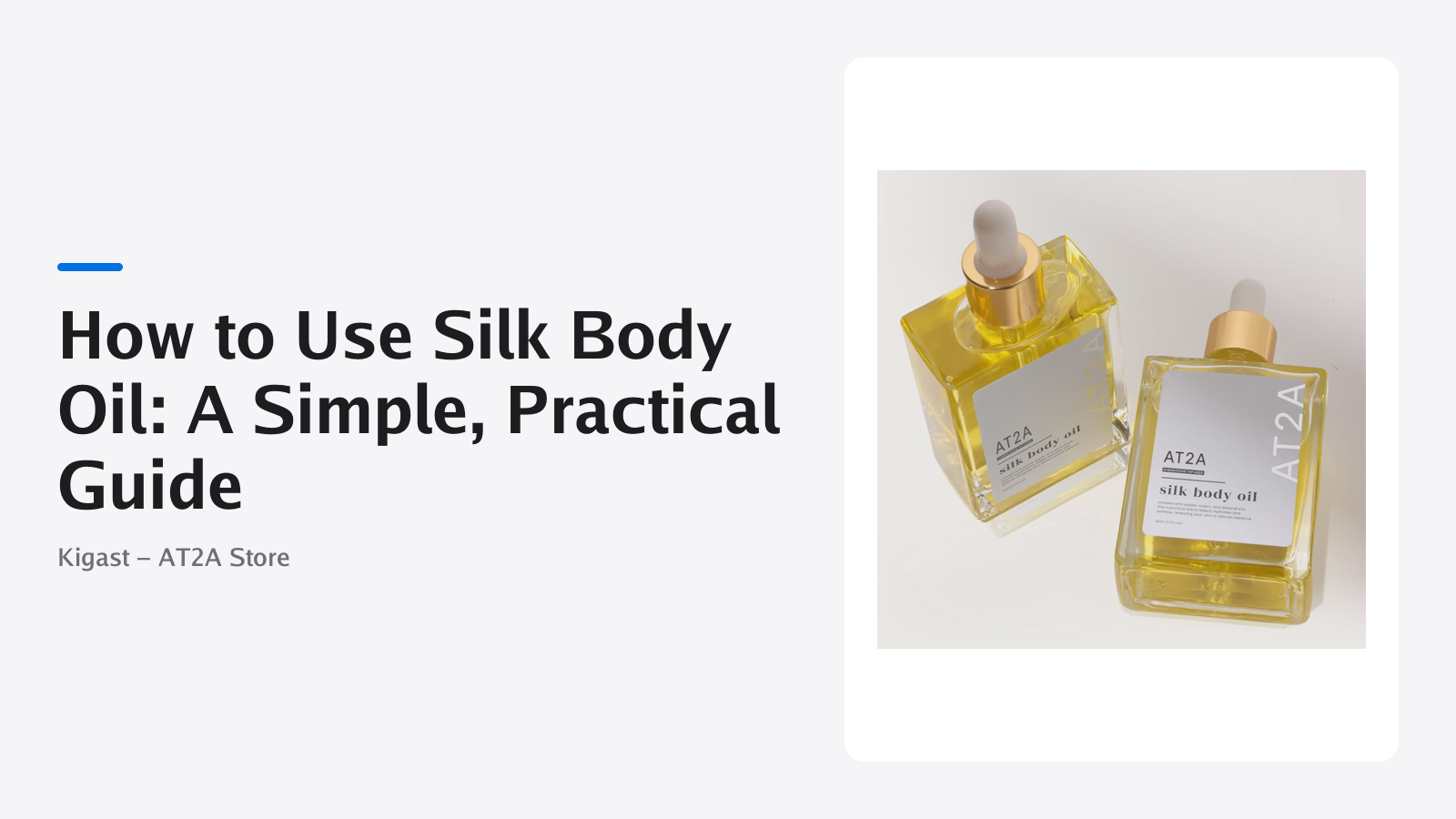
Most people who say they dislike body oil have only tried it on dry skin, in a hurry, with too much product. It goes on slick, sits on top, and ends up on a towel. The fix is not a different bottle so much as a different order of steps, which is why how to use silk body oil matters as much as what is inside it.
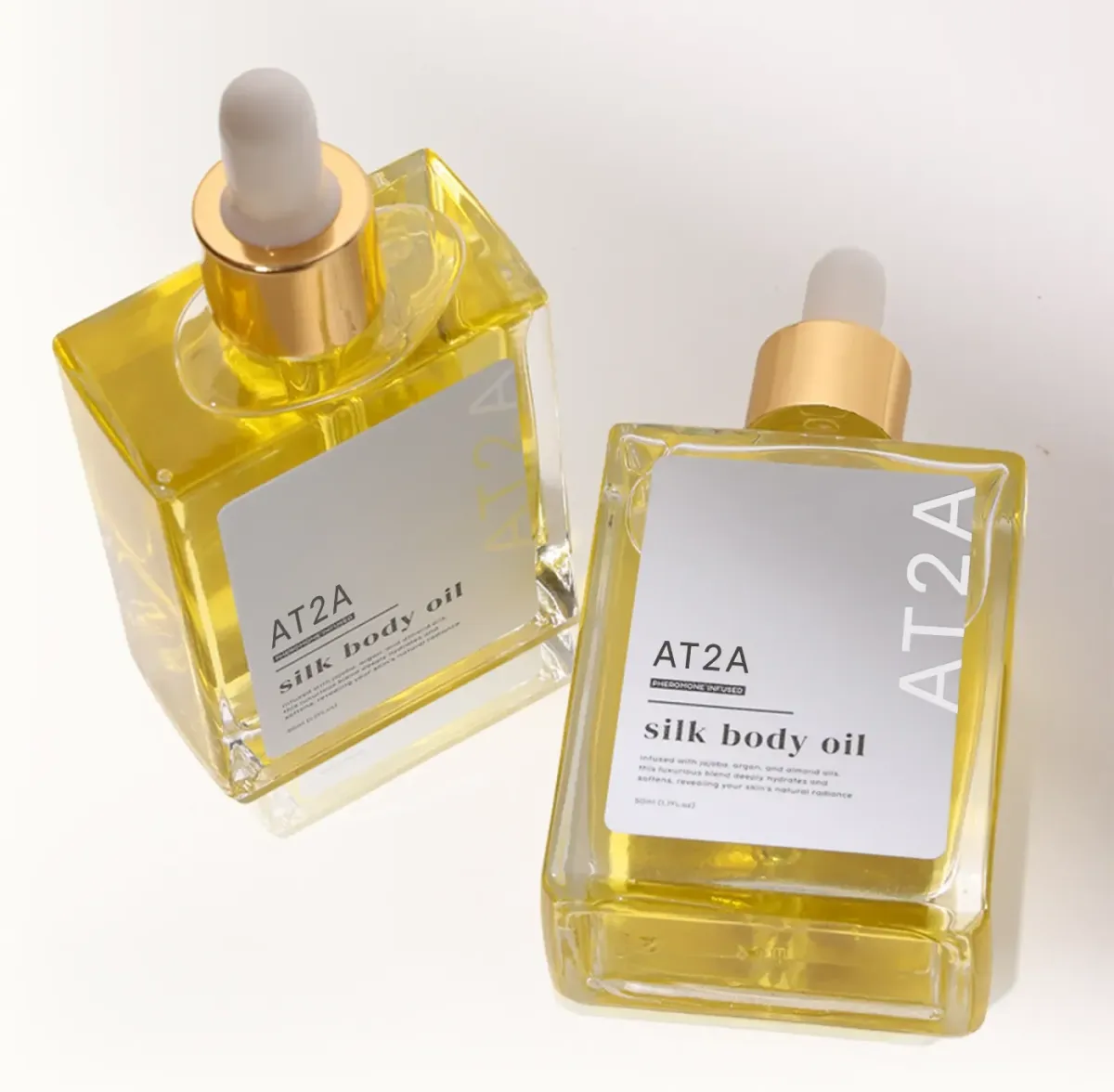
The product itself is simple. Silk Body Oil is described on its label as a pheromone-infused body oil made with jojoba, argan and almond oils that hydrates and softens skin, in a 50 mL (1.7 fl oz) glass dropper bottle. A second version, Silk Body Oil, uses the same oils and is described as leaving a warm, vanilla-forward scent.
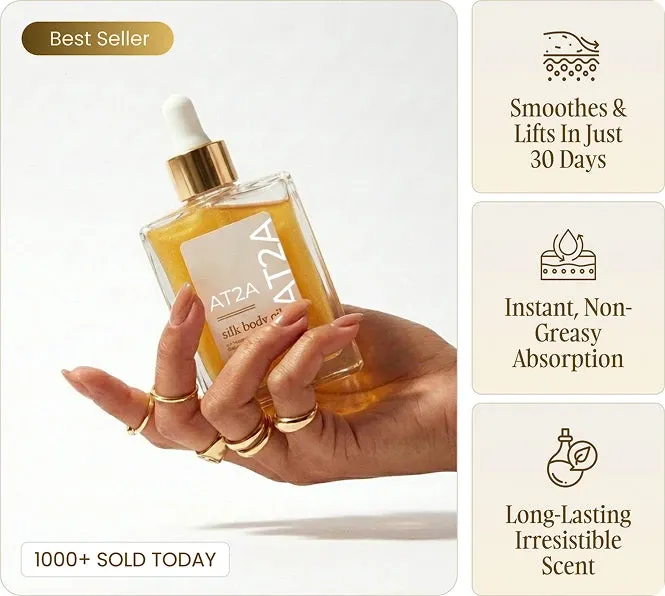
Oil is not a stronger version of lotion. It is a finishing step: a thin layer that sits on the surface and slows the water already in your skin from escaping. That is why dry skin, cold hands and a rushed morning can make a good oil feel like a bad one.
What is actually inside the bottle
Jojoba, argan and almond oils do different jobs. Jojoba is technically a liquid wax, and its structure sits close to the sebum your skin produces, which is why it feels familiar rather than heavy. Argan oil is pressed from the fruit of the argan tree and carries fatty acids and vitamin E. Almond oil is lighter and spreads slowly, with a faint scent of its own.
Blended, they give a texture thin enough to cover a whole limb but rich enough to leave a soft finish. Plant oils like these also carry small amounts of vitamin E, which is one reason they keep well in dark glass.
One word on the front label deserves honesty. Pheromone infused is a brand description, not a standard ingredient with a fixed meaning, so read it the way you would read any fragrance in a cosmetic. If scented products tend to make your skin react, test a small area rather than covering both legs.
How to use silk body oil, step by step
The order below is what makes the biggest difference.
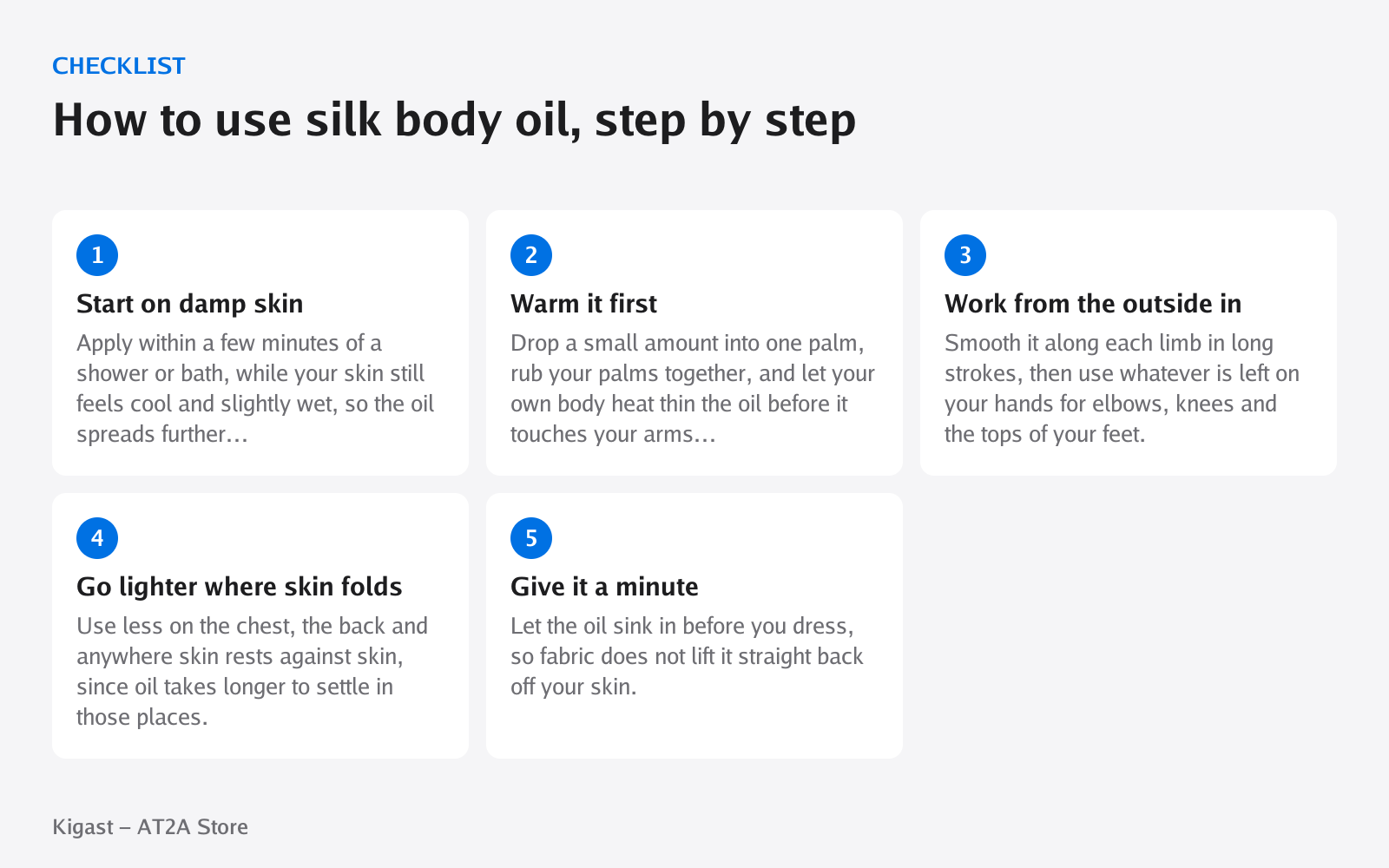
- Start on damp skin: Apply within a few minutes of a shower or bath, while your skin still feels cool and slightly wet, so the oil spreads further and holds on to the water already sitting there.
- Warm it first: Drop a small amount into one palm, rub your palms together, and let your own body heat thin the oil before it touches your arms or legs.
- Work from the outside in: Smooth it along each limb in long strokes, then use whatever is left on your hands for elbows, knees and the tops of your feet.
- Go lighter where skin folds: Use less on the chest, the back and anywhere skin rests against skin, since oil takes longer to settle in those places.
- Give it a minute: Let the oil sink in before you dress, so fabric does not lift it straight back off your skin.
Handle the dropper with a little care. Hold it above your palm rather than letting the glass touch your skin, and wipe the outside with a tissue before it goes back in the bottle. Water in the bottle is the quickest way to make an oil smell stale.
Where it fits in your routine
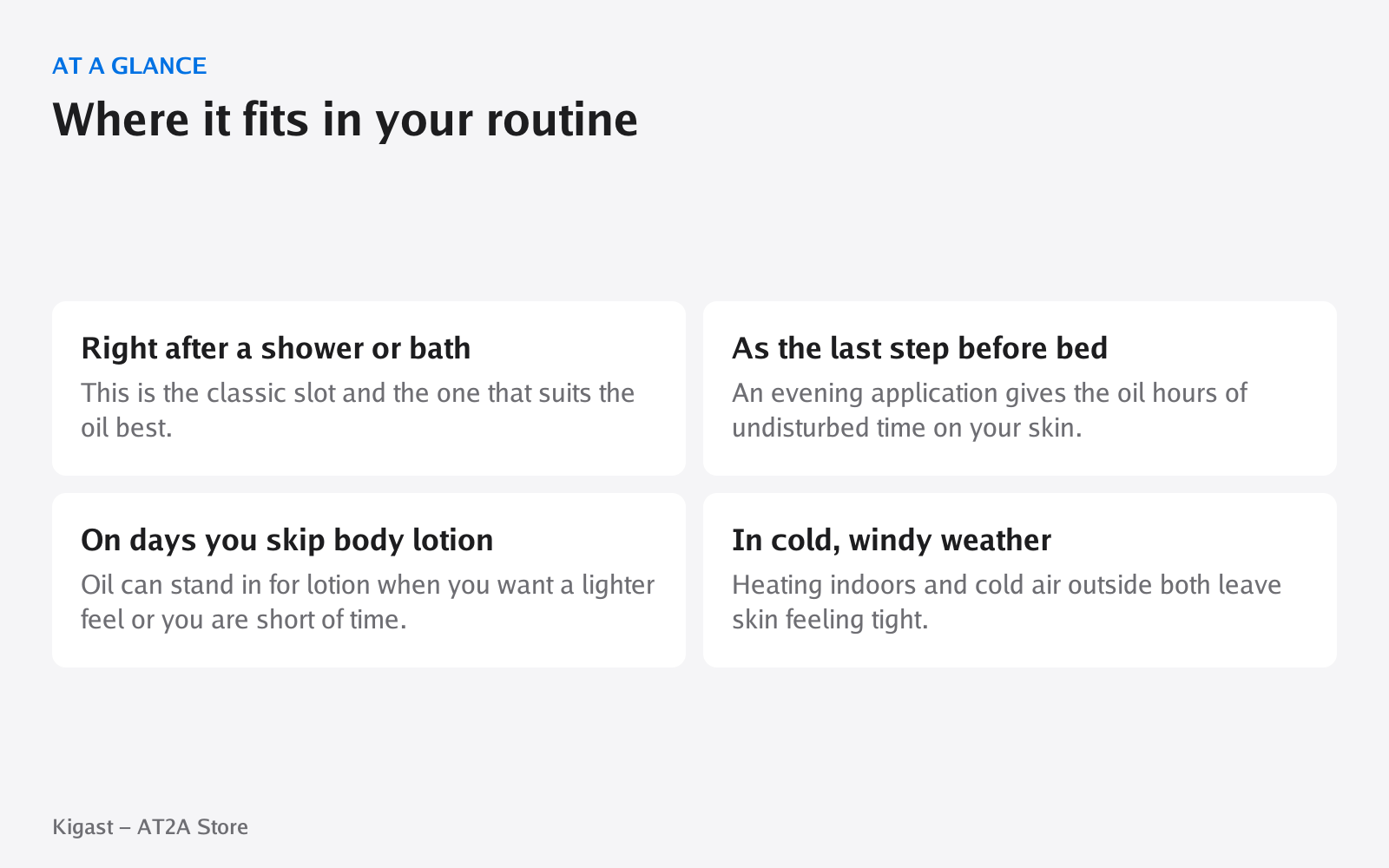
Right after a shower or bath
This is the classic slot and the one that suits the oil best. Towel off lightly, leave your skin a little damp, and apply before you do anything else. If you use a body lotion as well, put the lotion on first and the oil over the top, thinnest to thickest.
As the last step before bed
An evening application gives the oil hours of undisturbed time on your skin. It also keeps a scent close to you rather than competing with everything else in the day. Wear something soft and loose so the oil stays on your skin and not on a waistband.
On days you skip body lotion
Oil can stand in for lotion when you want a lighter feel or you are short of time. It will not add water to your skin the way a lotion does; it slows the water already there from leaving. That is why the damp-skin step matters even more when the oil is the only thing you use.
In cold, windy weather
Heating indoors and cold air outside both leave skin feeling tight. A thin layer on the shins, forearms and hands before you go out is a practical habit, and it is far easier to add a second thin layer later than to fix a heavy one.
Getting the amount right
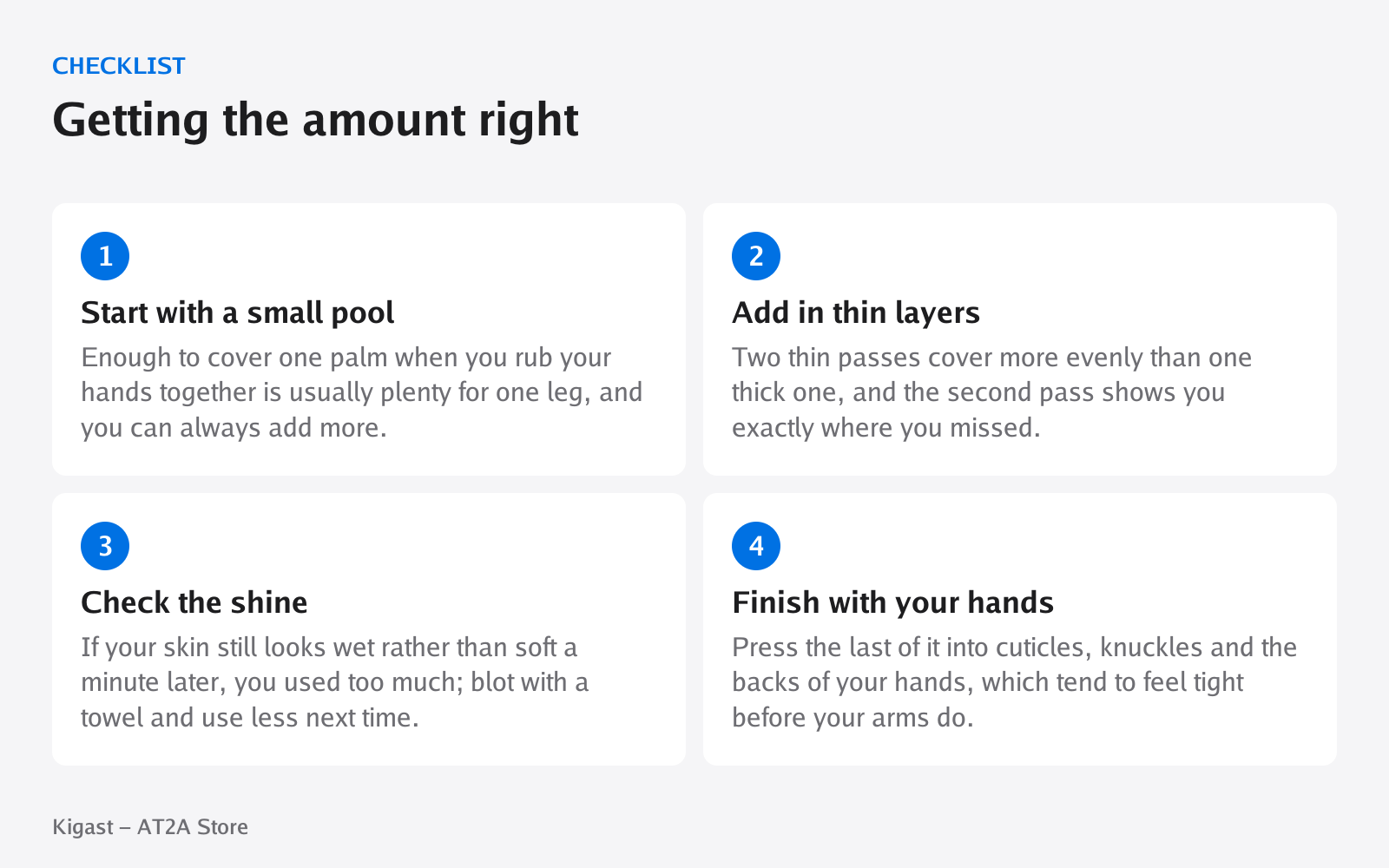
- Start with a small pool: Enough to cover one palm when you rub your hands together is usually plenty for one leg, and you can always add more.
- Add in thin layers: Two thin passes cover more evenly than one thick one, and the second pass shows you exactly where you missed.
- Check the shine: If your skin still looks wet rather than soft a minute later, you used too much; blot with a towel and use less next time.
- Finish with your hands: Press the last of it into cuticles, knuckles and the backs of your hands, which tend to feel tight before your arms do.
A dropper bottle makes it easy to over-pour, because drops feel smaller than they are. Tip the bottle gently and count the drops into your palm instead of squeezing. You will use noticeably less over a month without trying.
Reading the label before you buy
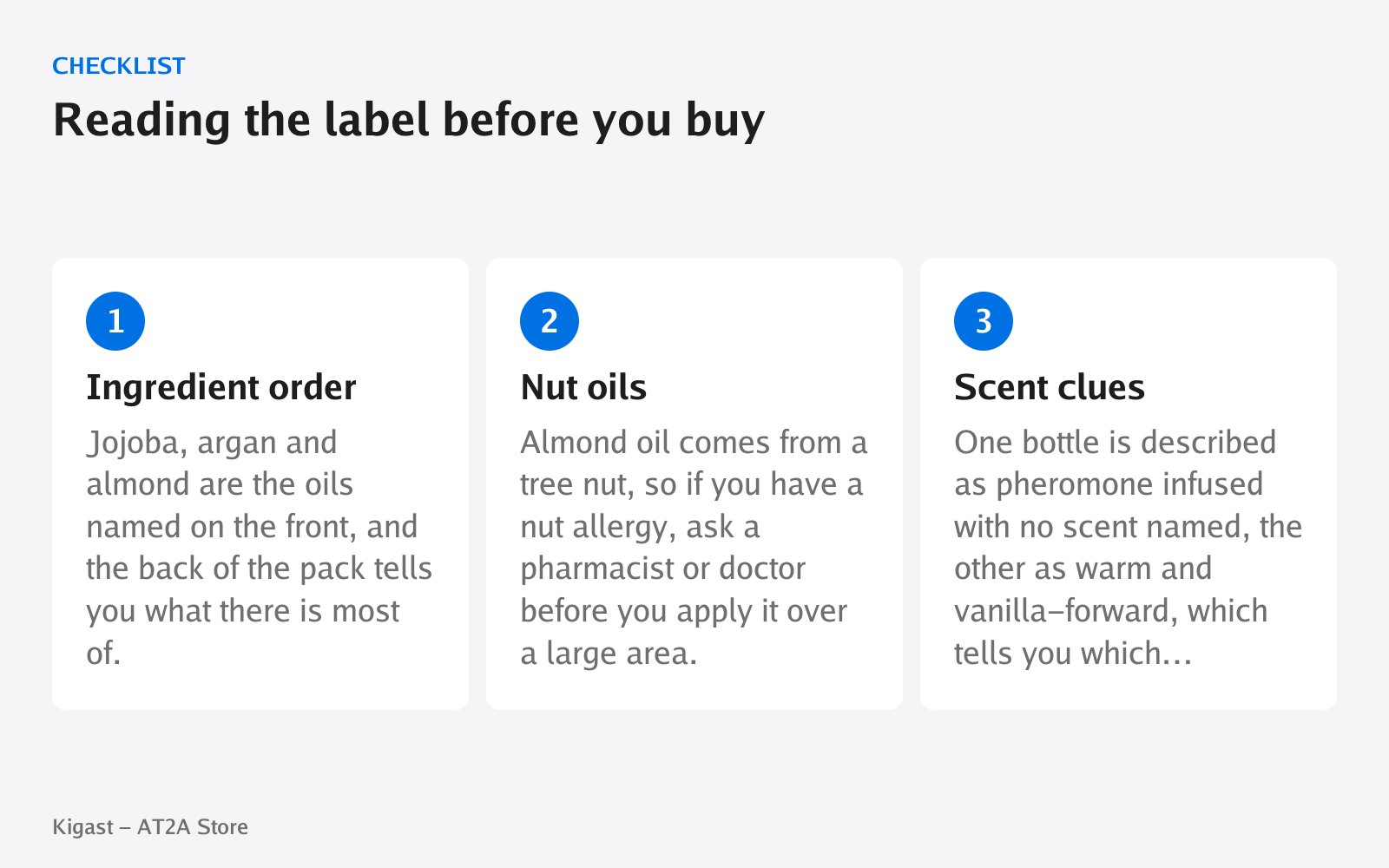
- Ingredient order: Jojoba, argan and almond are the oils named on the front, and the back of the pack tells you what there is most of.
- Nut oils: Almond oil comes from a tree nut, so if you have a nut allergy, ask a pharmacist or doctor before you apply it over a large area.
- Scent clues: One bottle is described as pheromone infused with no scent named, the other as warm and vanilla-forward, which tells you which is the quieter of the two.
Whichever bottle you choose, do one small test first. Apply a little to the inner forearm, leave it, and check the area later before you use it more widely. That is a sensible habit with any new cosmetic, scented or not.
Choosing between the two bottles
Both bottles carry the same name and the same oil base: jojoba, argan and almond, blended to hydrate and soften skin. The difference the labels make clear is scent. The first is described as pheromone infused without naming a note; the second is described as leaving a warm, vanilla-forward scent.
If you like a scent you can notice without leaning in, start with the vanilla version. If you would rather your body product stay quiet under perfume, choose the other. The application steps are identical either way.
When to check with a doctor or pharmacist first
Body oil is a cosmetic, not a medicine, and most people can use it without a second thought. There are still a few situations where a quick question is worth it, and they are easy to spot.
Ask first if you have reacted to a scented cosmetic before, if you have a known nut allergy and want to use it over a large area, or if you are already following a skin plan from a doctor or pharmacist and are unsure how a new oil fits in. The same goes if your skin is currently sore, cracked or broken, since oil on broken skin stings and does not help it. During pregnancy and breastfeeding, scent preferences and skin sensitivity can both change, so a small test area is a sensible first step.
Storing it so it stays fresh
Plant oils slowly change as they meet air and light. Keep the bottle closed, stand it in a cupboard rather than on a sunny windowsill, and screw the dropper down properly after each use. Glass helps, but it does not make the oil last forever.
Smell is your best check. If the oil develops a sharp, crayon-like or sour note that was not there when you opened it, it has turned and belongs in the bin. Keep the bottle out of the shower itself; steam and splashes are the usual reason a body oil goes off early.
Frequently asked questions
Should silk body oil go on wet or dry skin?
Damp skin. Apply it within a few minutes of a shower or bath while your skin is still slightly wet, then let it settle. On completely dry skin the oil drags, needs more product, and sits on the surface for longer.
Can you use silk body oil on your face?
The label describes it as a body oil, and facial skin is thinner and more reactive than the skin on your legs. If you want to try it, use a very small amount on one area first, keep it away from your eyes, and stop if it feels tight or warm.
How often can you use it?
As often as your skin feels comfortable with, which for most people means after a shower or before bed. In warm weather you may want it less often, or only on your legs and hands.
Why does it feel greasy on me?
Almost always because of the amount or the timing. Use less, apply to damp skin, and give it a minute before dressing. A second thin layer later behaves better than one heavy one at the start.
How long does a 50 mL (1.7 fl oz) bottle last?
That depends on how much you use and how much of your body you cover. Used as a thin layer on damp skin a few times a week, the bottle goes further than most people expect; used daily all over, it empties faster.
Sources
- Vitamin E - Consumer — Office of Dietary Supplements
- Aromatherapy — National Center for Complementary and Integrative Health
- Skin, Hair, and Nails — MedlinePlus