
Maca Root vs Ashwagandha for Energy: Which One Fits Your Routine?
By AT2A7 min read
When you're looking for natural ways to support energy, maca root and ashwagandha often come up. Both have been used for centuries, but they come from different parts of the world and are prepared in different ways. Maca is a root vegetable grown in the Andes, while ashwagandha is an herb from India. Knowing how each is used can help you decide which one might fit your daily routine.
Maca root is usually dried and ground into a powder, which can be added to smoothies or taken in capsules. Ashwagandha, on the other hand, is often found as a liquid extract or in capsule form. Some people prefer the convenience of a capsule, while others like adding maca powder to foods. The choice often comes down to personal preference and how you plan to use it each day.
It's also worth noting that both maca and ashwagandha are part of a larger group of plants sometimes called adaptogens. These are ingredients that are often taken to support the body's response to everyday stress. While the term is used widely, it's good to remember that individual results can vary, and what works for one person may not work the same way for another.
What Is Maca Root?
Maca root comes from the Lepidium meyenii plant, a cruciferous vegetable related to broccoli and cabbage. It's native to the high altitudes of the Andes Mountains in Peru, where it has been cultivated for centuries. The root is typically dried and ground into a powder, which can be added to foods or taken in capsules.
Maca is often taken to support energy and stamina. It's also used by some to support mood and overall well-being. The root is rich in fiber and contains several amino acids, which are the building blocks of proteins. It's also a source of vitamins and minerals, including vitamin C, copper, and iron.
When choosing a maca product, you might see terms like "gelatinized" or "raw." Gelatinized maca has been processed to remove starches, which can make it easier to digest. Raw maca is simply dried and ground, retaining all its natural components. Some people prefer one form over the other, depending on their digestive sensitivity.
Forms of Maca Root
Powder: The most common form, maca powder can be added to smoothies, oatmeal, or baked goods. It has a slightly nutty, earthy flavor that blends well with other ingredients.
Capsules: For those who prefer convenience, maca capsules offer a measured dose without the taste. They're easy to take on the go and fit into a daily supplement routine.
Liquid Extract: Less common but available, liquid maca extract can be added to water or juice. It's a good option if you want to avoid powders or capsules.
How Maca Is Often Used
Maca is often taken in the morning or early afternoon to support energy throughout the day. Some people add maca powder to their breakfast smoothie or oatmeal. Others take it in capsule form with their daily vitamins. The key is consistency, as it may take time to notice any effects.
It's also worth noting that maca is sometimes included in blends with other ingredients. For example, All-In-One Energy & Performance Support combines maca root with ashwagandha, fenugreek, beet root, and L-arginine in a liquid supplement. This type of blend is designed to support overall energy and stamina.
What Is Ashwagandha?
Ashwagandha, also known as Withania somnifera, is an herb from India. It's part of the nightshade family, which includes tomatoes and potatoes. The root and berries of the plant are used in traditional practices, but the root is the most common form found in supplements.
Ashwagandha is often taken to support energy and help the body manage everyday stress. It's also used to support mood and overall well-being. The root contains several compounds, including withanolides, which are believed to be the active components.
When shopping for ashwagandha, you might see terms like "root extract" or "full-spectrum." Root extract is a concentrated form, while full-spectrum means the product contains all the naturally occurring compounds in the root. Some people prefer one form over the other, depending on their needs.
Forms of Ashwagandha
Capsules: The most common form, ashwagandha capsules offer a measured dose and are easy to take. They're a good option if you prefer a straightforward supplement routine.
Liquid Extract: Ashwagandha liquid extract can be added to water or juice. It's a good choice if you want to avoid capsules or powders.
Powder: Less common but available, ashwagandha powder can be added to smoothies or teas. It has a bitter taste, so it's often mixed with other ingredients.
How Ashwagandha Is Often Used
Ashwagandha is often taken in the morning or evening, depending on personal preference. Some people take it with their daily vitamins, while others prefer to take it before bed to support relaxation. Like maca, consistency is key.
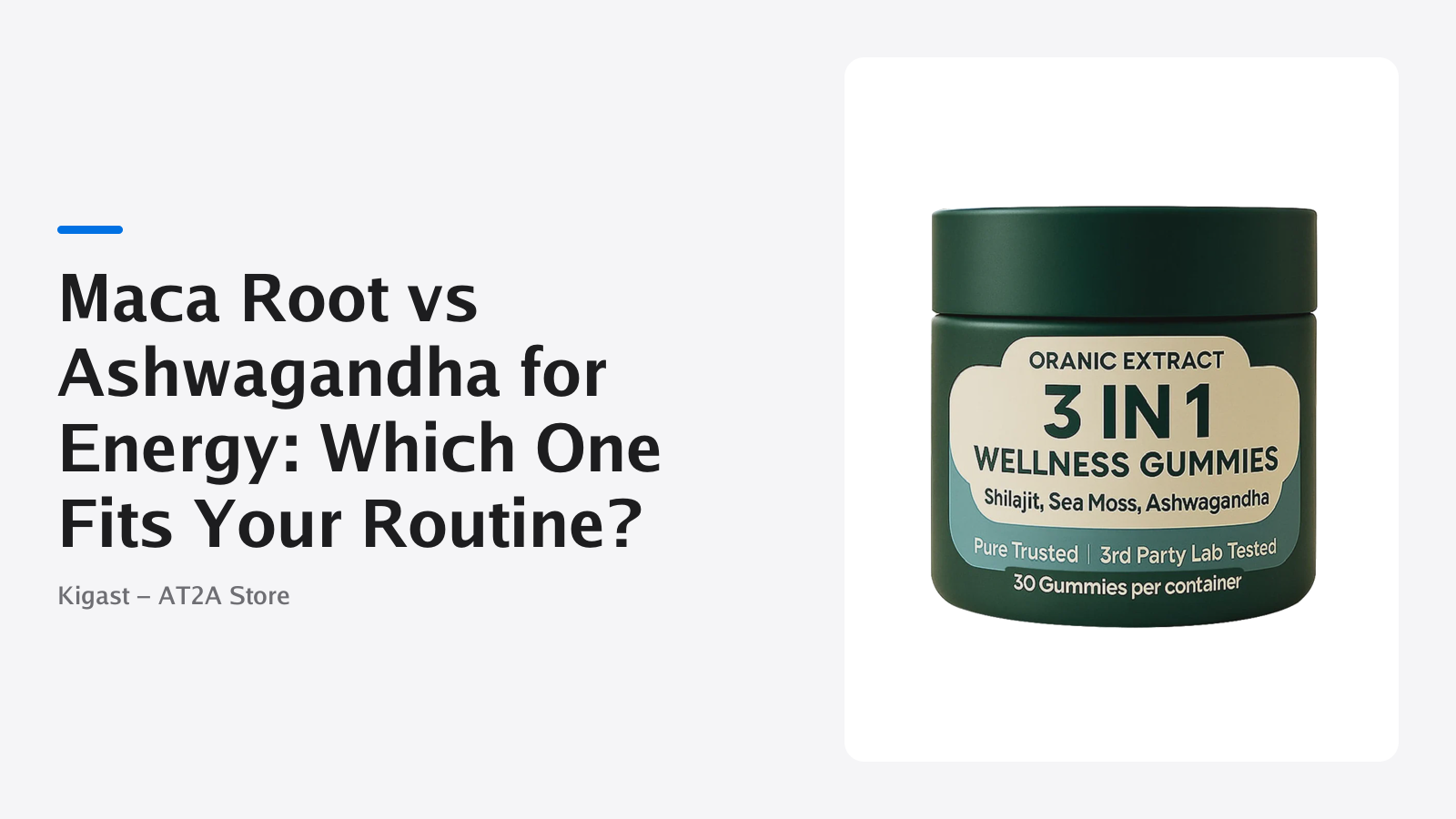
Ashwagandha is also found in blends with other ingredients. For example, ORANIC EXTRACT 3-in-1 Wellness Gummies combine ashwagandha with shilajit, sea moss, and lion's mane. This type of blend is designed to support overall well-being.

Key Differences Between Maca Root and Ashwagandha
While both maca root and ashwagandha are used to support energy, they come from different plants and have different profiles. Understanding these differences can help you decide which one fits your routine.
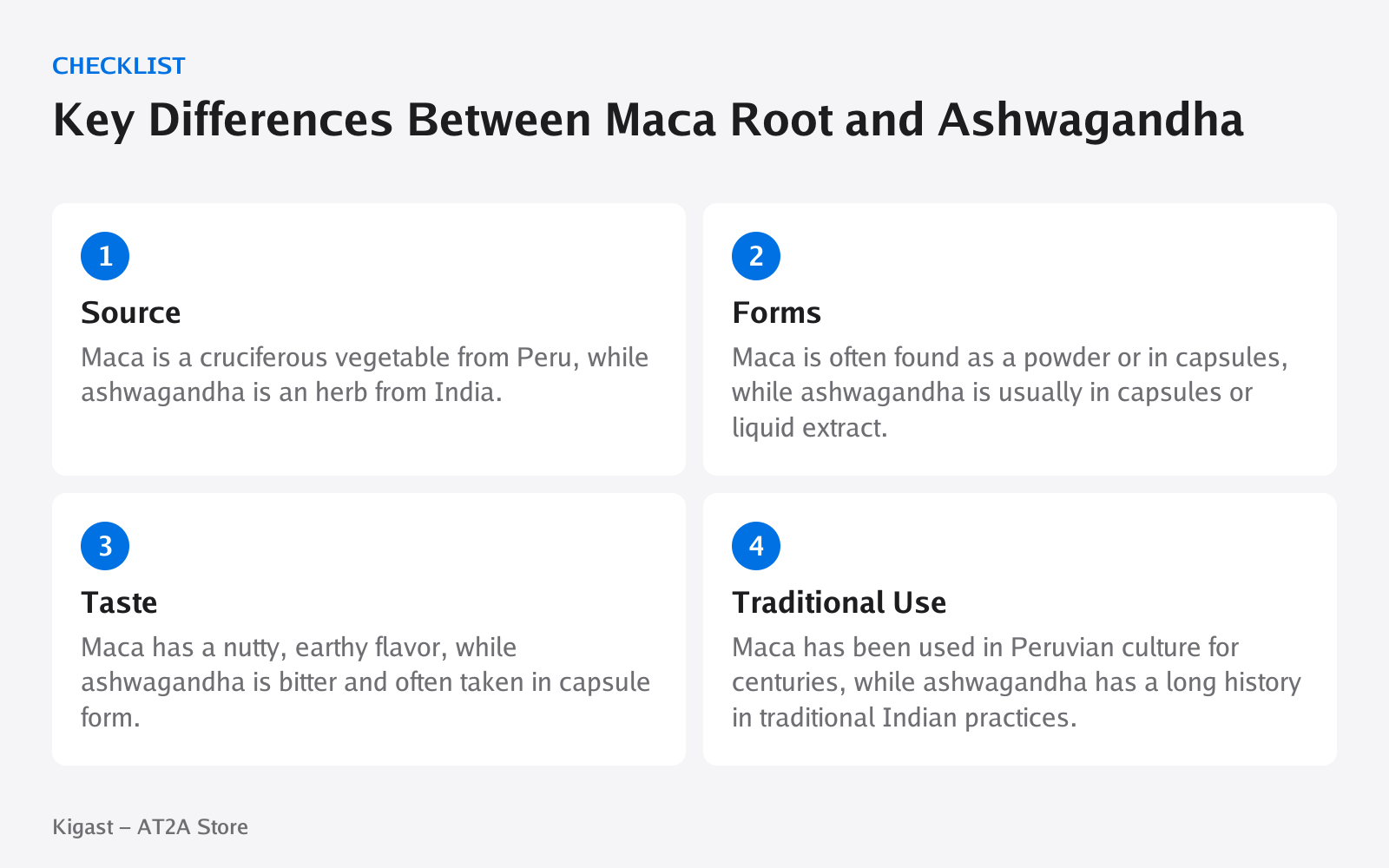
- Source: Maca is a cruciferous vegetable from Peru, while ashwagandha is an herb from India.
- Forms: Maca is often found as a powder or in capsules, while ashwagandha is usually in capsules or liquid extract.
- Taste: Maca has a nutty, earthy flavor, while ashwagandha is bitter and often taken in capsule form.
- Traditional Use: Maca has been used in Peruvian culture for centuries, while ashwagandha has a long history in traditional Indian practices.
How to Choose Between Maca and Ashwagandha
Choosing between maca and ashwagandha often comes down to personal preference and how you plan to use it. Here are a few things to consider:
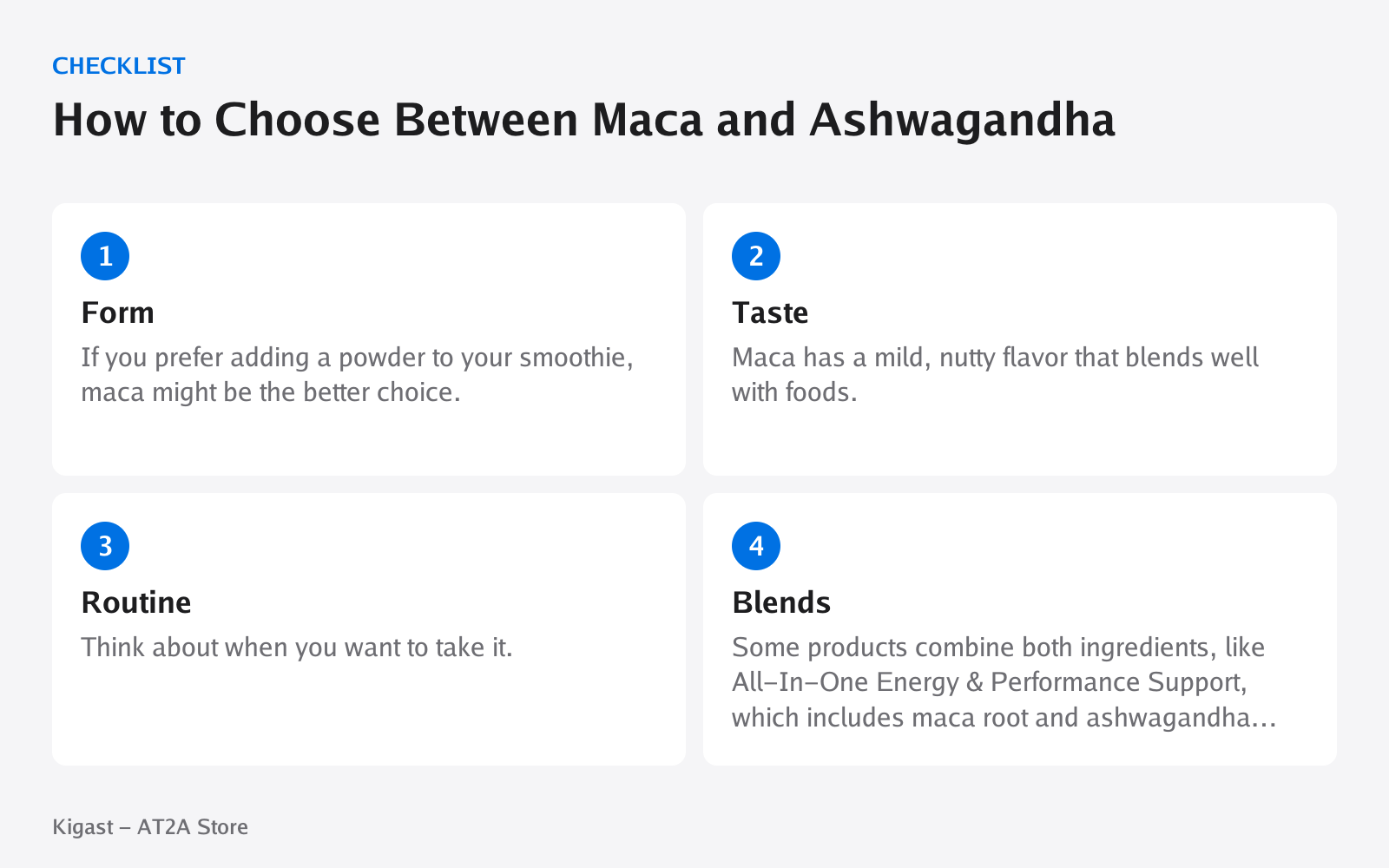
- Form: If you prefer adding a powder to your smoothie, maca might be the better choice. If you prefer capsules or liquid extracts, ashwagandha could be a good fit.
- Taste: Maca has a mild, nutty flavor that blends well with foods. Ashwagandha is bitter and often taken in capsule form to avoid the taste.
- Routine: Think about when you want to take it. Maca is often taken in the morning to support energy, while ashwagandha can be taken in the morning or evening.
- Blends: Some products combine both ingredients, like All-In-One Energy & Performance Support, which includes maca root and ashwagandha along with other ingredients.
Reading the Label
When shopping for maca or ashwagandha, it's important to read the label carefully. Here's what to look for:
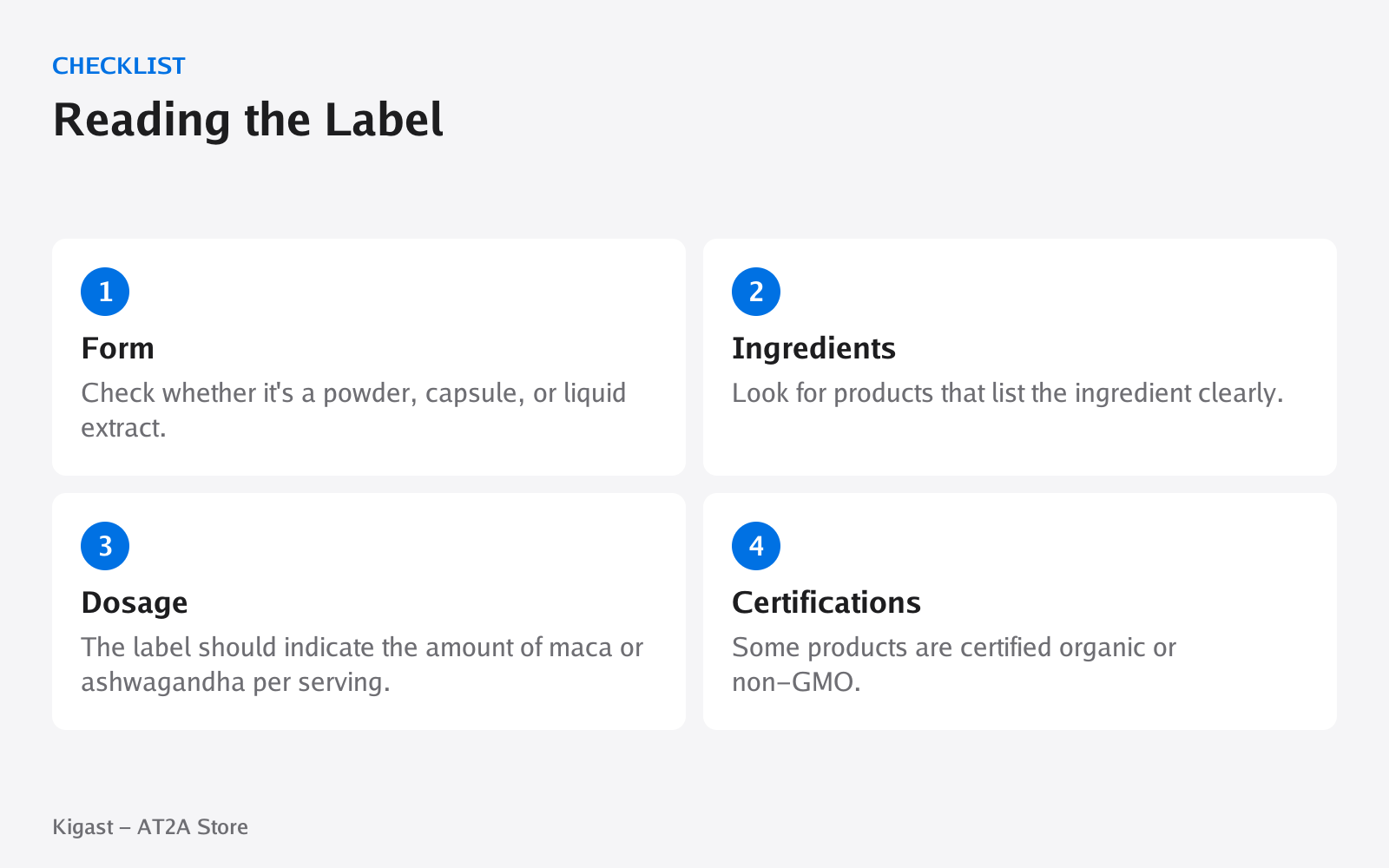
- Form: Check whether it's a powder, capsule, or liquid extract. Choose the form that fits your routine.
- Ingredients: Look for products that list the ingredient clearly. Avoid products with unnecessary fillers or additives.
- Dosage: The label should indicate the amount of maca or ashwagandha per serving. This can help you compare products and choose the right one for your needs.
- Certifications: Some products are certified organic or non-GMO. These certifications can give you confidence in the quality of the product.
Frequently asked questions
Can I take maca and ashwagandha together?
Yes, maca and ashwagandha can be taken together. Some products, like All-In-One Energy & Performance Support, combine both ingredients in one formula. If you're considering taking them separately, it's a good idea to start with one and see how you feel before adding the other.
What does maca root taste like?
Maca root has a nutty, earthy flavor. It's often described as slightly sweet with a hint of butterscotch. The taste is mild enough to blend well with smoothies, oatmeal, or baked goods.
What does ashwagandha taste like?
Ashwagandha has a bitter, earthy taste. Many people prefer to take it in capsule form to avoid the bitterness. If you choose a liquid extract, you can mix it with juice or water to mask the taste.
How long does it take to notice effects?
The time it takes to notice effects can vary from person to person. Some people report feeling a difference within a few days, while others may take a few weeks. Consistency is key, so it's important to take it regularly as part of your routine.
Are there any precautions I should take?
If you're pregnant, nursing, or taking medication, it's always a good idea to check with your doctor before adding any new supplement to your routine. This is especially important if you have any underlying health conditions or concerns.
Sources
- Ashwagandha — National Center for Complementary and Integrative Health
- Vitamin D — Office of Dietary Supplements, NIH
- Ethnobiology and Ethnopharmacology of Lepidium meyenii (Maca), a Plant from the Peruvian Highlands — National Center for Biotechnology Information
- Efficacy and Safety of Ashwagandha (Withania somnifera) Root Extract in Improving Sexual Function in Women: A Pilot Study — National Center for Biotechnology Information
A note on these statements
These statements have not been evaluated by the Food and Drug Administration. This product is not intended to diagnose, treat, cure, or prevent any disease. Talk to your doctor or pharmacist before starting a supplement, especially if you are pregnant, nursing, take medication or have a medical condition.