
Which Supplements Should Women Take Daily? A Guide by Nutrient and Age
By AT2AUpdated 8 min read
Walk down any supplement aisle and you will find dozens of bottles labeled "for women." Some are useful, some are mostly packaging, and very few explain what is inside. This guide lists the nutrients women most often need to think about, the official daily amounts from the NIH Office of Dietary Supplements, how needs change with age, and how to read a label.
Use it as a starting point for a conversation with your doctor or pharmacist, not as a replacement for one. Blood work and a review of your medicines tell you more than any general article.
Which supplements should a woman take every day?
There is no single list that fits everyone. Start by looking honestly at a typical week of eating: leafy greens, beans, eggs, fish, dairy or fortified alternatives, how much meat you eat, and how much time you spend outdoors. Those answers point to the likely gaps. Someone who eats little or no animal food may fall short on vitamin B12; heavy periods raise iron needs; little sun exposure makes vitamin D worth checking. A targeted approach usually beats a "cover everything" product taken on autopilot.
How much of each key nutrient do women need?
These are the Recommended Dietary Allowances (RDAs) for healthy, non-pregnant adult women from the NIH Office of Dietary Supplements. Your own needs may differ.
| Nutrient | Women 19–50 | Women 51+ | What to know |
|---|---|---|---|
| Folate1 | 400 mcg DFE | 400 mcg DFE | Women who could become pregnant should also get 400 mcg a day of folic acid from supplements or fortified foods. |
| Iron2 | 18 mg | 8 mg | Upper limit 45 mg a day. Test before taking high-dose iron. |
| Calcium3 | 1,000 mg | 1,200 mg | Absorption is best at 500 mg or less at a time. |
| Vitamin D4 | 600 IU (15 mcg) | 600 IU to age 70, then 800 IU | Fat-soluble; upper limit 4,000 IU (100 mcg) a day. |
| Vitamin B125 | 2.4 mcg | 2.4 mcg | Found naturally only in animal foods. |
Folate
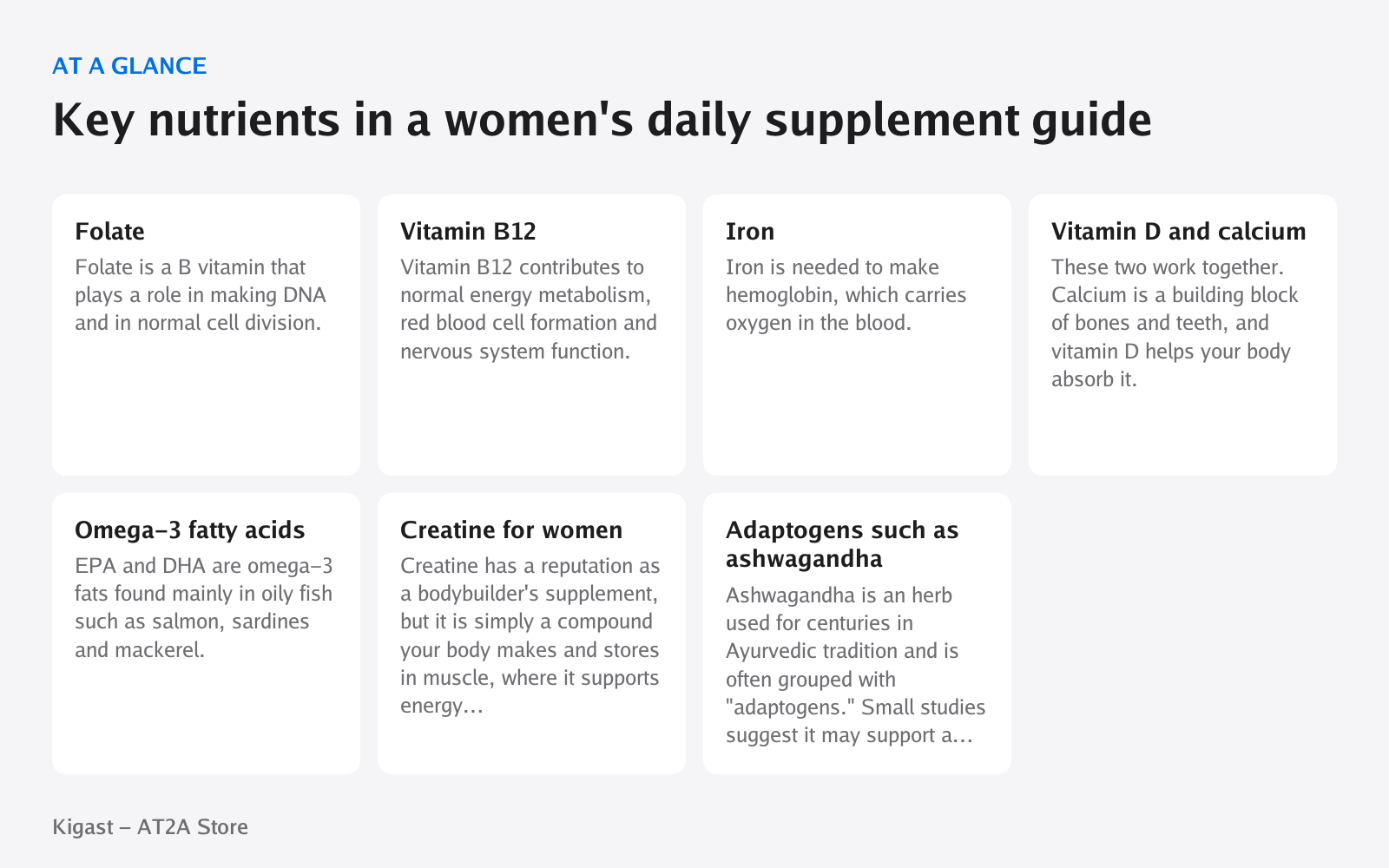
Folate is a B vitamin used to make DNA and in cell division. The RDA for adult women is 400 mcg dietary folate equivalents (DFE) a day1. NIH states that women of childbearing age should get 400 mcg a day of folic acid from supplements and/or fortified foods in addition to the folate in a varied diet, and the RDA rises to 600 mcg DFE during pregnancy1. Leafy greens, beans, lentils and fortified grains are good food sources.
Iron
Iron is needed to make hemoglobin, which carries oxygen in the blood. Women aged 19 to 50 need 18 mg a day; after 50 the RDA drops to 8 mg2. Iron is one nutrient where testing really matters, because too much is harmful: the adult upper limit is 45 mg a day, and high doses can cause stomach upset and constipation2. Taking iron with food can help reduce those effects2.
Calcium and vitamin D
Calcium builds bones and teeth, and vitamin D helps the body absorb it. Women need 1,000 mg of calcium a day from 19 to 50 and 1,200 mg from 513. Vitamin D needs are 600 IU (15 mcg) a day up to age 70 and 800 IU (20 mcg) after4. About 72% of the calcium Americans get comes from dairy and foods with added dairy3, so check your diet before adding a large calcium tablet. If you do take one, NIH notes absorption is highest with doses of 500 mg or less, and absorption is generally greater with food3.
Vitamin B12
Vitamin B12 is used for red blood cell formation, nerve function and energy metabolism. The adult RDA is 2.4 mcg a day5. Natural food sources are limited to animal foods, so vegans and vegetarians have a higher risk of falling short; fortified foods and supplements can substantially reduce that risk5. Older adults are another group more likely to run low5.
Omega-3 fatty acids
EPA and DHA are omega-3 fats found mainly in oily fish such as salmon, sardines and mackerel. If you eat fish regularly you may already be covered; if not, a fish oil or algae-based omega-3 is a common choice. Take it with a meal.
Creatine
Creatine is a compound your body makes and stores in muscle, where it supplies energy for short, intense efforts. Most research has been done in men, and interest in women is growing. Women who lift weights, do interval training or eat little meat are the ones who most often consider it. Read our creatine gummies vs powder guide for amounts used in research.
Ashwagandha
Ashwagandha is an herb from Ayurvedic tradition. NCCIH reports that some ashwagandha preparations may help with sleep and stress, while evidence for anxiety is unclear6. It should be avoided during pregnancy and while breastfeeding, is not recommended for people with thyroid or autoimmune conditions, can interact with several medicines, and rare cases of liver injury have been reported6. More in our ashwagandha guide.
How do women's supplement needs change with age?
What makes sense at 25 may not make sense at 55:
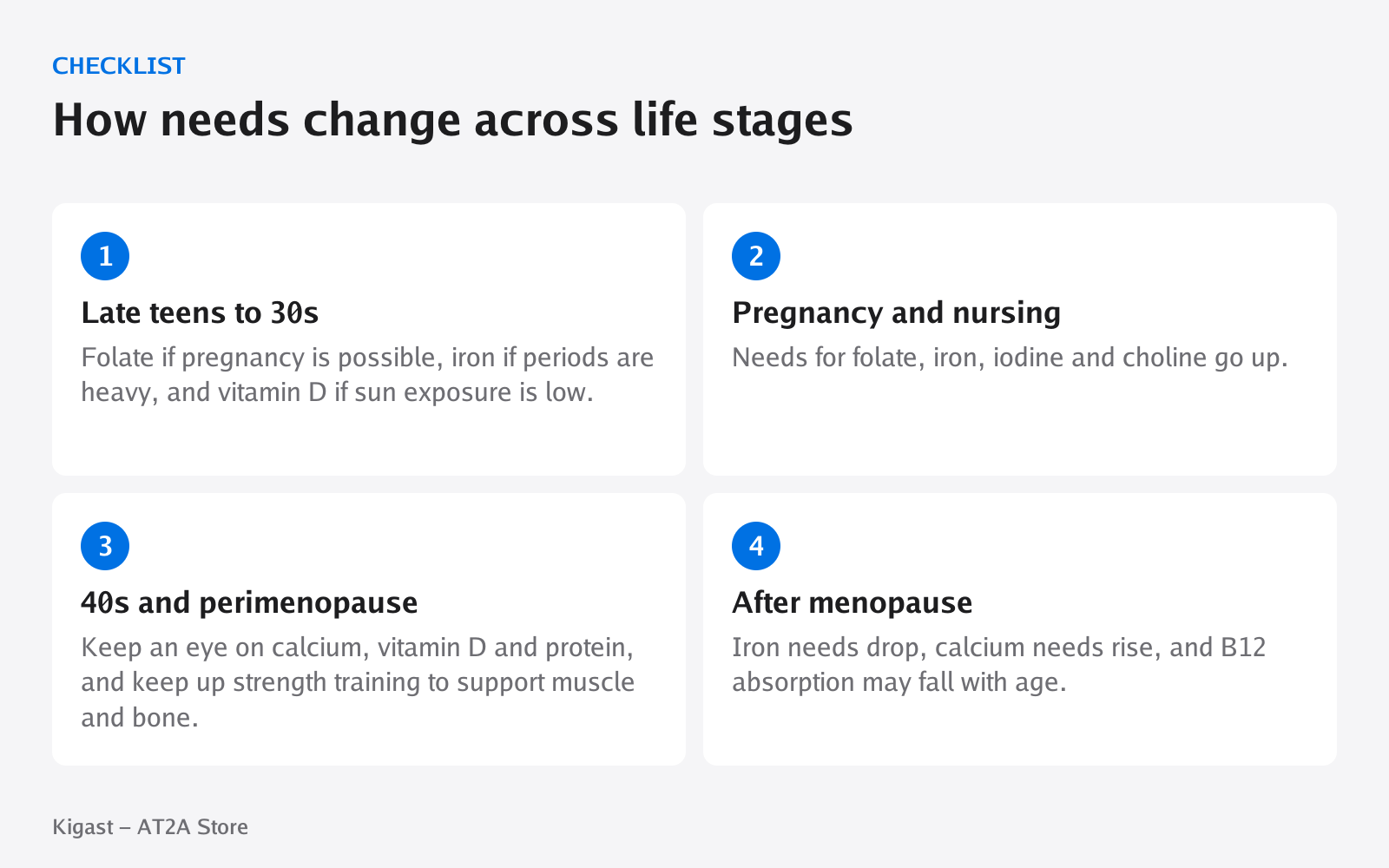
- Late teens to 40s: folic acid if pregnancy is possible, iron if periods are heavy, vitamin D if sun exposure is low.
- Pregnancy and nursing: folate needs rise to 600 mcg DFE in pregnancy1. Use a prenatal chosen with your doctor rather than mixing products yourself.
- From 51: iron needs drop from 18 mg to 8 mg a day2 and calcium needs rise from 1,000 mg to 1,200 mg3.
- After 70: vitamin D rises to 800 IU a day4, and B12 is worth checking because older adults are more likely to run low5.
How do you read a women's supplement label?
The front of a bottle is marketing. The Supplement Facts panel on the back is where the useful information lives:
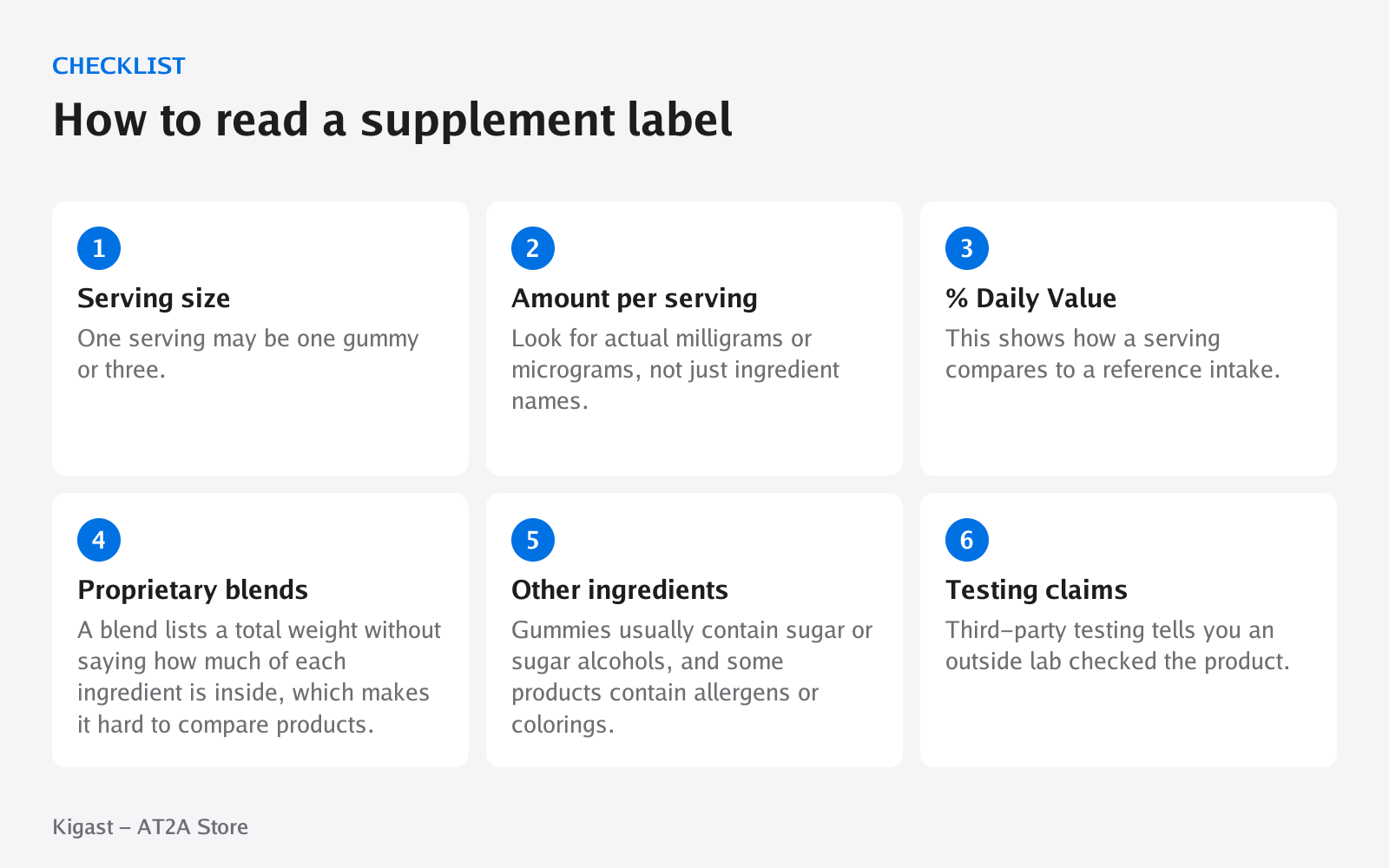
- Serving size. One serving may be one gummy or three. Every number below it refers to that serving.
- Amount per serving. Look for actual milligrams or micrograms, not just ingredient names.
- % Daily Value. Over 100% is common for B vitamins; very high numbers for iron, vitamin D or calcium deserve a second look against the upper limits above.
- Proprietary blends. A blend lists one total weight, so you cannot tell how much of each ingredient is inside.
- Other ingredients. Gummies usually contain sugar or sugar alcohols; check for allergens.
- Testing claims. Third-party testing means an outside lab checked the product. It is a plus, but it is not proof the product does anything for you.
Can you take too many vitamins?
Yes. Fat-soluble vitamins such as A, D, E and K are stored in the body and can build up, and iron can be dangerous in excess. Add up what you get from every source, including fortified foods and any multivitamin: if two products both contain vitamin D, you are getting both doses. The adult upper limits are 4,000 IU a day for vitamin D4 and 45 mg a day for iron2.
How do you build a routine you will actually keep?
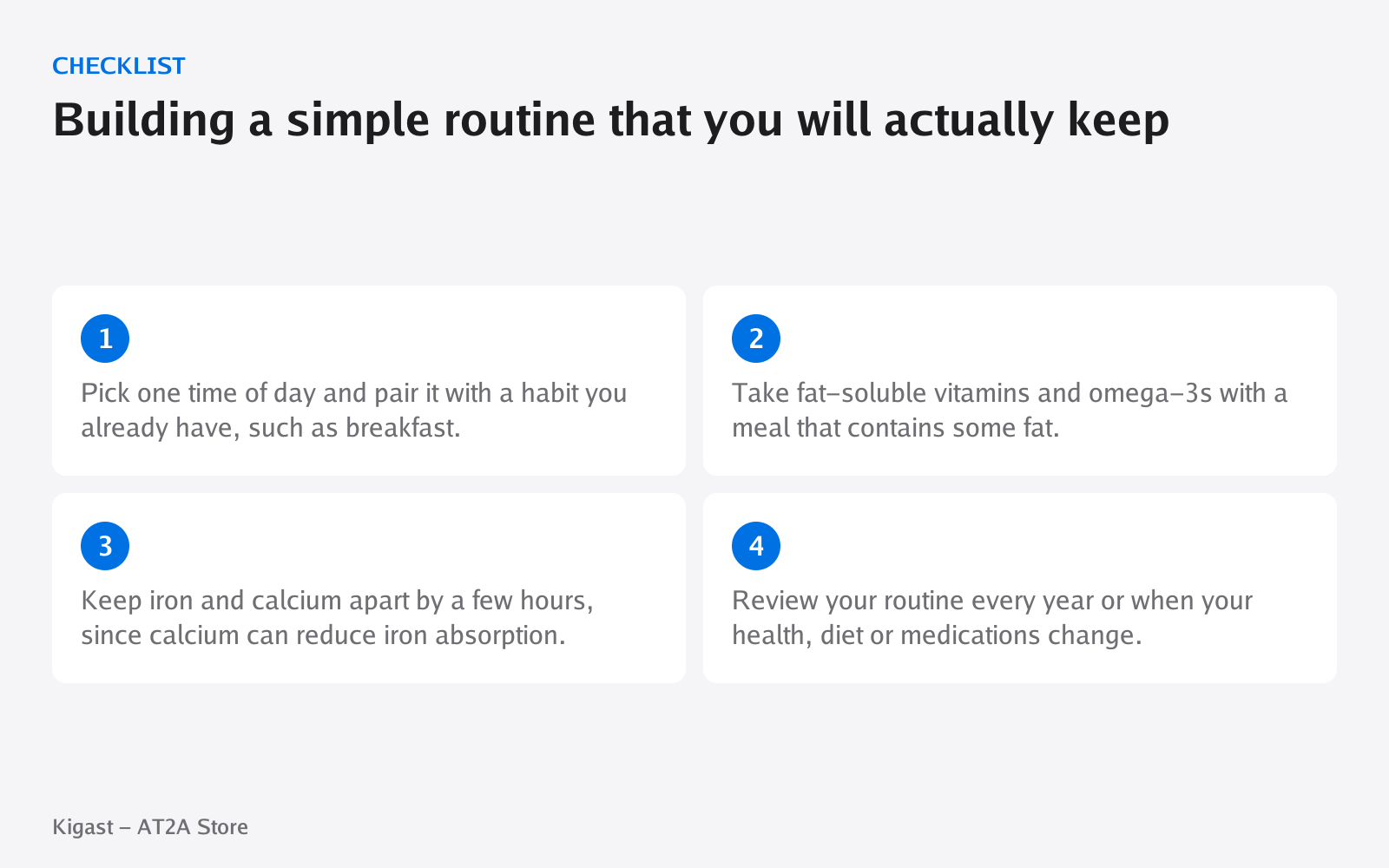
- Pick one time of day and pair it with a habit you already have, such as breakfast.
- Take fat-soluble vitamins and omega-3s with a meal that contains some fat.
- Take separate calcium and iron supplements at different times of day; NIH notes calcium might reduce iron absorption2.
- Review your routine every year, or when your health, diet or medicines change.
Plan your timing with the AT2A supplement timing tool: women's multivitamin, iron and calcium.
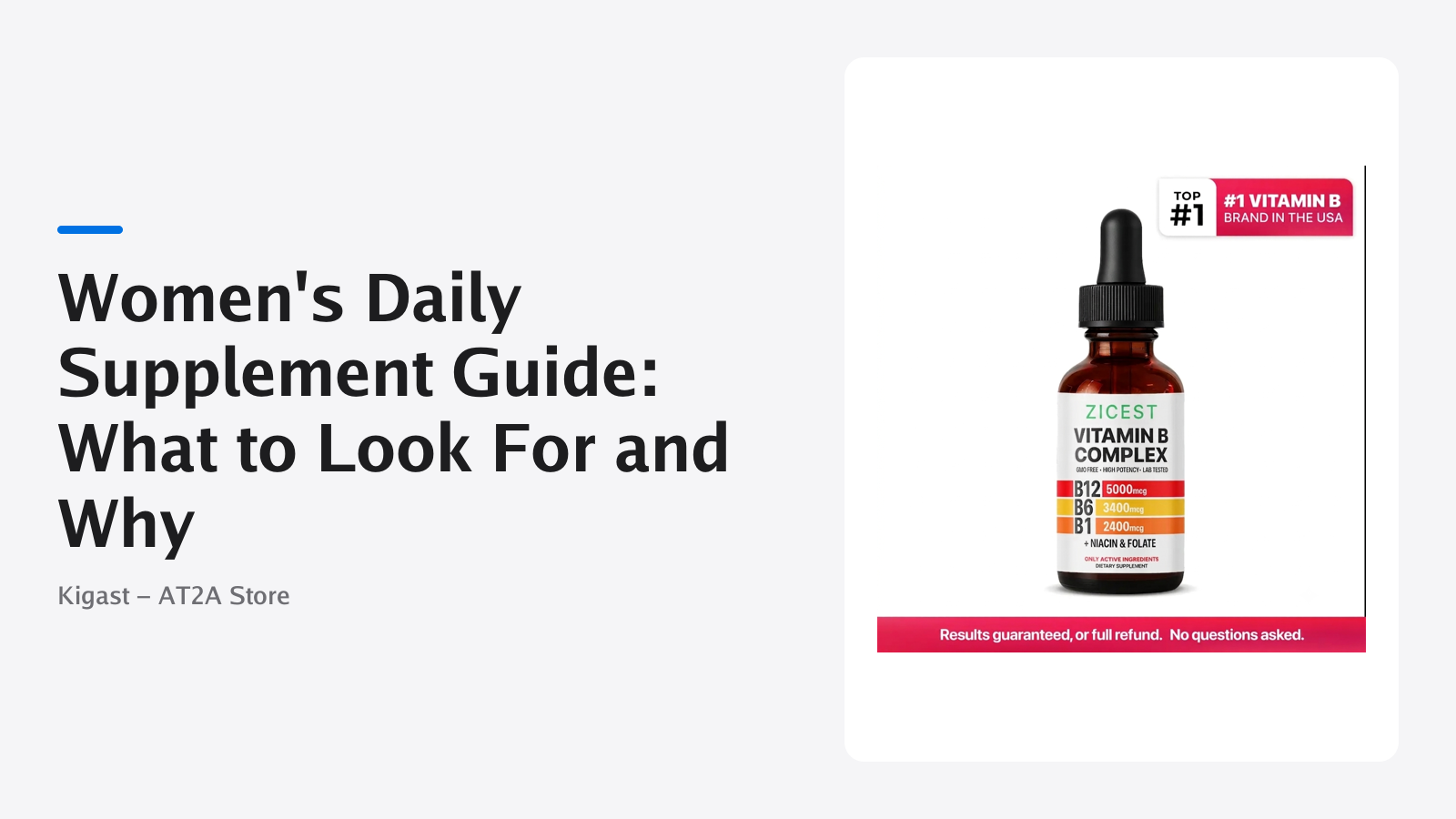
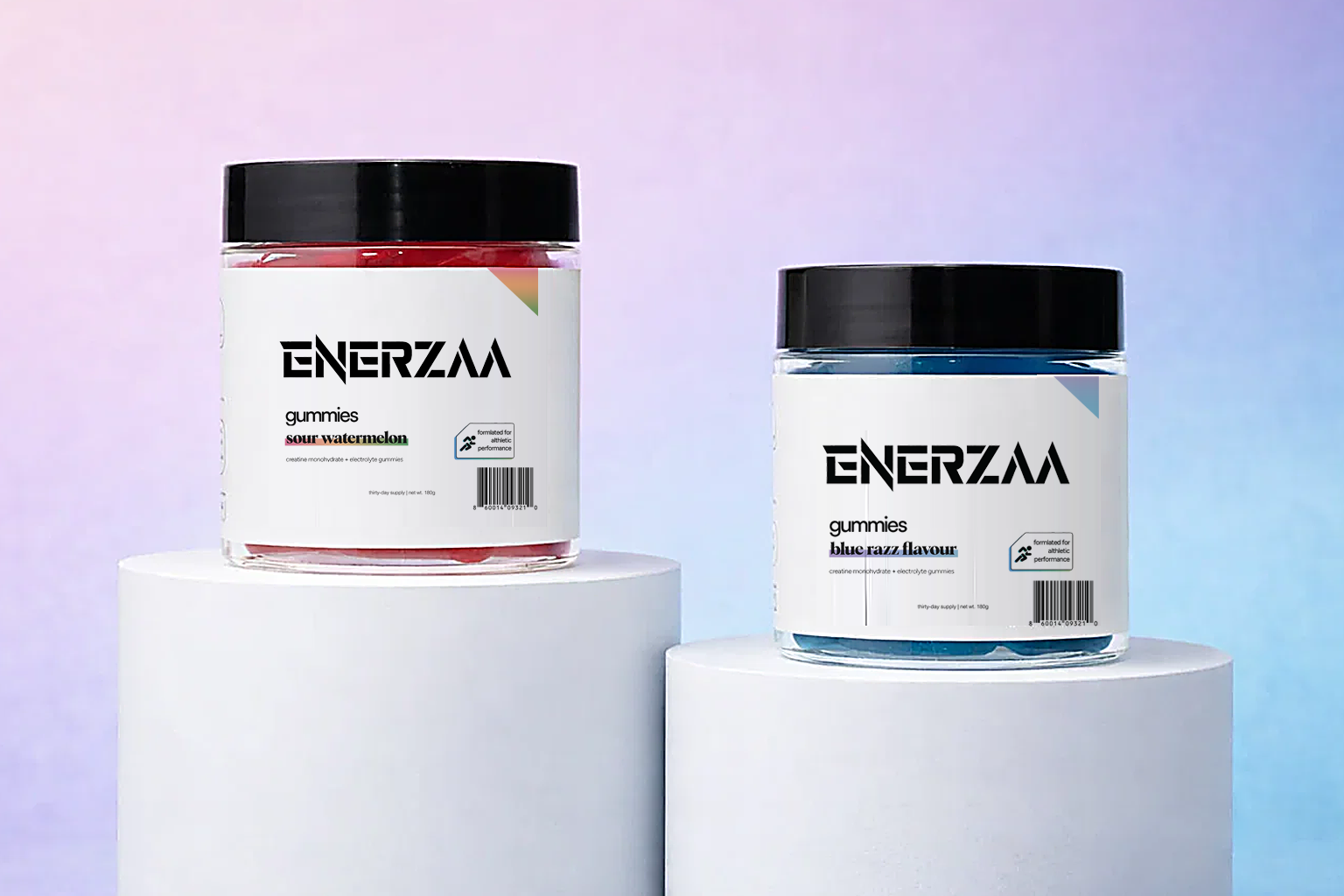
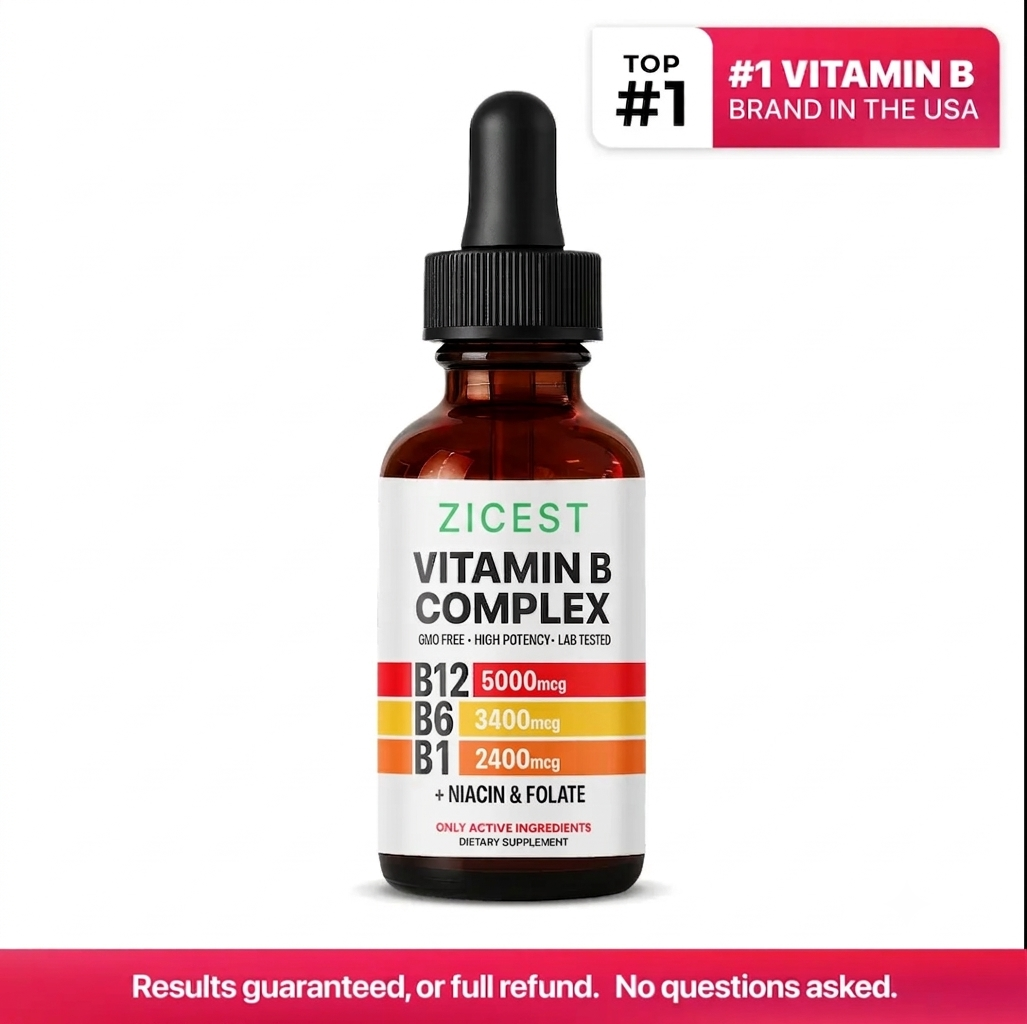
If you are looking for specific products to discuss with your doctor, AT2A carries a few that relate to the nutrients above. The 5-in-1 Vitamin B Complex is a liquid dropper whose front label lists vitamin B12 5,000 mcg, vitamin B6 3,400 mcg and vitamin B1 2,400 mcg, plus niacin and folate. That B12 figure is far above the 2.4 mcg RDA, so check the Supplement Facts panel for the serving size before you start. Enerzaa Creatine Complex Gummies are creatine monohydrate and electrolyte gummies in sour watermelon and blue raspberry flavors, labeled as a thirty-day supply (net wt. 180 g). Cured Ashwagandha Gummies are an ashwagandha option in gummy form; see the ashwagandha cautions above.
Frequently asked questions
Do women need a different multivitamin than men?
Some needs differ, most clearly iron: 18 mg a day for women aged 19 to 50 versus 8 mg for men. Folic acid also matters more for anyone who could become pregnant. Beyond that, many targets are similar, so the amounts on the Supplement Facts panel matter more than a "women's" label.
How much folic acid should a woman take?
NIH states that women of childbearing age should get 400 mcg of folic acid a day from supplements and/or fortified foods, on top of the folate in a varied diet. During pregnancy, total folate needs rise to 600 mcg DFE a day.
Should women take iron every day?
Only if you need it. Women aged 19 to 50 need 18 mg a day from all sources, and many get it from food. Because the upper limit is 45 mg and too much is harmful, check your levels with a blood test before taking an iron supplement.
Can I take ashwagandha every day?
Many people do, but it should be avoided during pregnancy and breastfeeding, is not recommended with thyroid or autoimmune conditions, and can interact with several medicines. Ask your pharmacist first.
Are gummies as good as pills?
Gummies are easier for many people to take, which helps consistency. They often contain added sugar and may hold less per piece than a capsule, so compare the per-serving amounts.
Sources
- Folate: Fact Sheet for Health Professionals, NIH Office of Dietary Supplements (accessed 2026-10-13)
- Iron: Fact Sheet for Health Professionals, NIH Office of Dietary Supplements (accessed 2026-10-13)
- Calcium: Fact Sheet for Health Professionals, NIH Office of Dietary Supplements (accessed 2026-10-13)
- Vitamin D: Fact Sheet for Health Professionals, NIH Office of Dietary Supplements (accessed 2026-10-13)
- Vitamin B12: Fact Sheet for Health Professionals, NIH Office of Dietary Supplements (accessed 2026-10-13)
- Ashwagandha: Usefulness and Safety, National Center for Complementary and Integrative Health (NCCIH) (accessed 2026-10-13)
These statements have not been evaluated by the Food and Drug Administration. This product is not intended to diagnose, treat, cure, or prevent any disease.