
What Should You Look for in a Men's Multivitamin?
By AT2AUpdated 6 min read
Men's multivitamins range from simple once-a-day tablets to long blends of vitamins, minerals and herbs. More ingredients is not the same as a better product. The useful questions are whether the amounts suit a man of your age and diet, and whether the total adds up safely with everything else you take.
This guide walks through those questions using the NIH Office of Dietary Supplements fact sheets and FDA guidance, with the numbers you need to check a label yourself.
What should a good men's multivitamin contain?
A basic multivitamin/mineral (MVM) product contains all or most vitamins and minerals, most in amounts that do not exceed the Daily Values (DVs)1. That is a sensible default for most men. NIH also notes that MVMs often contain only small amounts of calcium, magnesium and potassium, so check the label for those rather than assuming they are covered1.
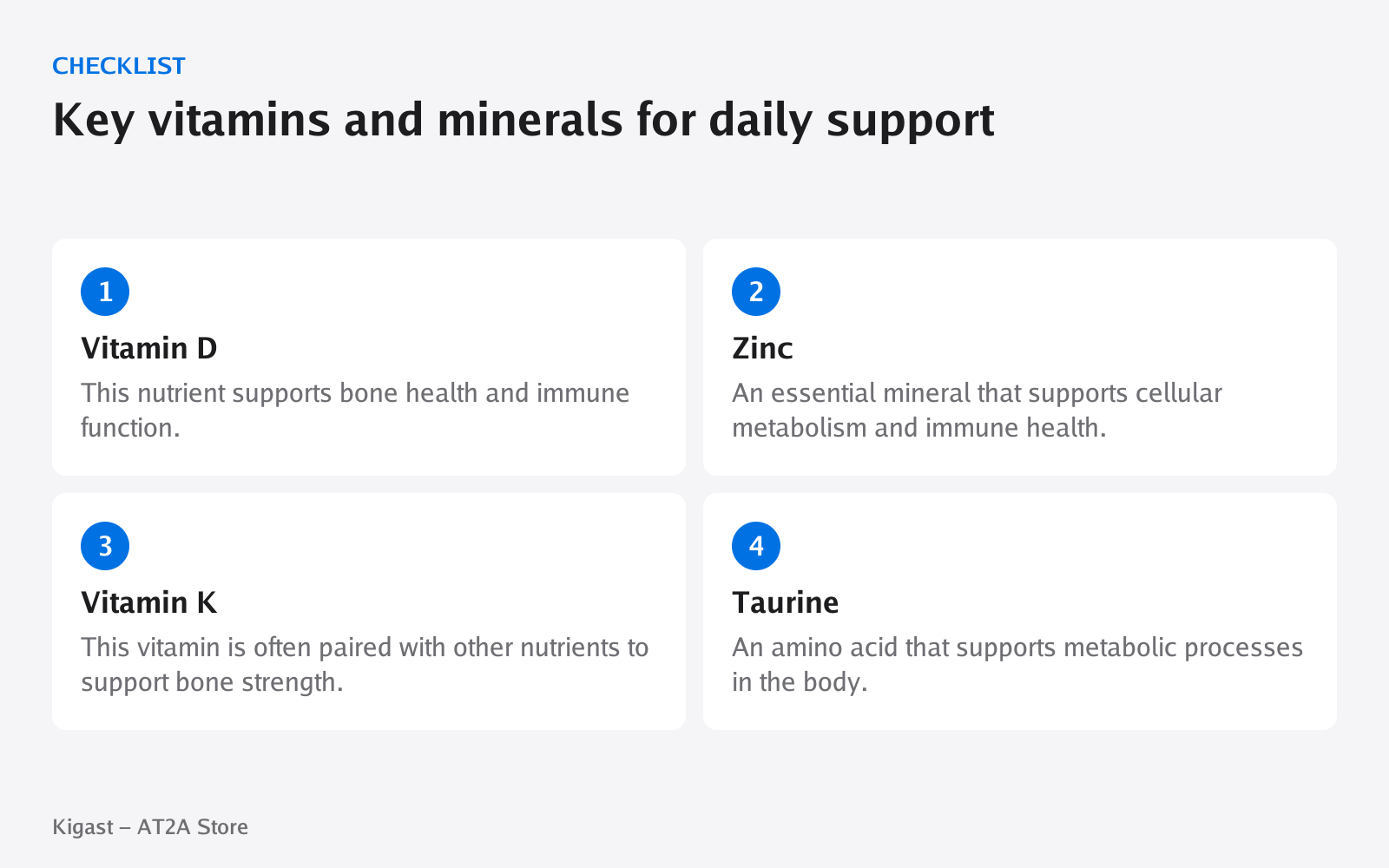
- Iron: little or none for most men. The iron RDA for adult men is 8 mg a day, compared with 18 mg for women aged 19 to 502. MVMs for men or seniors frequently contain less or no iron2.
- Zinc: around the DV, not far above it. The RDA for men is 11 mg a day and the adult upper limit is 40 mg from all sources3. Doses of 50 mg or more over weeks can interfere with copper absorption3.
- Vitamin D: check the IU. The RDA is 600 IU (15 mcg) for adults up to 70 and 800 IU (20 mcg) after 70; the adult upper limit is 4,000 IU (100 mcg)4.
- Vitamin K: fine for most men, important if you take a blood thinner. People on warfarin or similar drugs should talk to their health care provider before taking any MVM containing vitamin K1.
Should men over 50 choose a different multivitamin?
Often, yes. MVMs for older adults (sometimes called 50+ or senior formulas) often contain little or no iron and more calcium, vitamin D and vitamin B12 than those for younger adults1. NIH notes that people older than 50 are advised to get recommended amounts of vitamin B12 mainly from fortified foods or supplements, because absorption of the B12 naturally in food can decline with age1. NIH recommends choosing a product designed for your age, sex and life stage1.
What does the research say multivitamins actually do?
Multivitamins are best understood as a way to fill gaps in the diet. The evidence for that is clearer than for most other claims.
| What was studied | What the research found | Strength of evidence |
|---|---|---|
| Filling nutrient gaps | In a cohort of 90,771 adults aged 45 and older, about 74%–76% of men had adequate intakes, on average, of the 17 nutrients examined from food alone; with an MVM the share with adequate intakes rose to 84%1. | Consistent, large studies |
| Getting too much | In the same study, 10%–15% of MVM users had excessive intakes of vitamin A, iron and zinc, and 48%–61% had excessive niacin intakes1. | Consistent |
| Memory and thinking in older adults | Three COSMOS sub-studies with more than 5,000 older adults (mean age 69 to 73) found a daily MVM taken for 1 to 3 years helped maintain global cognition and episodic memory compared with placebo1. | Moderate: randomized trials, one product, older adults |
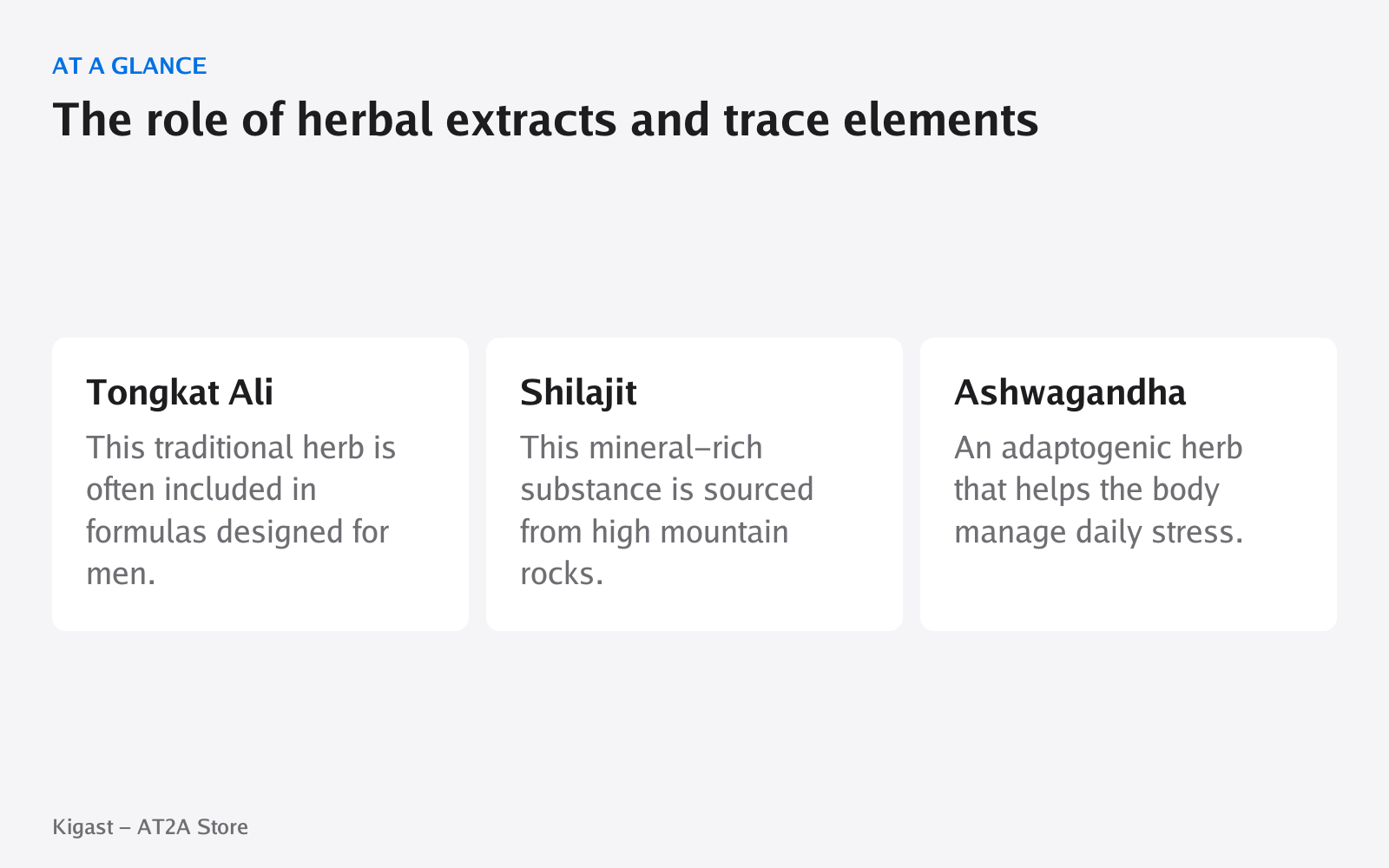
| Herbal add-ins (tongkat ali, shilajit, ashwagandha) | Small and mixed studies; amounts in combination products are often not shown on the front label. | Limited |
Are herbs like tongkat ali, shilajit and ashwagandha worth having in a multivitamin?
Herbal extracts turn a multivitamin into a different kind of product. Each herb has its own research base, cautions and interactions, and blends often do not show how much of each herb is inside. If an herb is the reason you are buying, read the evidence for that herb on its own: see our guides to natural testosterone support ingredients, ashwagandha and shilajit.
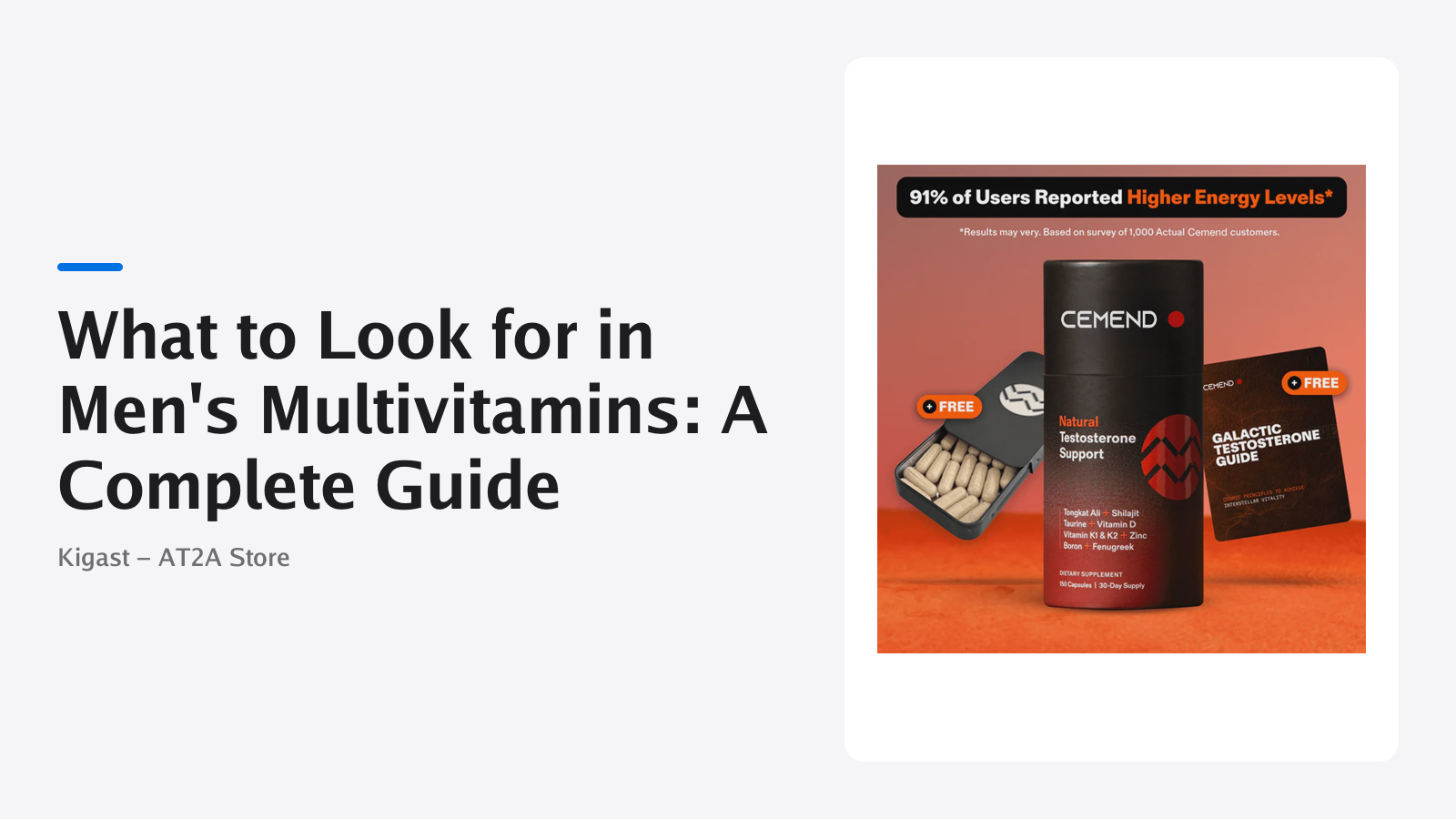
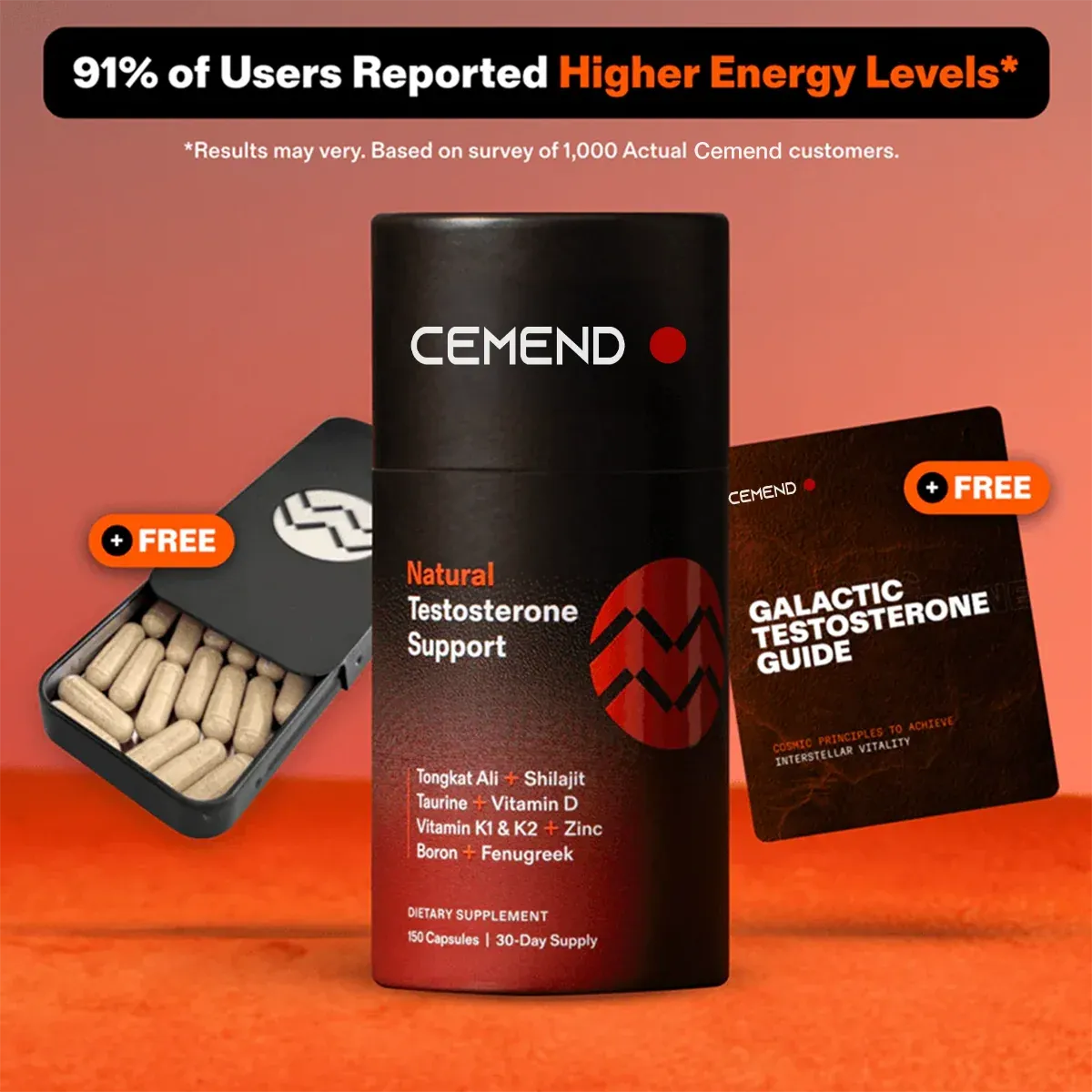
For example, CEMEND Natural Testosterone Support is not a multivitamin but a capsule blend: 150 capsules, a 30-day supply, whose label lists tongkat ali, shilajit, taurine, vitamin D, vitamins K1 and K2, zinc, boron and fenugreek. The front label does not show amounts per serving, so check the Supplement Facts panel and count its zinc, vitamin D and vitamin K toward your daily totals if you also take a multivitamin.
How do you read a men's multivitamin label?
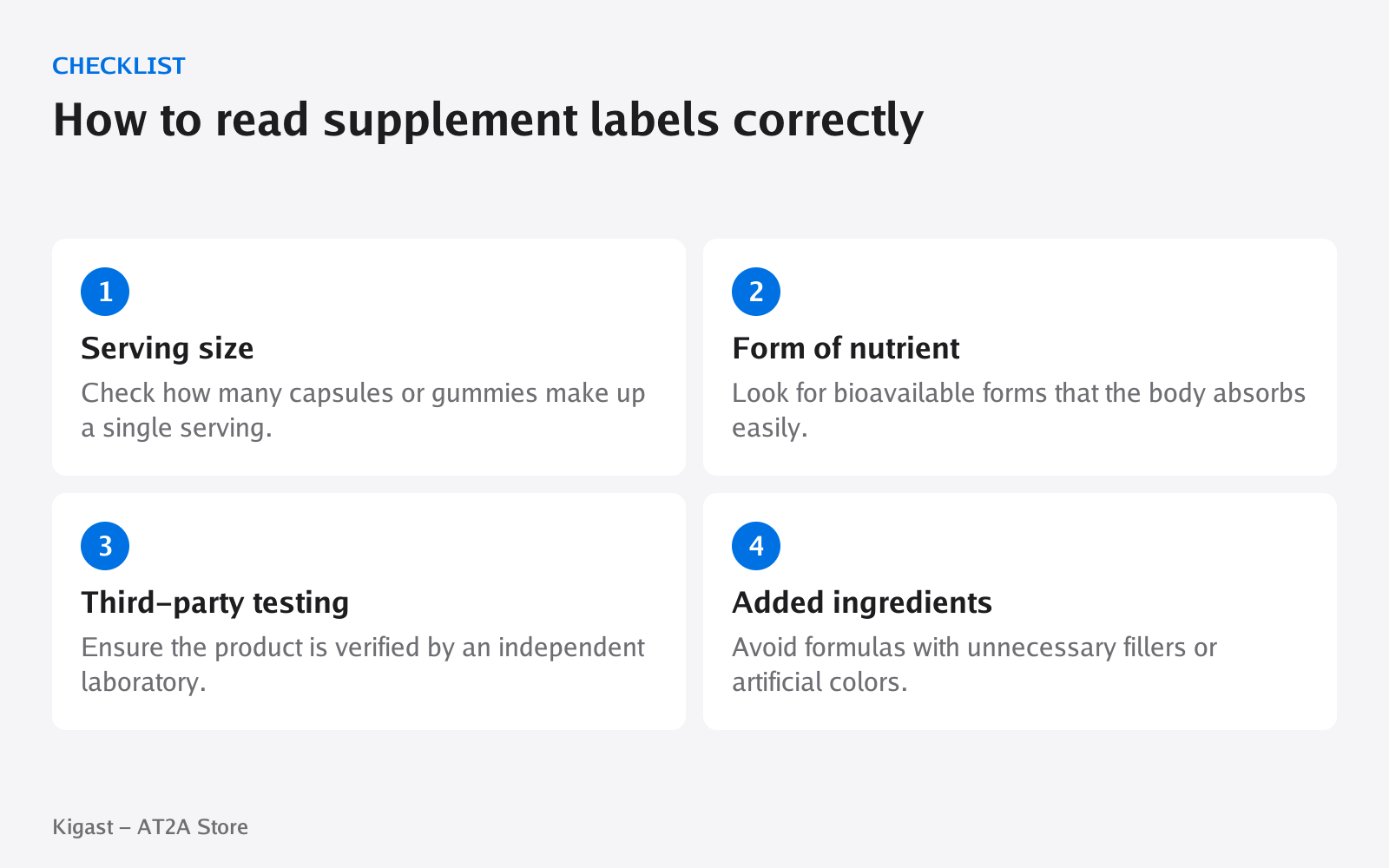
- Serving size. All amounts refer to one serving, which may be two or more tablets or gummies.
- Amount and %DV. Most nutrients at or near 100% DV is the norm for a basic MVM. Very high percentages deserve a second look.
- Iron line. For most men, low or none. Ask your doctor before taking iron you have not been told you need.
- Proprietary blends. A blend shows one total weight, not the amount of each ingredient, which makes comparison hard.
- Directions. Many labels say to take with a meal. See when to take a men's multivitamin.
Plan when to take a men's multivitamin with the AT2A supplement timing tool.
If you prefer a gummy, ORANIC EXTRACT 3-in-1 Wellness Gummies combine shilajit, sea moss and ashwagandha with 30 gummies per container and are labeled third-party lab tested. Like CEMEND, they are a botanical supplement rather than a vitamin-and-mineral multivitamin.

Does the FDA check multivitamins before they are sold?
No. Under the Dietary Supplement Health and Education Act, the FDA does not have the authority to approve dietary supplements before they are marketed, and manufacturers and distributors have initial responsibility for making sure their products are safe and their labels are truthful5. That is why an independent lab-testing statement, clear per-serving amounts and modest claims are useful signals when you compare brands.
Who should check with a doctor first?
Talk to your doctor or pharmacist before starting a multivitamin if you take a blood thinner (because of vitamin K), take other prescription medicines, have a medical condition, or already take separate vitamin D, zinc or iron. A blood test can show whether you actually have a gap worth filling.
Frequently asked questions
Do men need iron in their multivitamin?
Most adult men do not need extra iron: their RDA is 8 mg a day, and many men's and senior formulas contain little or none. Take iron only if your doctor recommends it.
How much zinc should a men's multivitamin have?
The RDA for men is 11 mg a day and the upper limit is 40 mg from all sources, including food and other supplements.
Are men's multivitamins different from women's?
They usually contain the same nutrients in different amounts. The clearest difference is iron, which is higher in women's formulas because women aged 19 to 50 need 18 mg a day.
Is it safe to take a multivitamin and other supplements together?
Often, but add up every source. Excess intake usually comes from stacking products that contain the same nutrient, such as zinc or vitamin D.
What is the difference between capsules and gummies?
Capsules and tablets often hold more per serving. Gummies are easier to take but usually contain sugar and may provide less per piece, so compare the Supplement Facts panels.
Sources
- Multivitamin/mineral Supplements: Fact Sheet for Health Professionals, NIH Office of Dietary Supplements (accessed 2026-10-13)
- Iron: Fact Sheet for Health Professionals, NIH Office of Dietary Supplements (accessed 2026-10-13)
- Zinc: Fact Sheet for Health Professionals, NIH Office of Dietary Supplements (accessed 2026-10-13)
- Vitamin D: Fact Sheet for Health Professionals, NIH Office of Dietary Supplements (accessed 2026-10-13)
- Questions and Answers on Dietary Supplements, U.S. Food and Drug Administration (accessed 2026-10-13)
These statements have not been evaluated by the Food and Drug Administration. This product is not intended to diagnose, treat, cure, or prevent any disease.